National Treasure
Standing Statue of Yakushi (Bhaisajyaguru)
Heian period
Plain wood
1 figure
Statue height: 170.6 cm
This article can be read in about 2 minutes.
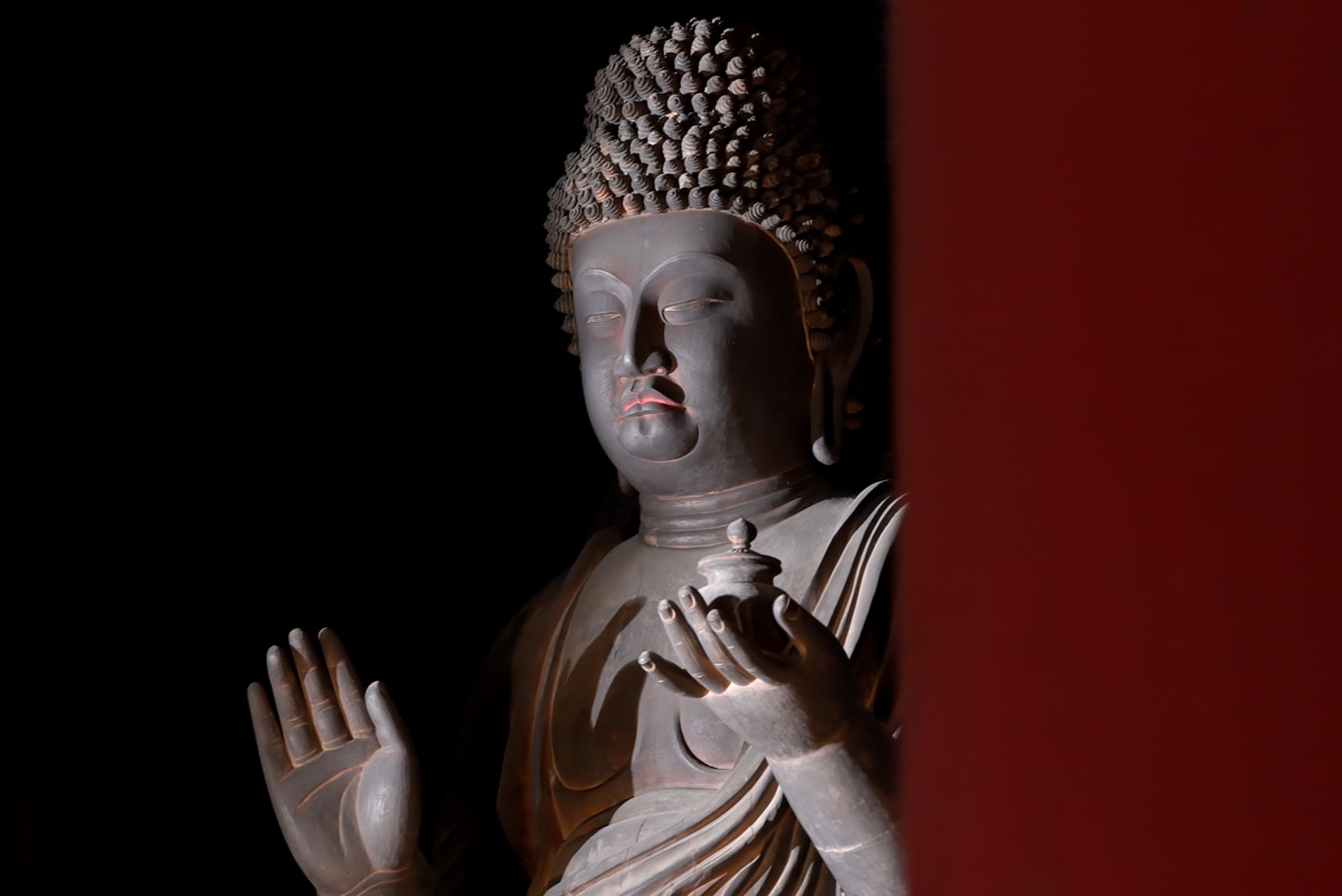
Intense beauty of form
with a gaze that pierces the heart
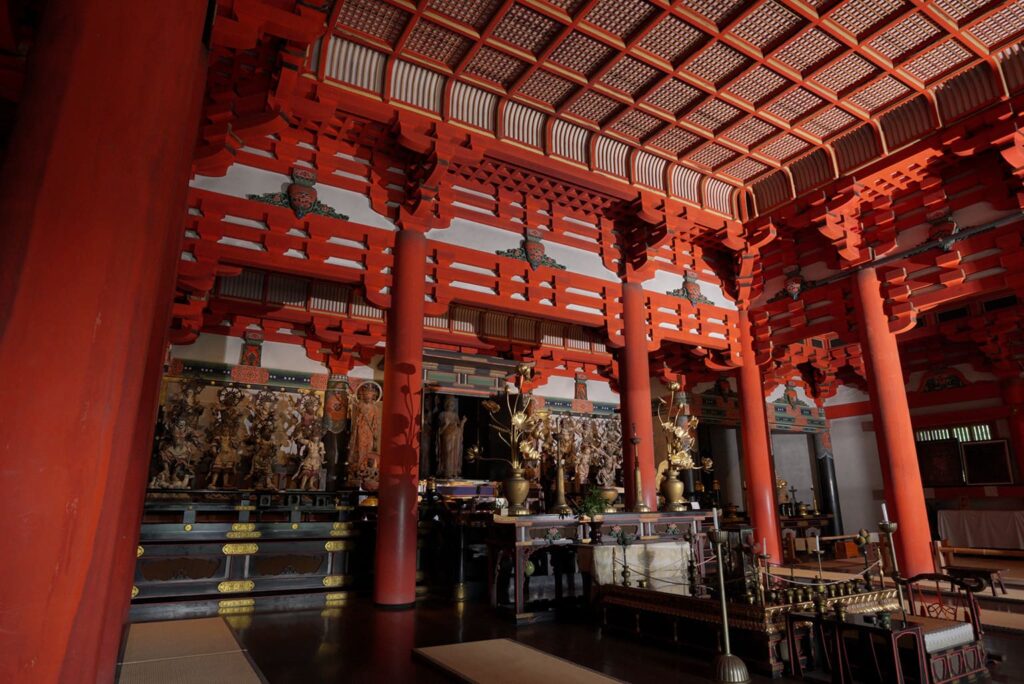
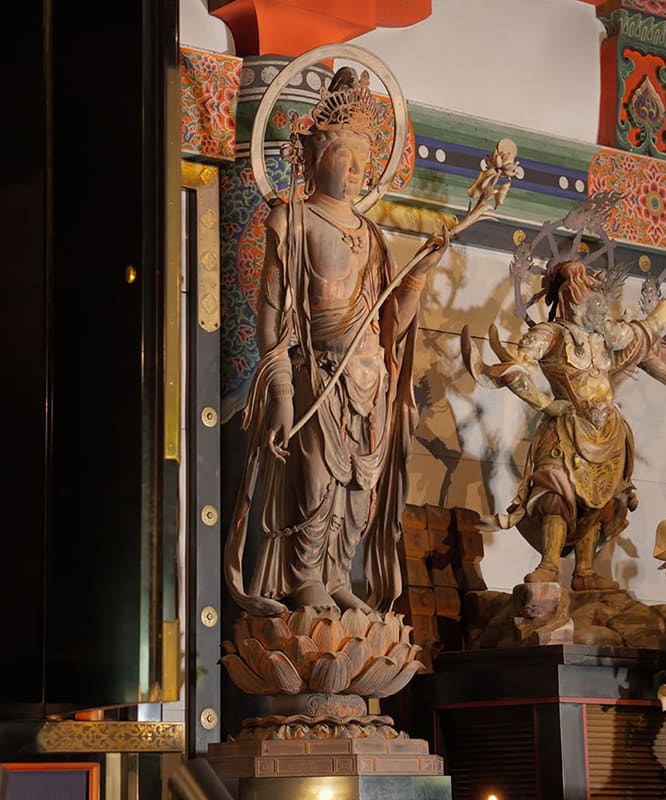
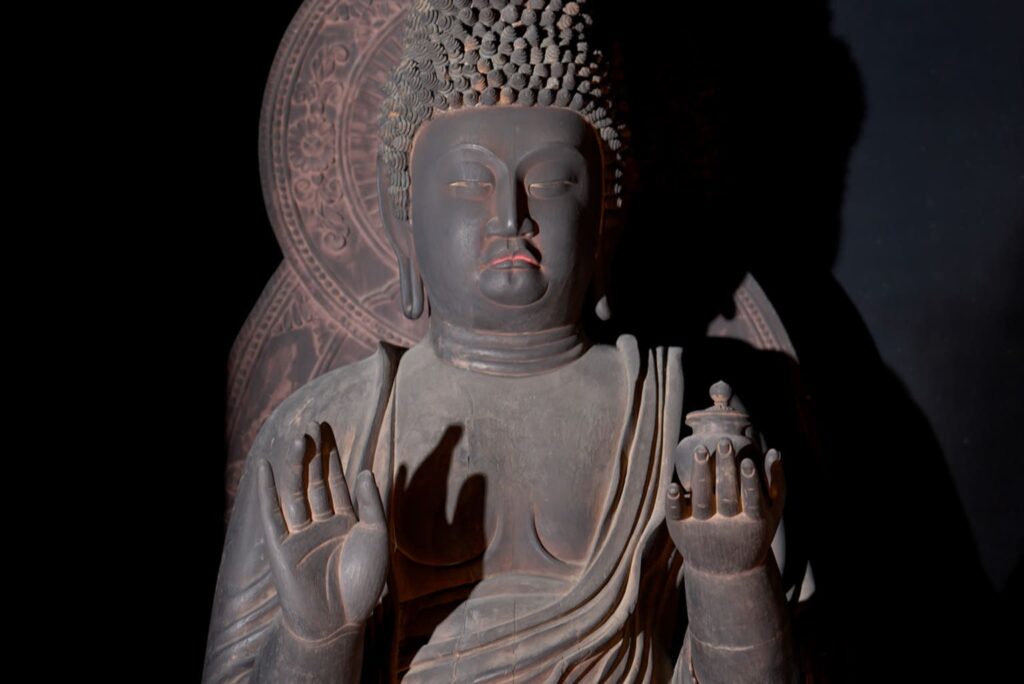
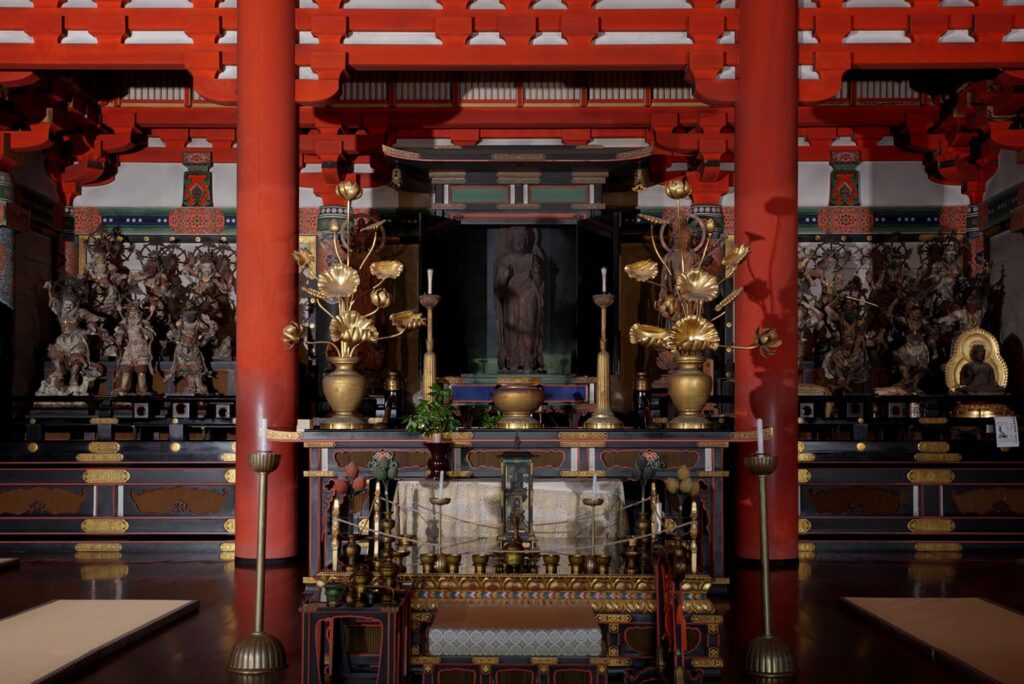
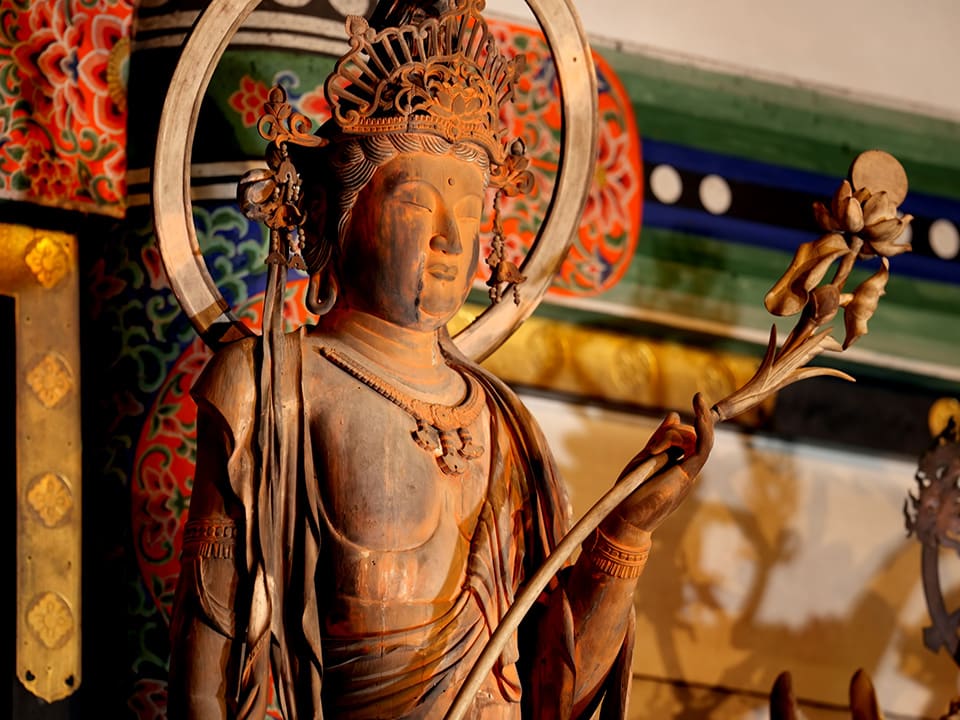
The principal object of worship at Jingoji Temple is the standing statue of Yakushi (Bhaisajyaguru), the Medicine Buddha, enshrined in the main hall. Sculpted during the Heian period (794–1185), it forms a Yakushi Triad with the statues of the bodhisattvas Nikkō (Suryaprabha) and Gakkō (Candraprabha)
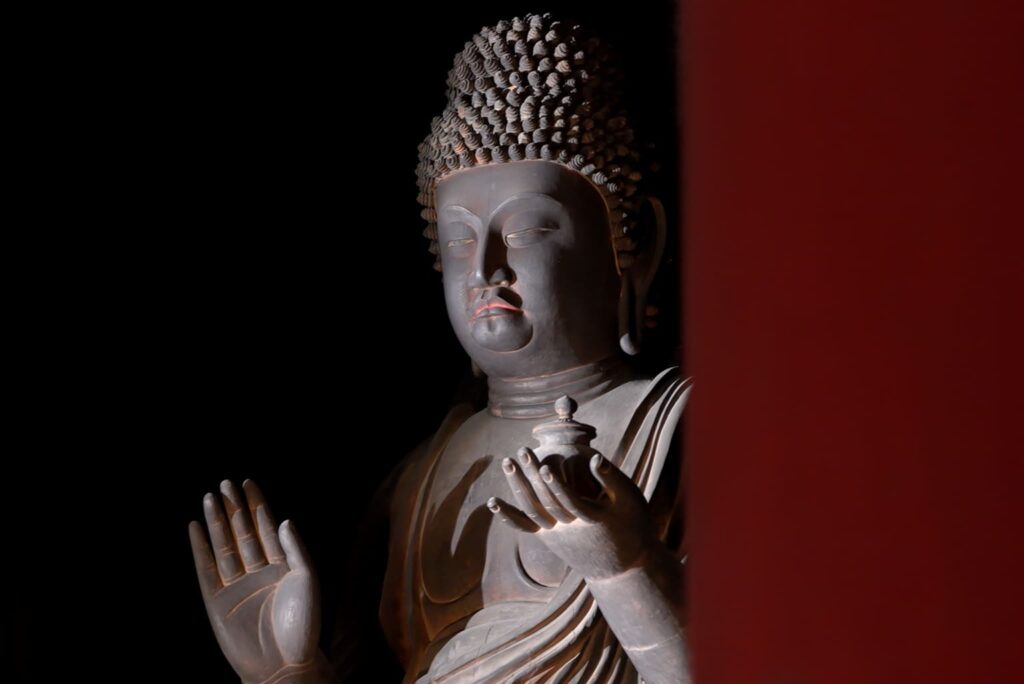
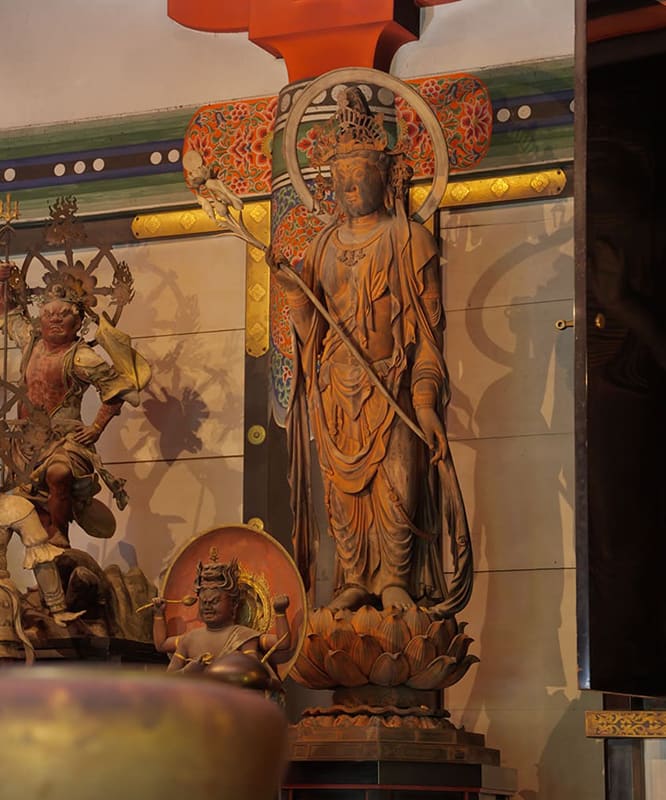
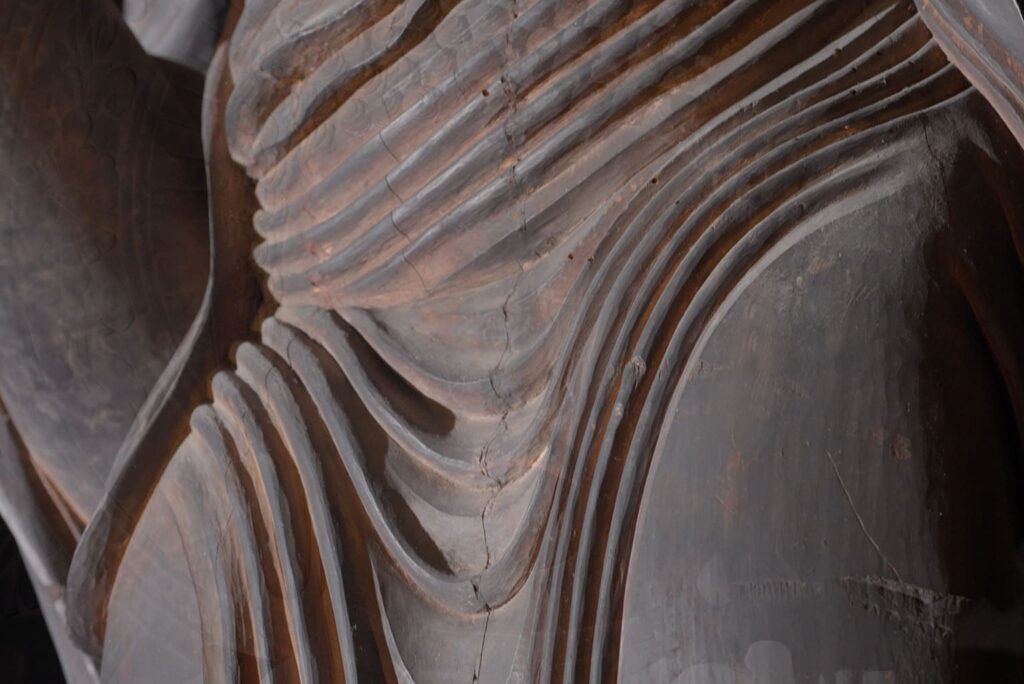
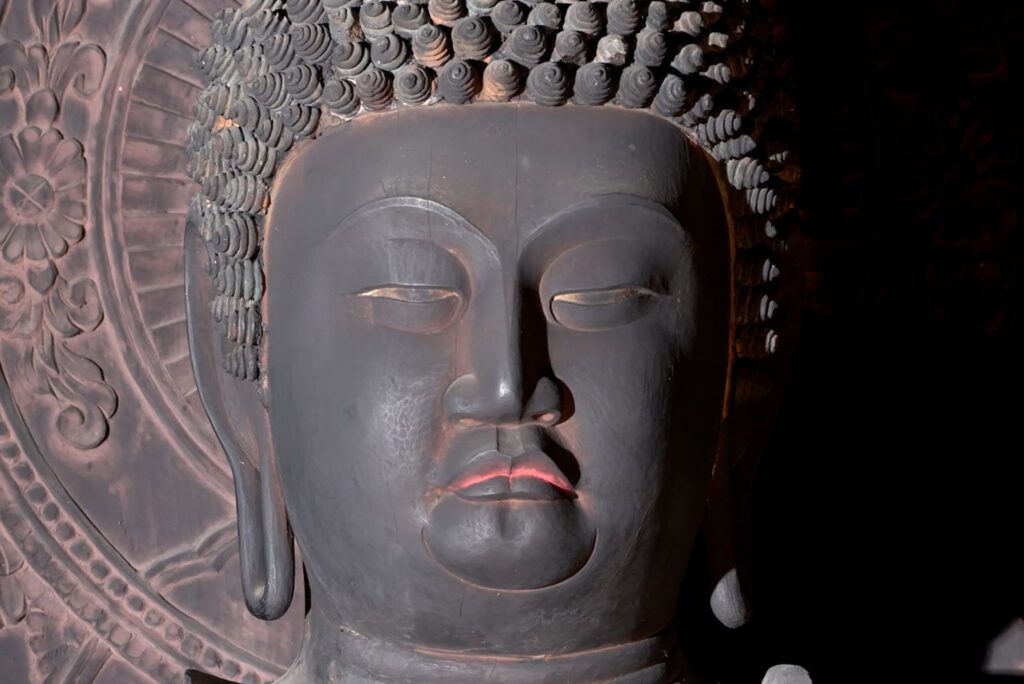
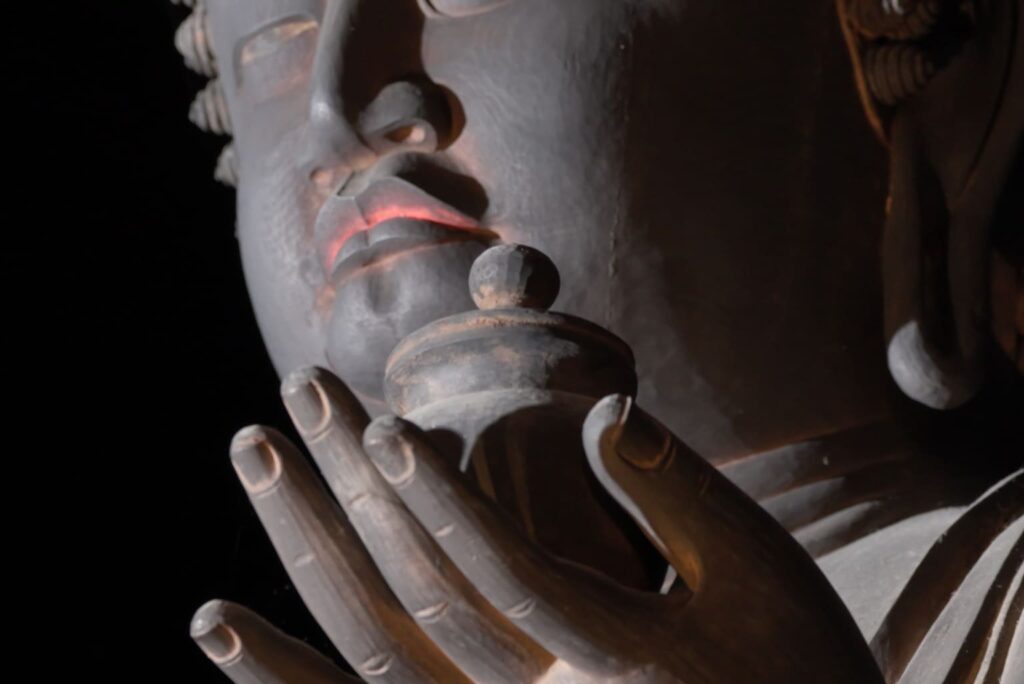
This statue was carved from Japanese nutmeg wood using advanced techniques and conveys a strong sense of spirituality through its finely cut lines and smooth surfaces. With its intense gaze, straight nose, and firm mouth, this Yakushi statue seems to possess a profound inner tranquility.
As the principal image of the temple where Kōbō Daishi (774–835) once lived, this statue is recognized for its artistic and historical significance and is considered one of the greatest masterpieces of Japanese sculpture.
Yuiseki Head Temple
This refers to the head temple of a religious sect. The name indicates the temple’s ties with the sect founder and high-ranking priests.
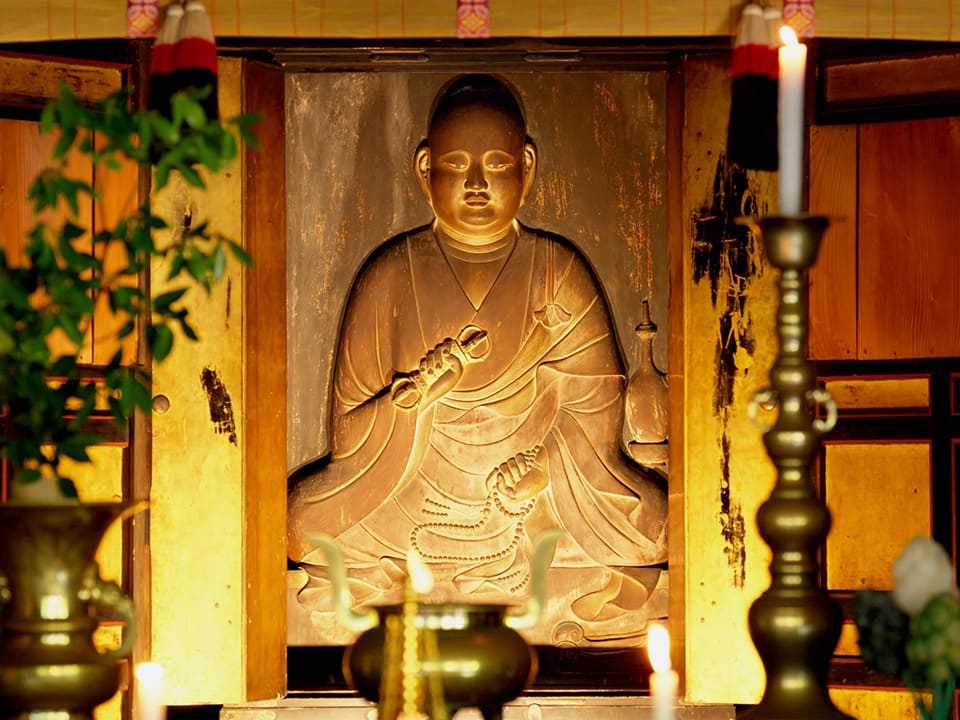
Kūkai (Kōbō Daishi)
A Heian Era priest (774-835). Also known as Kobo Daishi. He is the founder of the Shingon sect and one of the three great calligraphers of the day.
kaya (Japanese torreya)
A tall evergreen tree unique to Japan that belongs to the Taxaceae family and genus Torreya. Thick and highly fragrant, its wood is used to make go boards, Buddhist statues, and other wooden articles.
Standing Statue of Gakkō
An attendant figure of Yakushi Nyorai. Positioned to the right of the Nyorai, facing the Nikko Bosatsu on the left. This bodhisattva symbolizes the light of the moon.
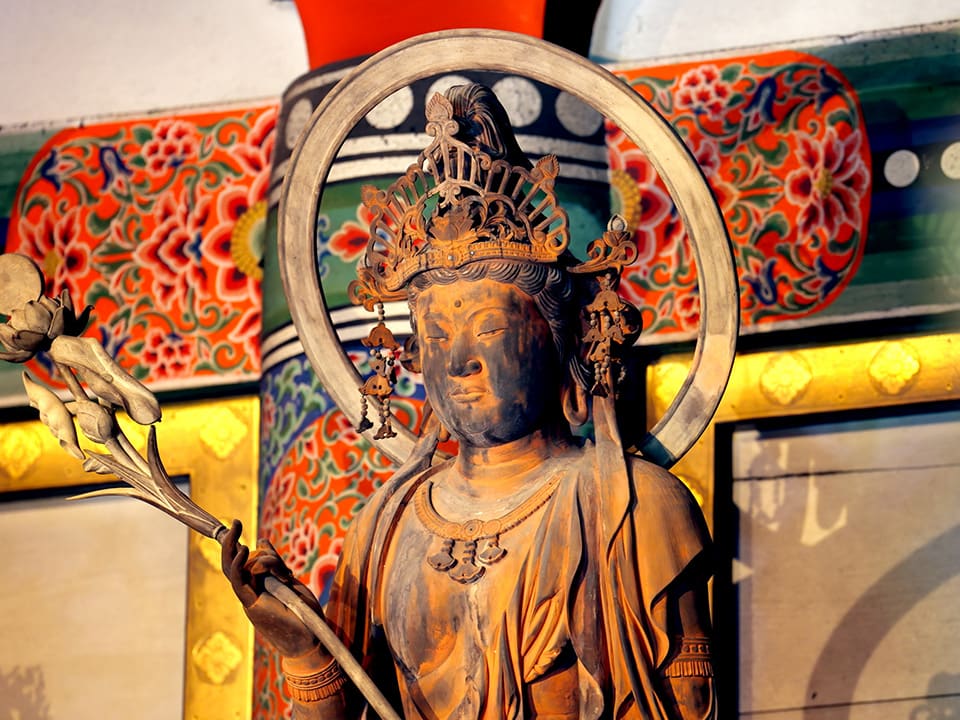
Standing Statue of Nikkō
An attendant figure of Yakushi Nyorai. Positioned to the left of the Nyorai, facing the Gakko Bosatsu on the right. This bodhisattva is believed to possess the virtue of illuminating the darkness of samsara, akin to the way sunlight dispels all shadows, thereby offering salvation to all beings.
Heian period
The Heian period lasted for approximately 400 years between the transfer of the capital to Heian-kyo (present day Kyoto) by Emperor Kanmu in 794 and the foundation of the Kamakura Shogunate in 1185. The period is often divided into three sections: the Early, Mid- and Late Heian periods. In other words, the period of reviving the political system based on Ritsuryo codes, the regency period and the Insei period (governed by a retired emperor), respectively. (The end of the Late Heian period was ruled by the Taira clan.) Also referred to as the period of the Heian imperial court.
Yakushi Nyorai
Since the introduction of Buddhism to Japan, this deity was revered as a healing Buddha who supports the health of mind and body while curing illnesses and suffering.
MOVIE
Experience the video to get one step closer.
This video, accompanied by narration, introduces the charms of Standing Statue of Yakushi (Bhaisajyaguru). Experience its charms even more deeply through the video.
Duration: (audio included)


Please take part in the survey.
Takes about 30 seconds