Important Cultural Property
Standing Statues of the Bodhisattvas Nikkō and Gakkō
Heian period
Plain wood
Enshrined in Kondō Hall
Statue height: 151.4 cm (Bodhisattva Nikkō); 150.3 cm (Bodhisattva Gakkō)
This article can be read in about 2 minutes.
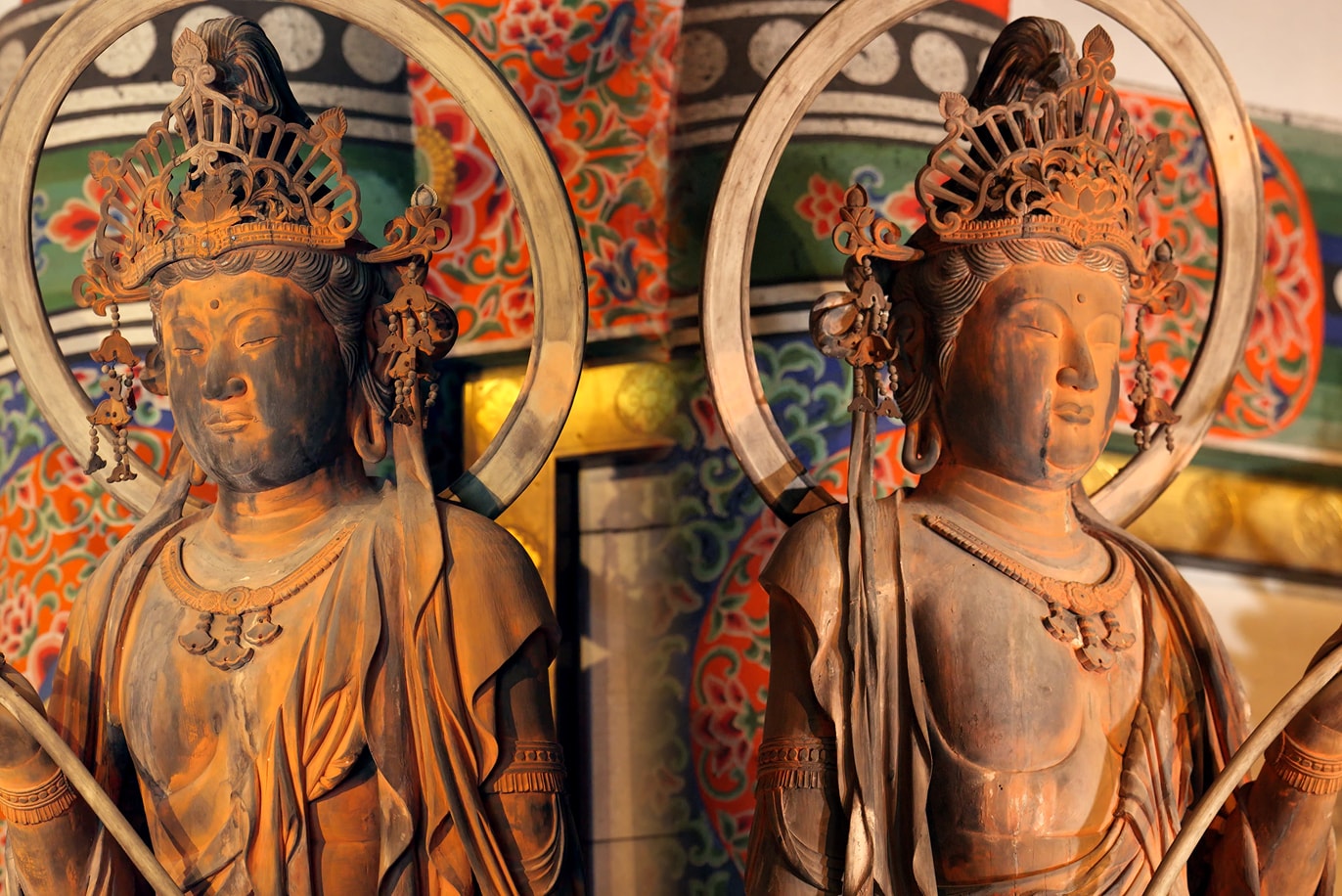
Daylight’s sun, moonlight’s shadow
A form of harmony
created by two forms of light
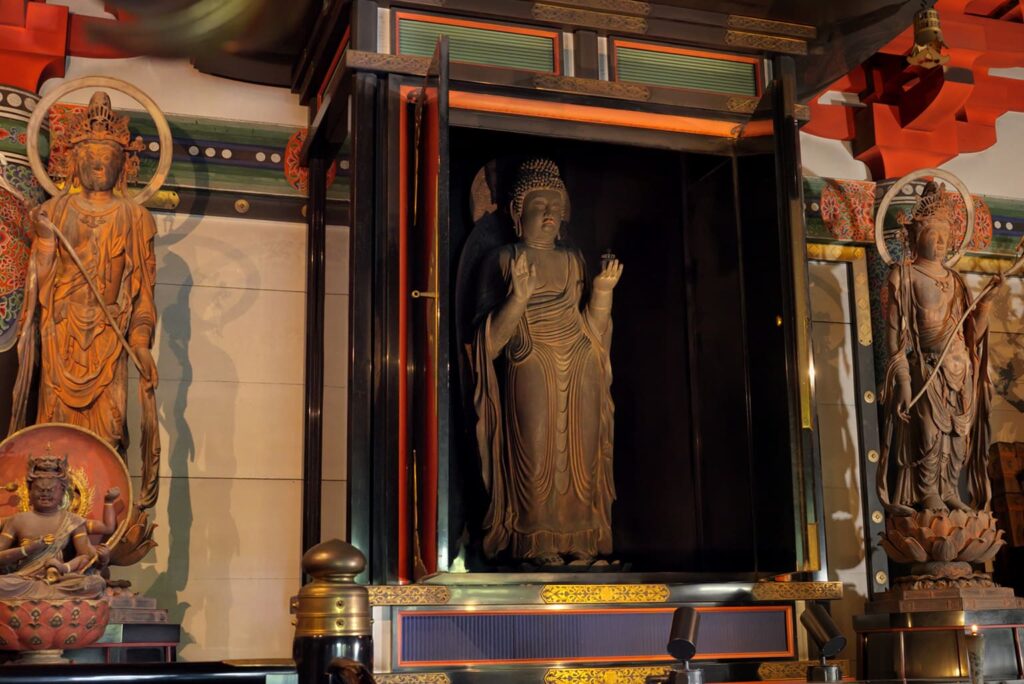
The companion statues of the bodhisattvas Nikkō (Suryaprabha) and Gakkō (Candraprabha) flank the principal image of the buddha Yakushi (Bhaisajyaguru) at Jingoji Temple. All three statues are thought to have been made during the ninth century.
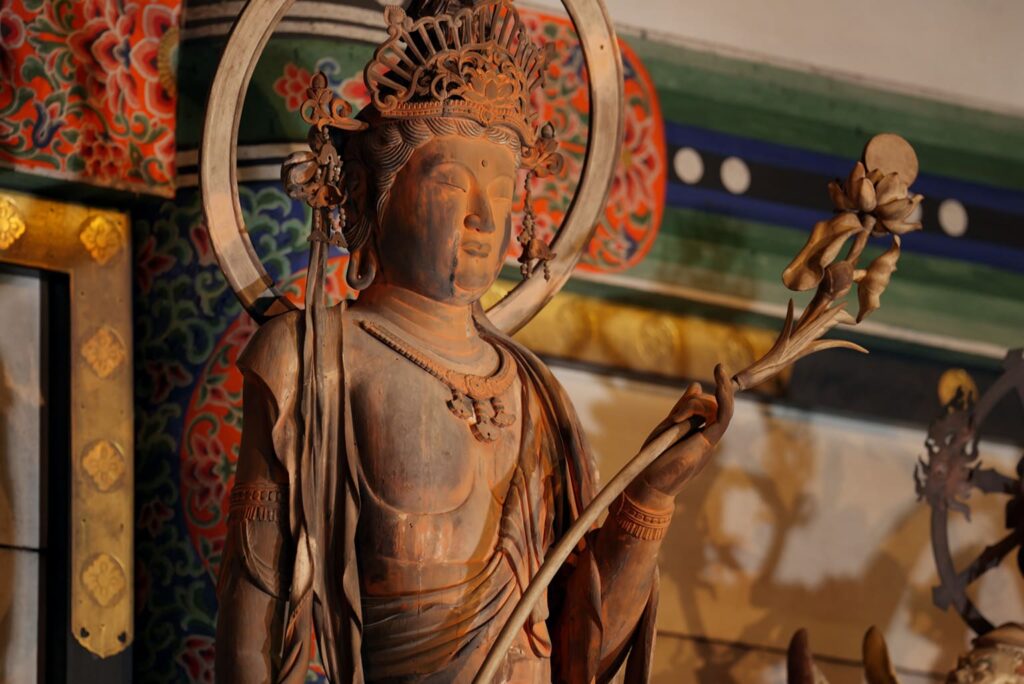
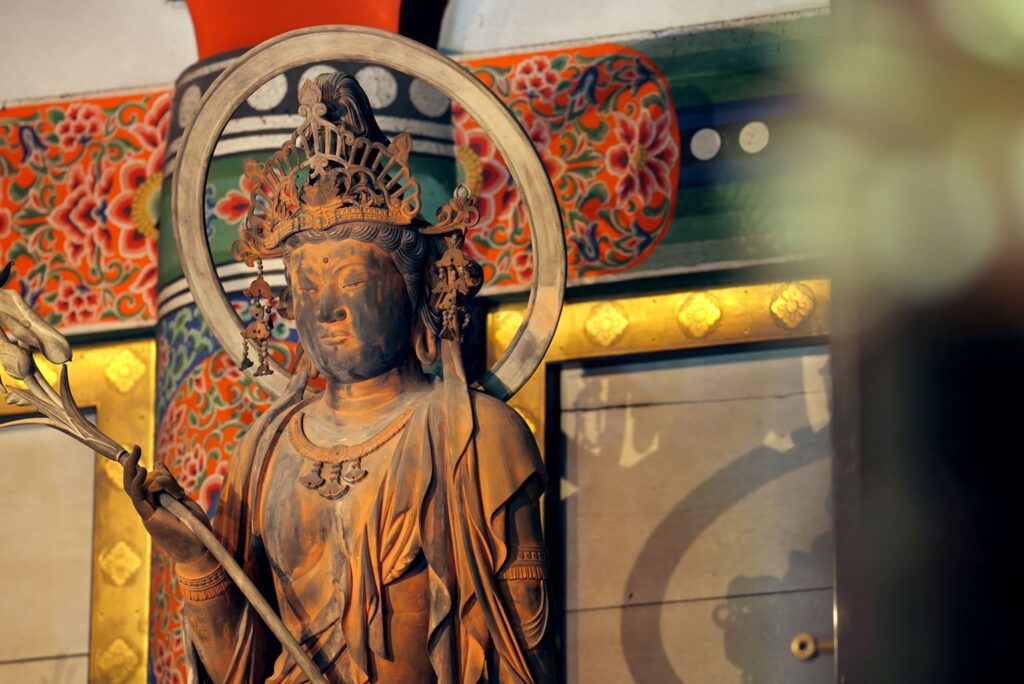
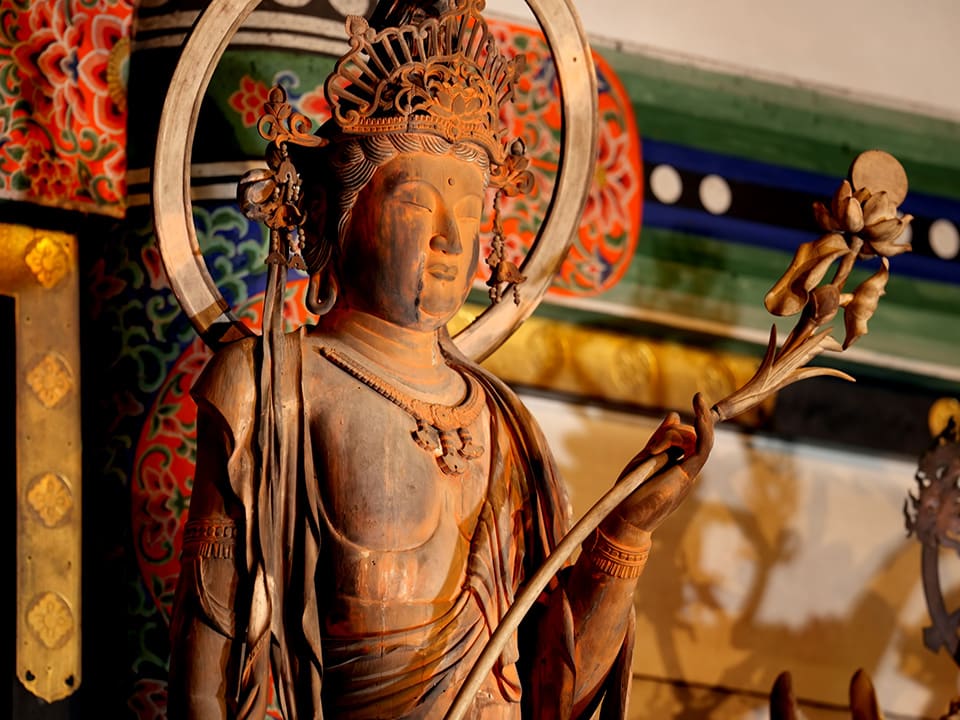
Nikkō and Gakkō stand on lotus thrones wearing jeweled crowns and heavenly garments, and each holds a long lotus stem. Atop the lotus stems, Nikkō holds the sun and Gakkō holds the moon.
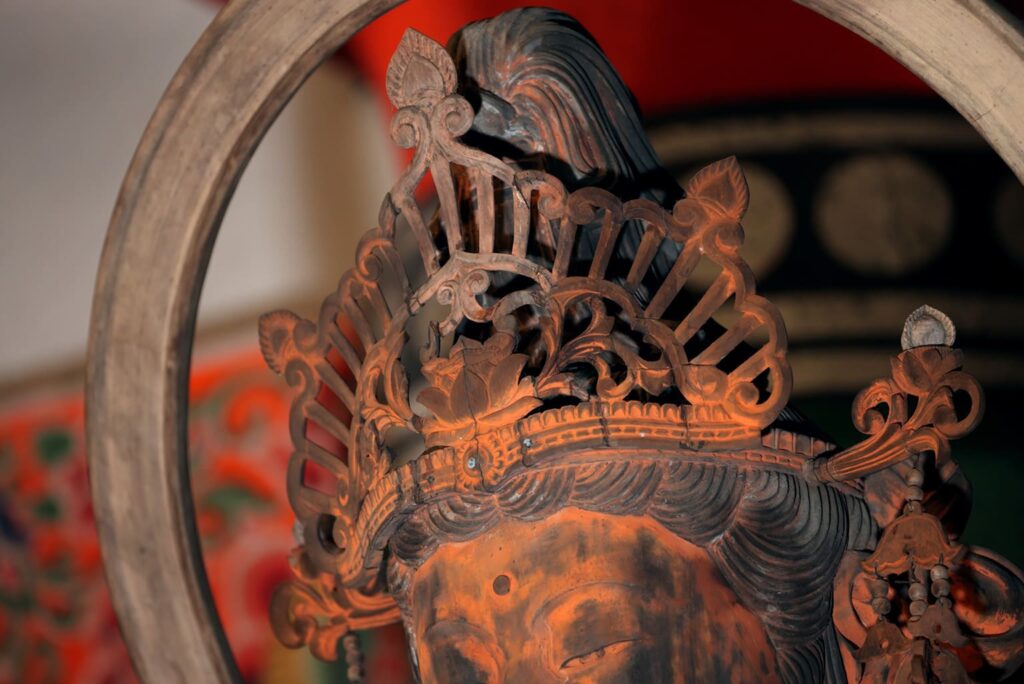
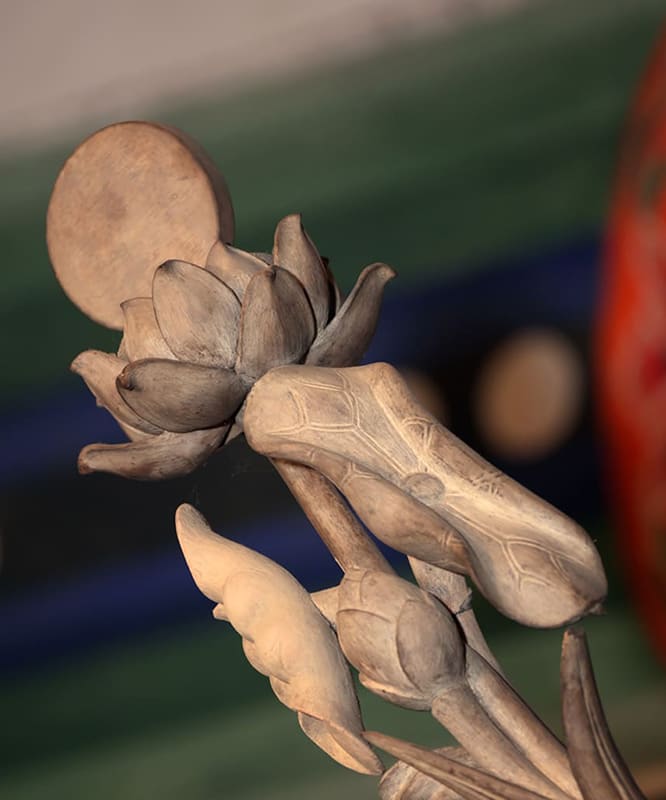
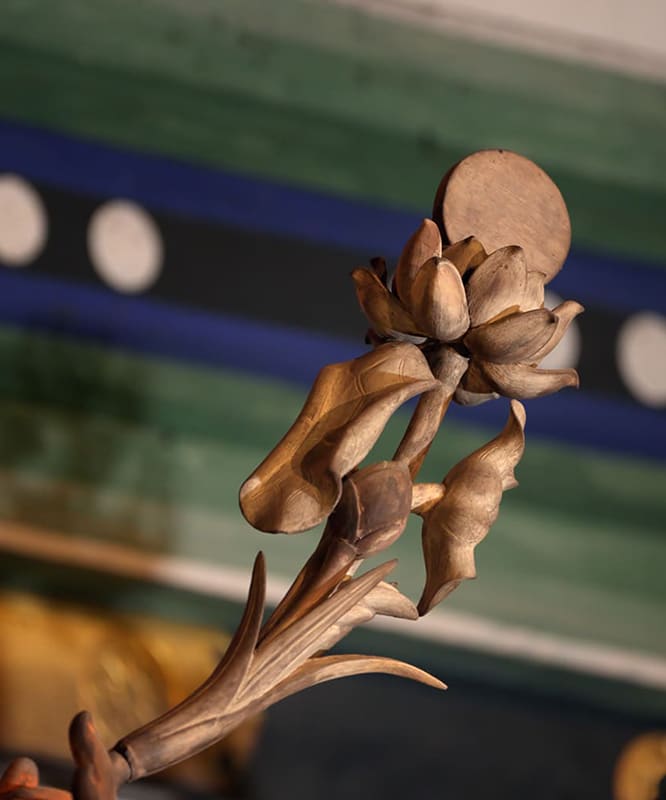
Both statues were originally carved from single blocks of wood, but parts of the statues have been damaged over time and repaired. The Nikkō statue is original from the waist down, and Gakkō from the knees down is original. The statues’ lower bodies have smooth surfaces with gentle lines and curves that contrast the more tense and rigid features of the Yakushi statue. The Nikkō and Gakkō statues have been carefully preserved as valuable examples of early Heian-period (794–1185) Buddhist sculpture.
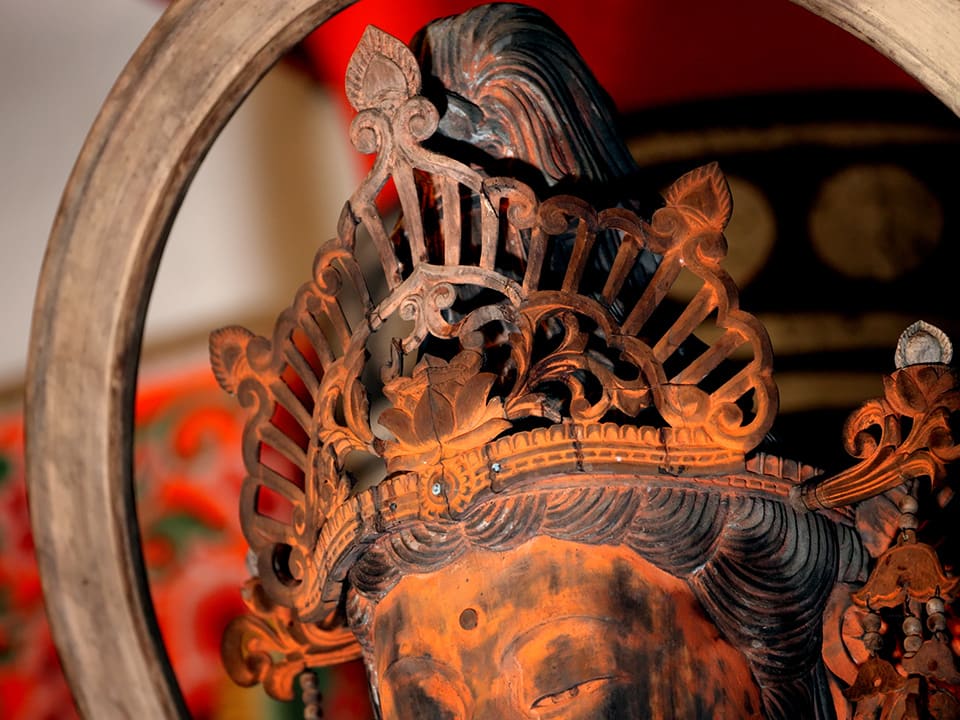
Coronet
This is a decorative crown placed on the head of Buddhist statues, especially statues of bodhisattvas.
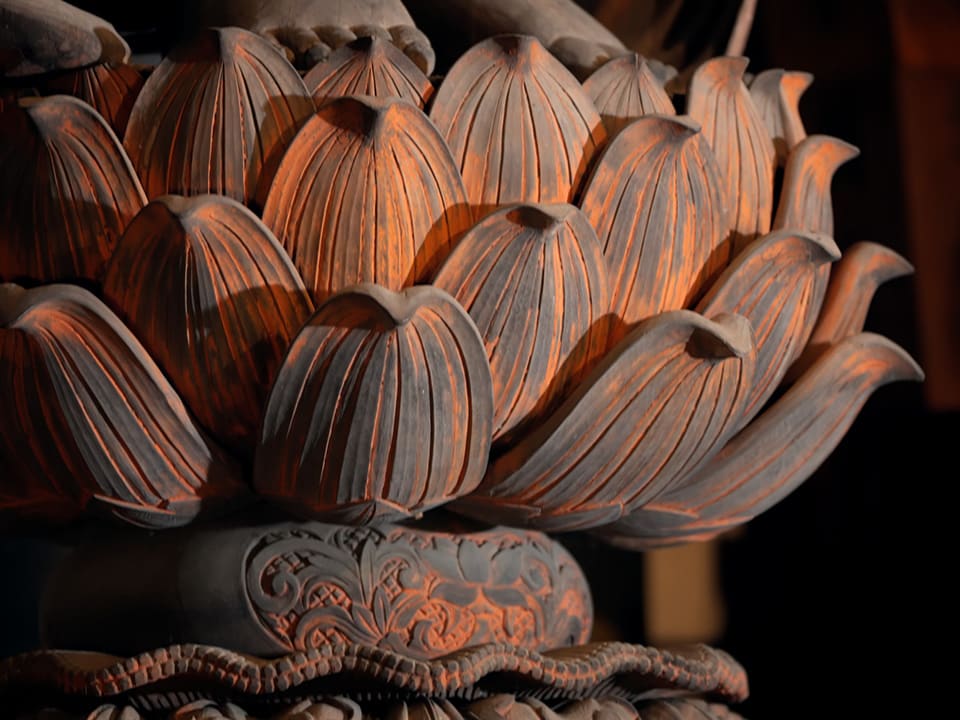
lotus position
Serving as a platform for enshrining the statue, featuring a motif resembling a lotus flower viewed from above. It is the most universal type of Buddhist seat.
heavenly shawl
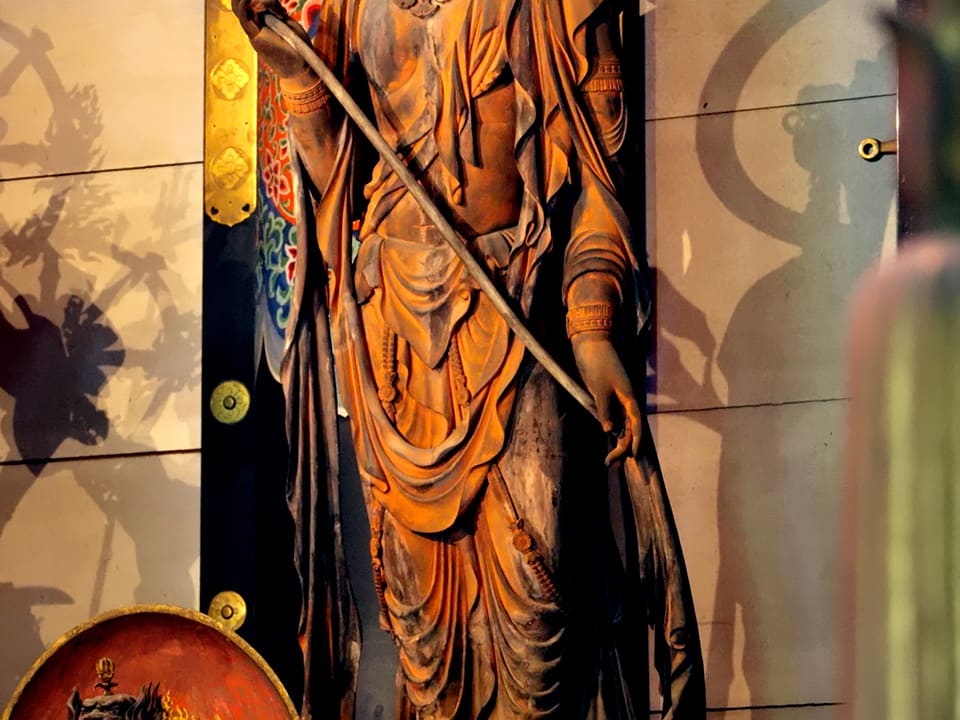
single-block wood carving (ichiboku-zukuri)
A wood carving technique where the main parts of the head and body of the statue are carved from a single piece of material.
Standing Statue of Gakkō
An attendant figure of Yakushi Nyorai. Positioned to the right of the Nyorai, facing the Nikko Bosatsu on the left. This bodhisattva symbolizes the light of the moon.
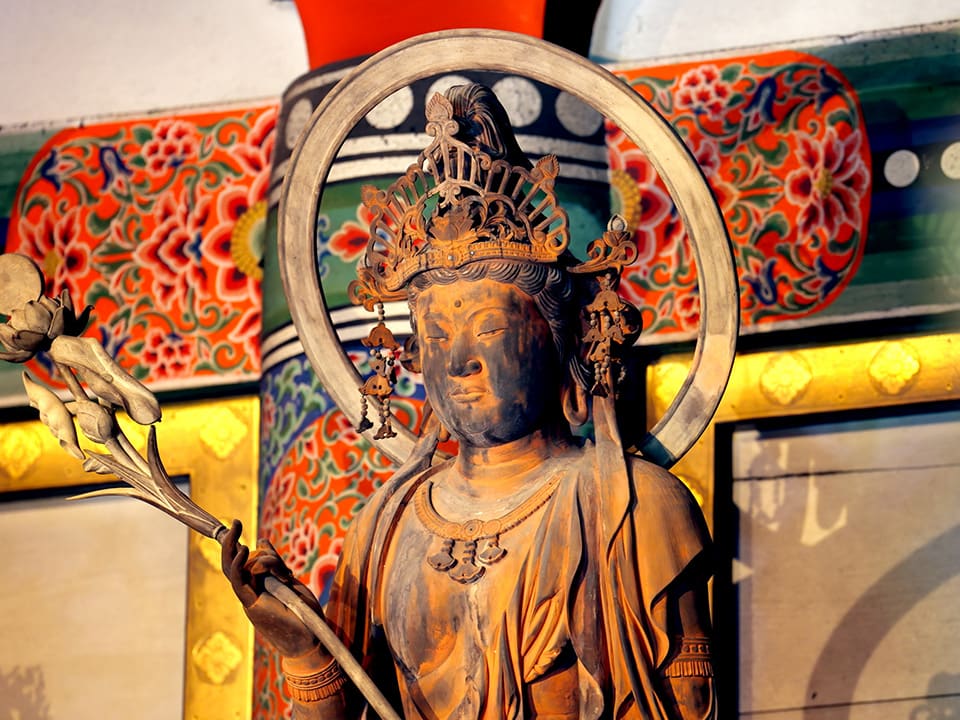
Standing Statue of Nikkō
An attendant figure of Yakushi Nyorai. Positioned to the left of the Nyorai, facing the Gakko Bosatsu on the right. This bodhisattva is believed to possess the virtue of illuminating the darkness of samsara, akin to the way sunlight dispels all shadows, thereby offering salvation to all beings.
Heian period
The Heian period lasted for approximately 400 years between the transfer of the capital to Heian-kyo (present day Kyoto) by Emperor Kanmu in 794 and the foundation of the Kamakura Shogunate in 1185. The period is often divided into three sections: the Early, Mid- and Late Heian periods. In other words, the period of reviving the political system based on Ritsuryo codes, the regency period and the Insei period (governed by a retired emperor), respectively. (The end of the Late Heian period was ruled by the Taira clan.) Also referred to as the period of the Heian imperial court.
MOVIE
Experience the video to get one step closer.
This video, accompanied by narration, introduces the charms of Standing Statues of the Bodhisattvas Nikkō and Gakkō. Experience its charms even more deeply through the video.
Duration: (audio included)


Please take part in the survey.
Takes about 30 seconds