Important Cultural Property
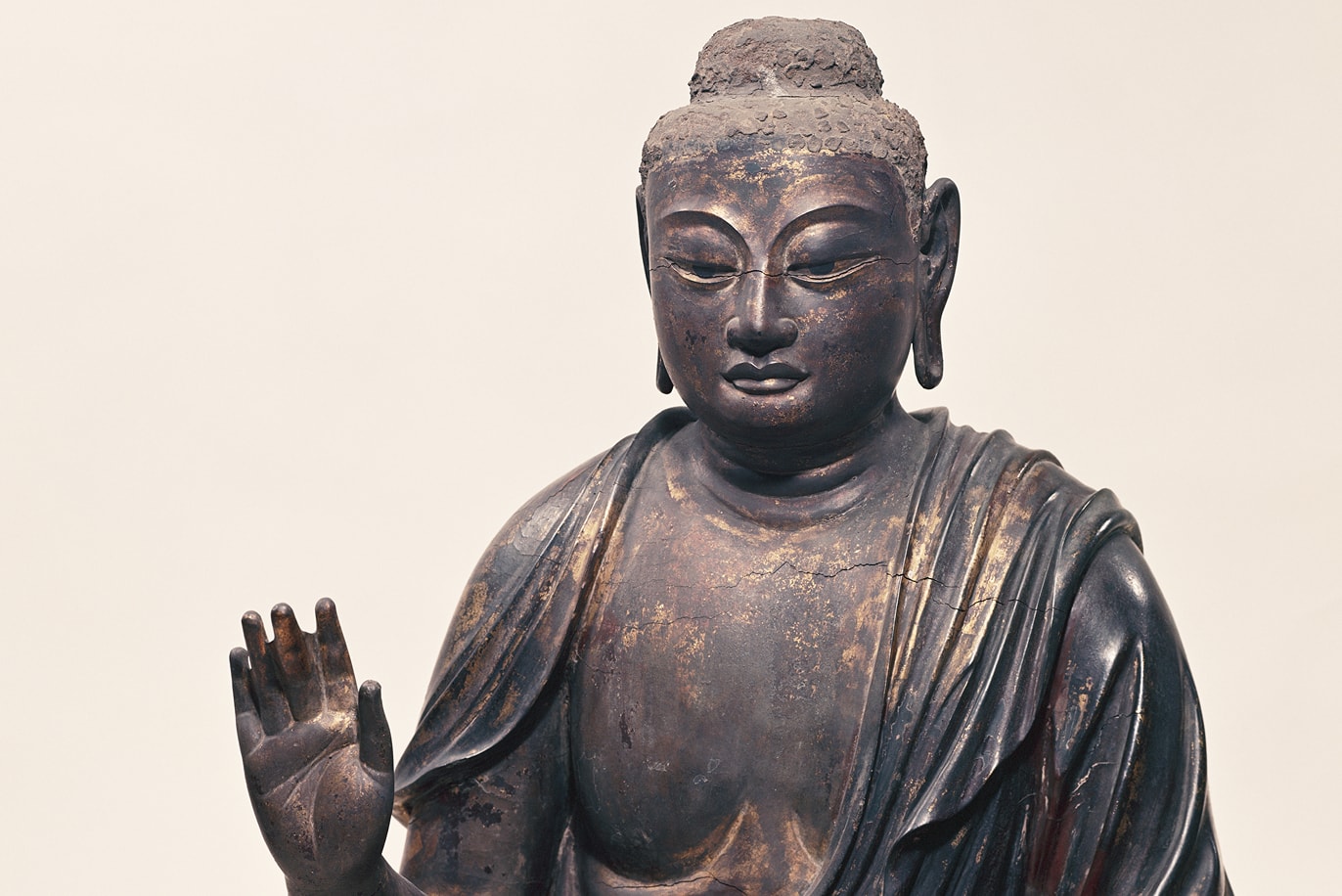
Dry Lacquered Seated Statue of Yakushi (Bhaisajyaguru)
Nara period
Dry lacquer over a wooden core, lacquer-gilt (gold leaf)
1 figure
Statue height: 68.3 cm
This article can be read in about 2 minutes.
Nara Period
prayer and transcendence
within a small figure
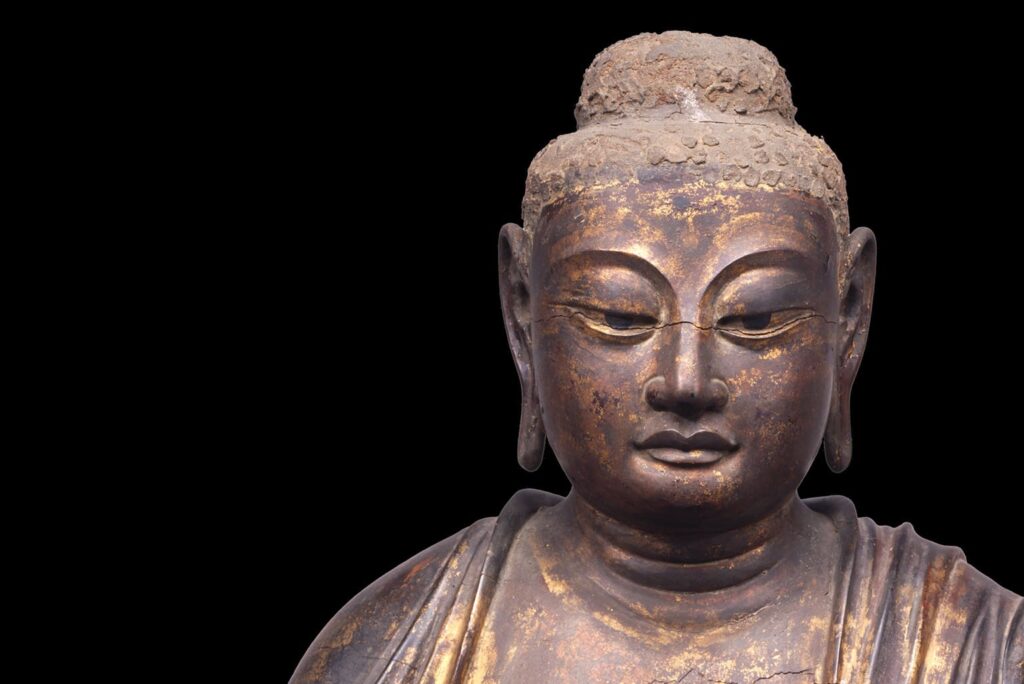
Although it is only 68.3 centimeters tall, this relatively small statue of the buddha Yakushi (Bhaisajyaguru) has a powerful presence. It was made during the Nara period (710–794) with the mokushin kanshitsuzō (wood-core dry lacquer) technique, in which the core of a statue is carved out of wood and is then covered in multiple layers of hemp cloth and lacquer to create the final shape.
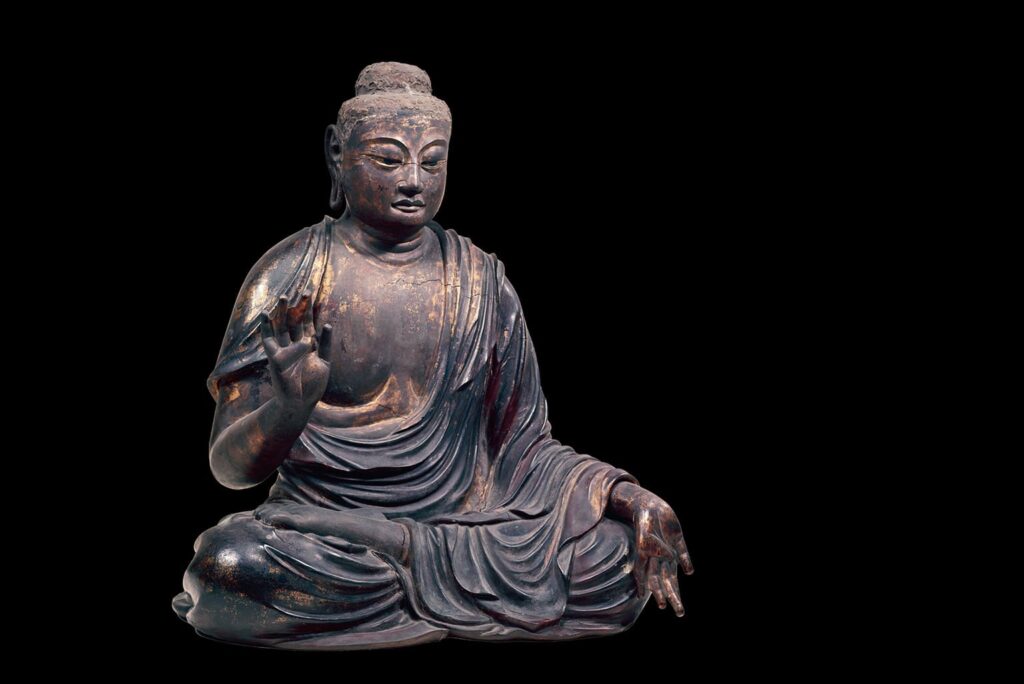
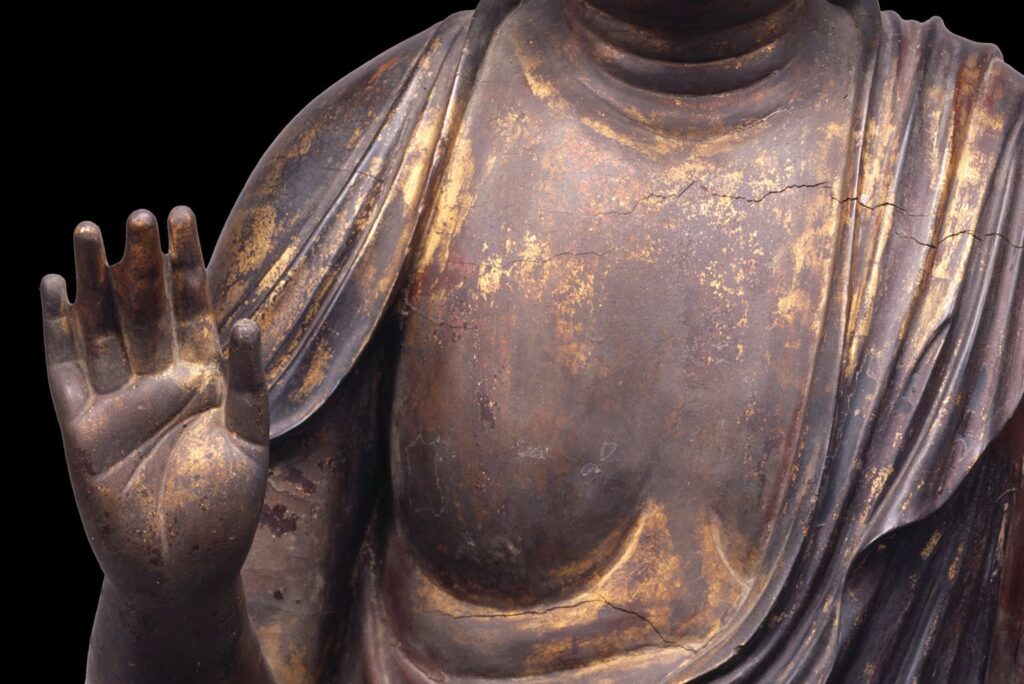
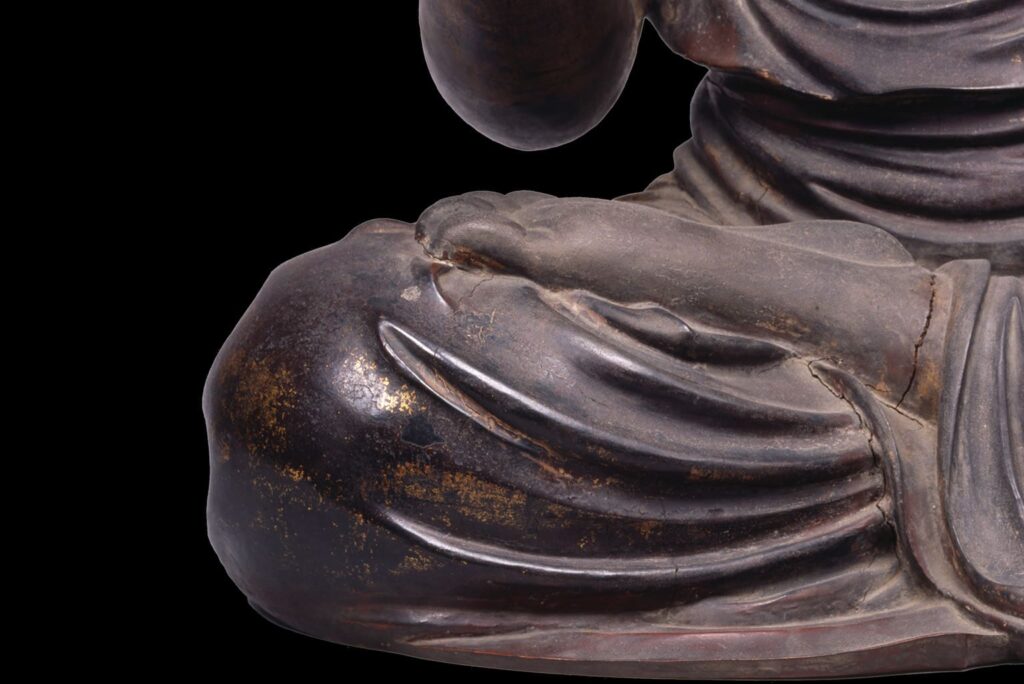
The statue follows an older iconographic style, in which Yakushi, the Medicine Buddha, does not hold a medicine jar in his left hand. The statue exhibits exaggerated features, such as large, sharply defined eyes, long, drooping hands, and rippling folds in the robes. It is believed that this depiction of Yakushi symbolizes the fulfillment of prayers through the transcendence of Esoteric Buddhism.
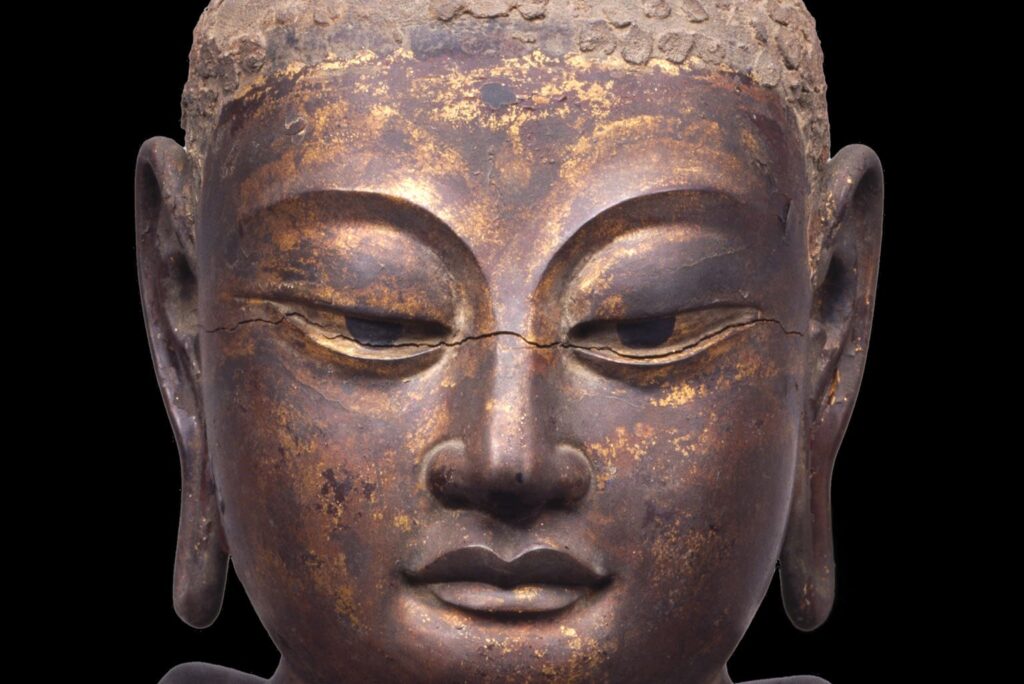
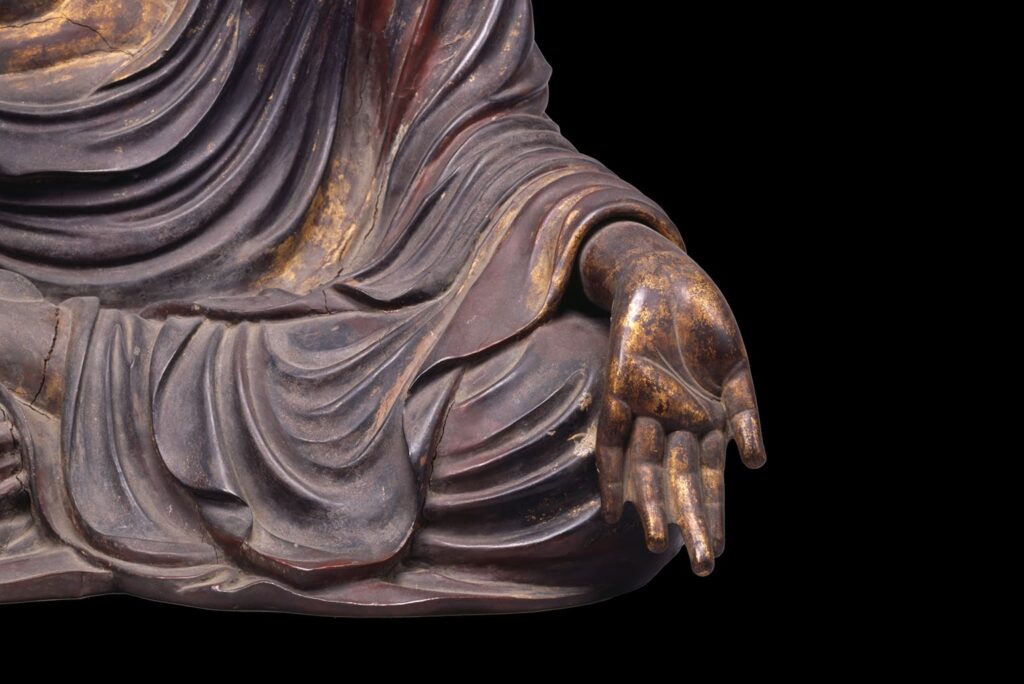
Although the origins of the statue are unknown, it may have been enshrined in Takaosanji Temple, which stood in the area before Jingoji Temple was established in 824. As such, this statue is a valuable relic that speaks to the long history of the Jingoji Temple.
Takaosanji Temple
This is a private temple founded by Wake no Kiyomaro (733–799) in the early Heian period (794–1185). It is a holy site used as an ascetic mountain training ground, and the prominent Buddhist religious figures Saichō (767–822) and Kūkai (774–835) refined their knowledge here. Takaosanji was consolidated with nearby Jinganji Temple to form the precursor to Jingoji Temple.
medicine jar
This is one of several religious implements held by Buddhist statues. It is a symbol of the buddha Yakushi.
mokushin kanshitsu-zukuri lacquer technique
The technique involves carving the basic shape of the statue from wood, overlaying it with hemp cloth, and then applying layers of fragranced or wood powder lacquer to complete it. The inner wooden core remains intact within the statue.
Nara period
Refers to the period between 710 and 784 when the capital was moved to Heijo-kyo, present day Nara. Lasting a little over 70 years the period saw the reign of seven emperors: Genmei, Gensho, Shomu, Kenko, Junnin, Shotoku, and Konin. In art history, the Nara period is sometimes referred to as the Tenpyo period, and is marked by the splendour of the Buddhist statuary and architecture produced.
MOVIE
Experience the video to get one step closer.
This video, accompanied by narration, introduces the charms of Dry Lacquered Seated Statue of Yakushi (Bhaisajyaguru). Experience its charms even more deeply through the video.
Duration: (audio included)


Please take part in the survey.
Takes about 30 seconds