Important Cultural Property
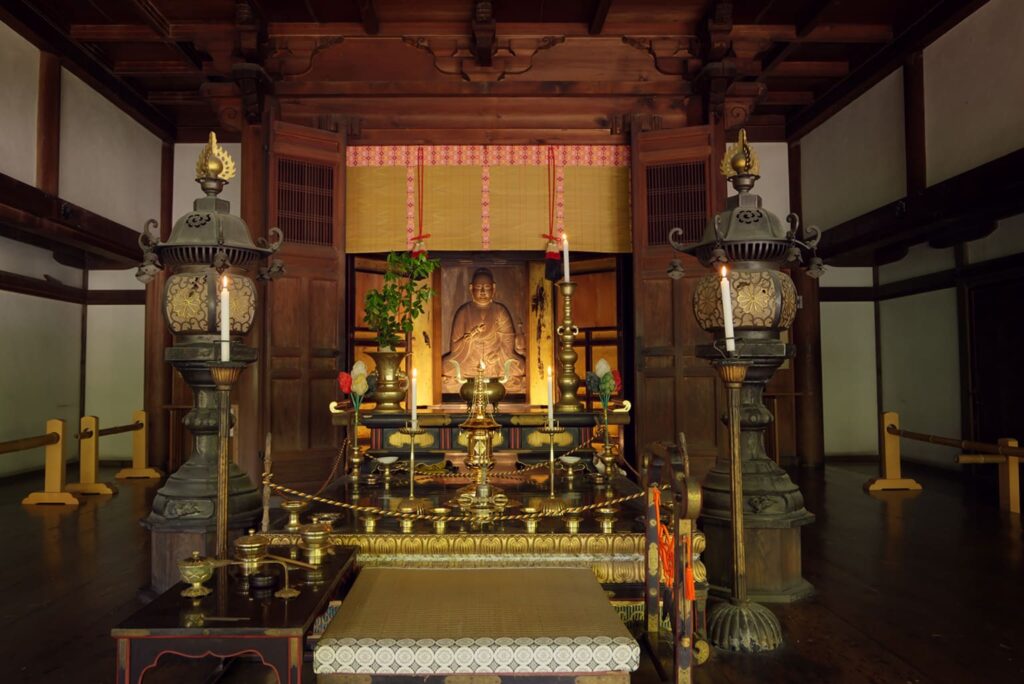
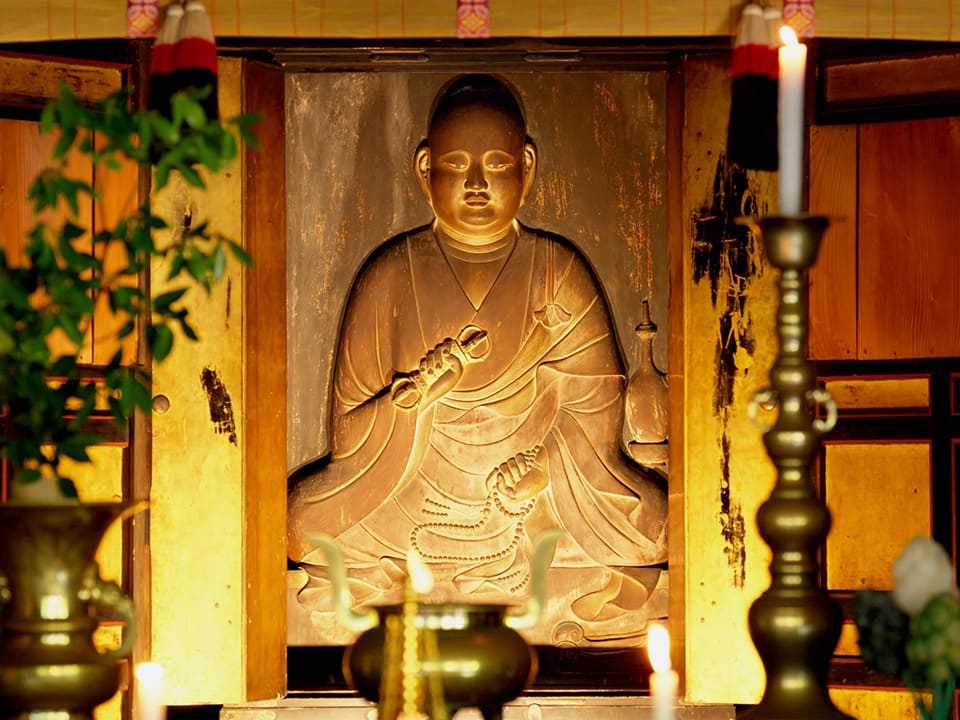
Image of Kōbō Daishi Carved in Relief
Kamakura period (1302)
Wood, polychrome
Total height: 136.7 cm
Enshrined in Daishidō Hall
This article can be read in about 2 minutes.
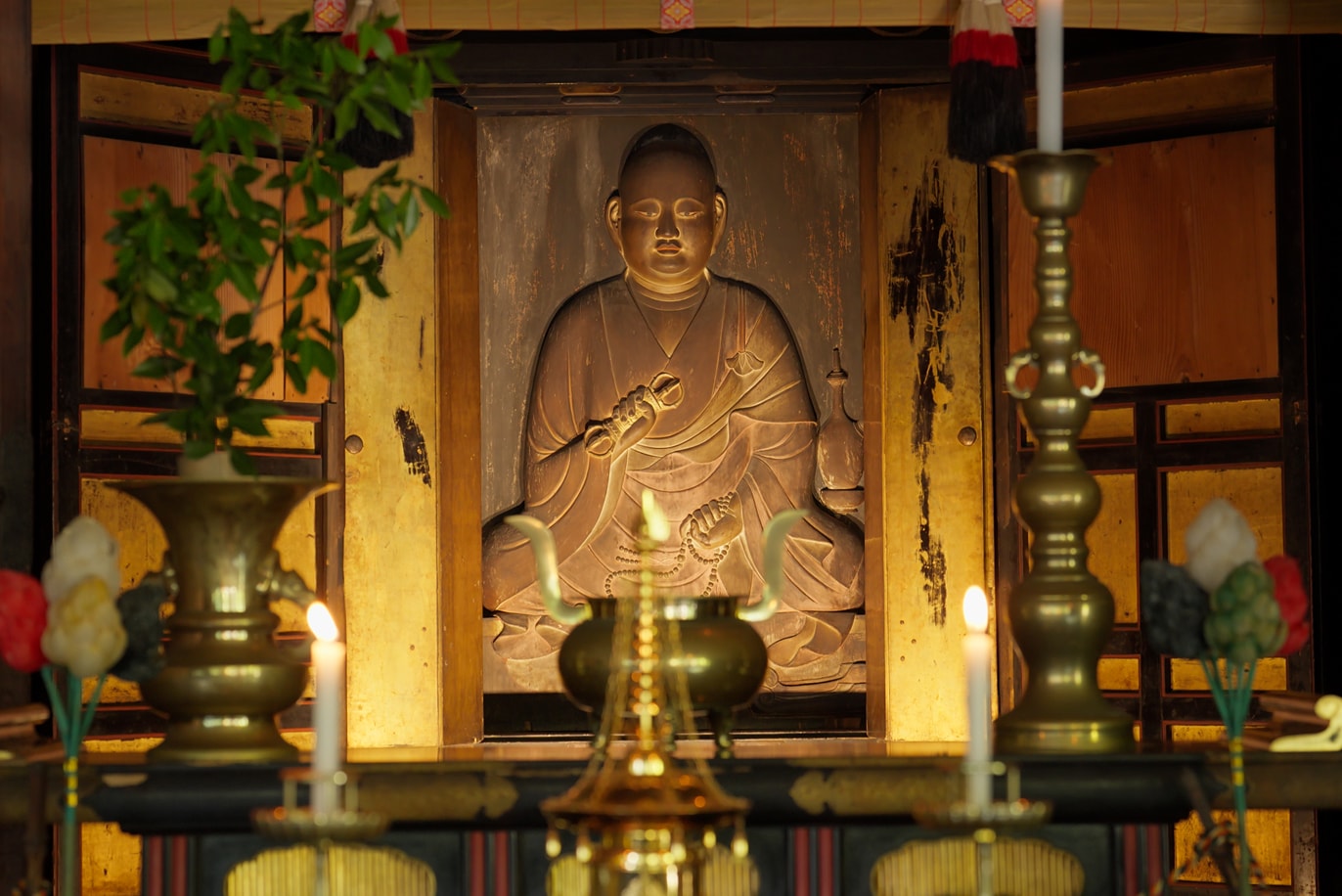
Kamakura craftsmanship
carved the likeness of Kobo Daishi
The Buddhist artist Jōki carved this image of Kōbō Daishi (774–835), the founder of the Shingon school of Buddhism, out of wood in 1302. It is enshrined in Daishidō Hall, which was built on the ruins of the Dōryōbō priests’ quarters where Kōbō Daishi once resided.
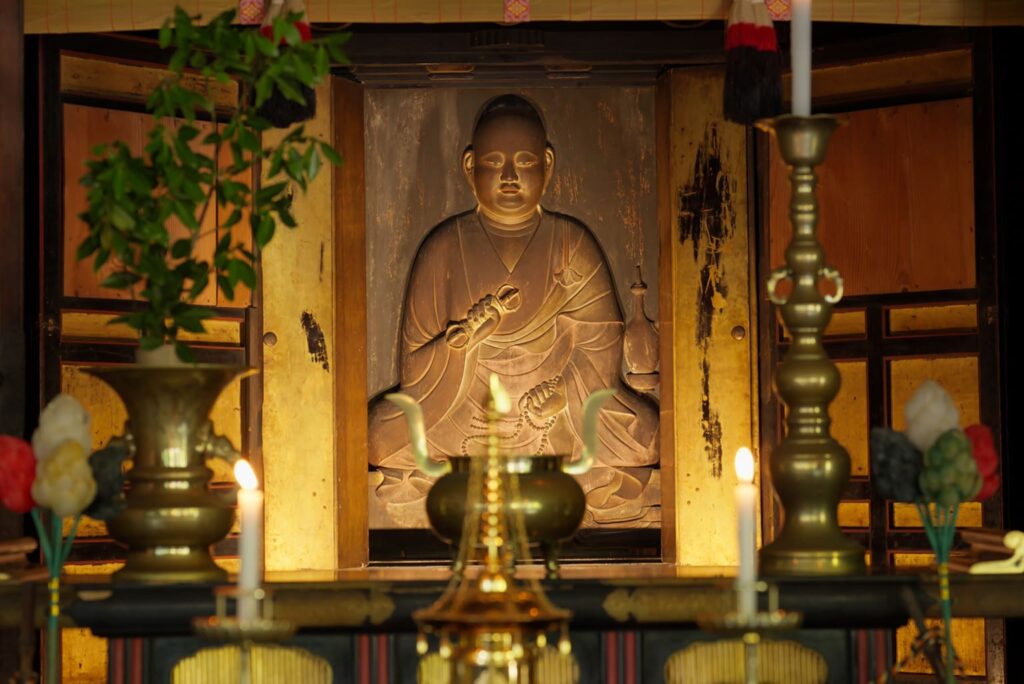
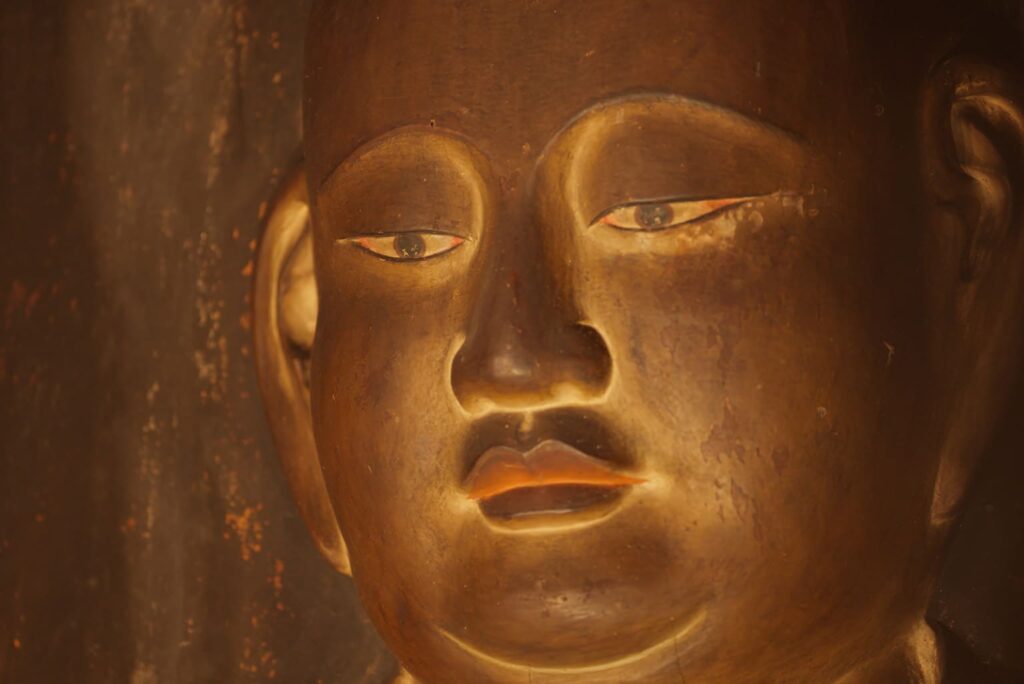
According to tradition, Prince Shōnin (1267–1304), the son of Emperor Go-Fukakusa (1243–1304), commissioned the carving while he was staying at Jingoji Temple. It was modeled after a statue of Kōbō Daishi enshrined at Kongōchōji Temple in Tosa Province. When the carving was completed, the prince had it enshrined at Gangyokuin Temple, the temple he had founded.
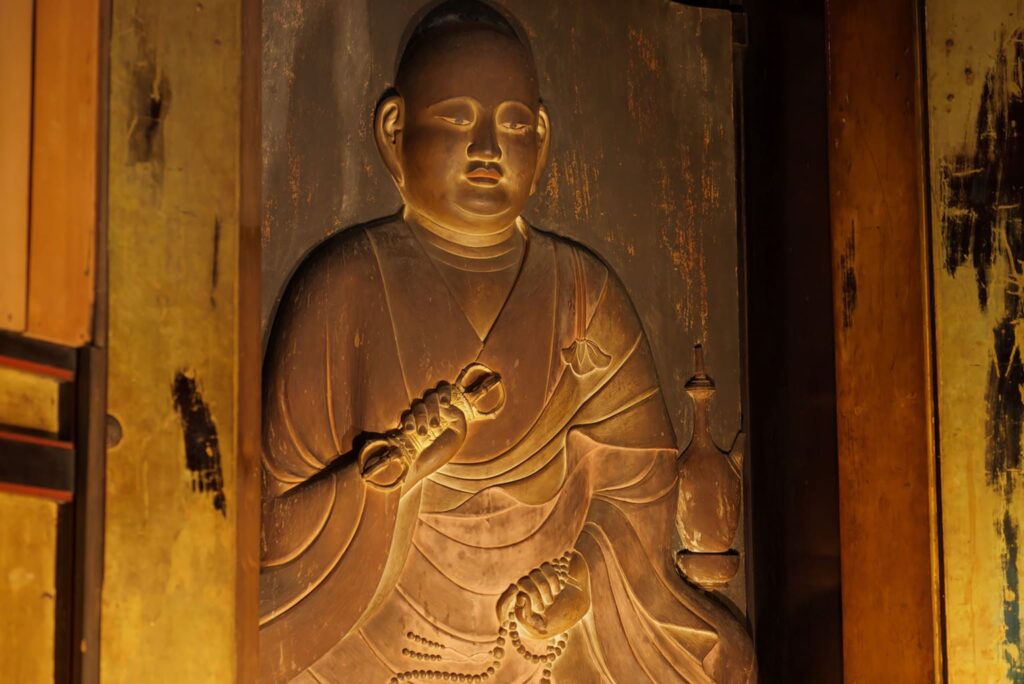
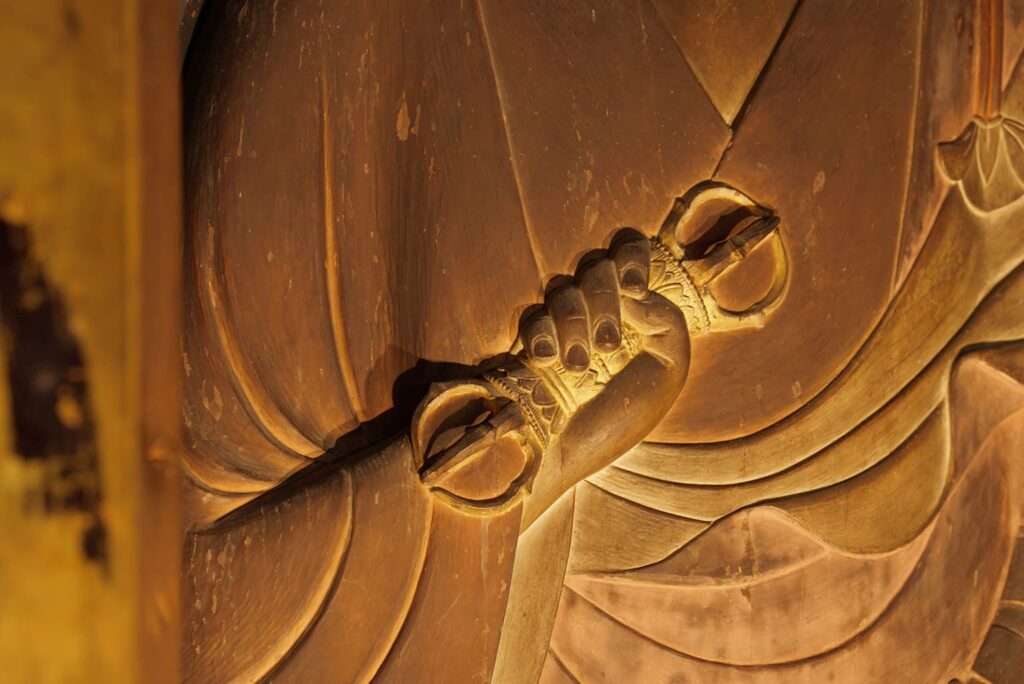
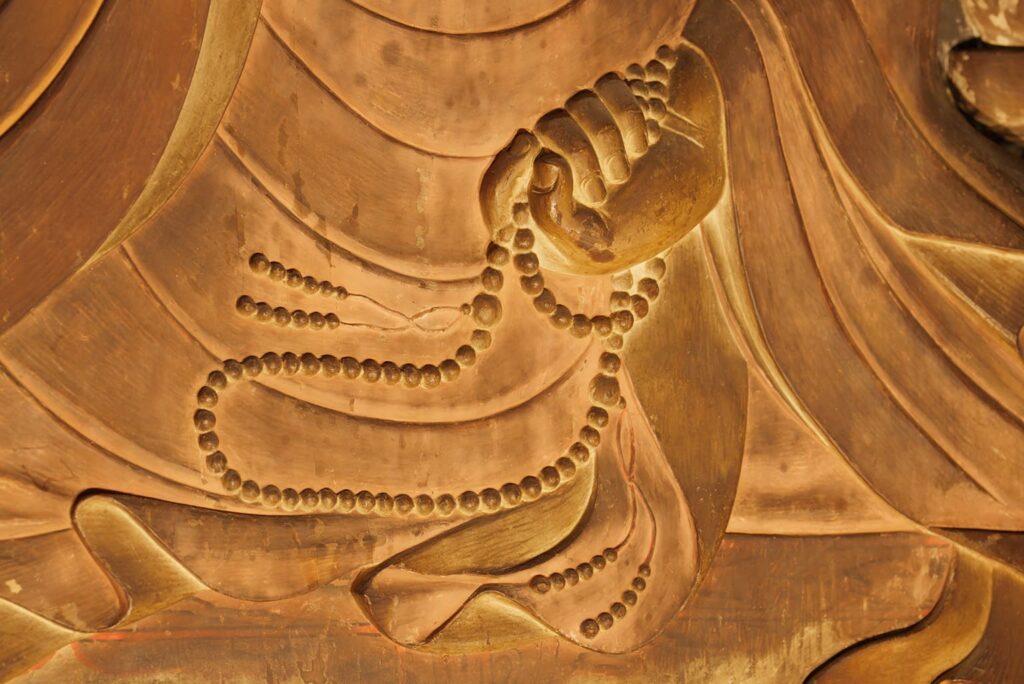
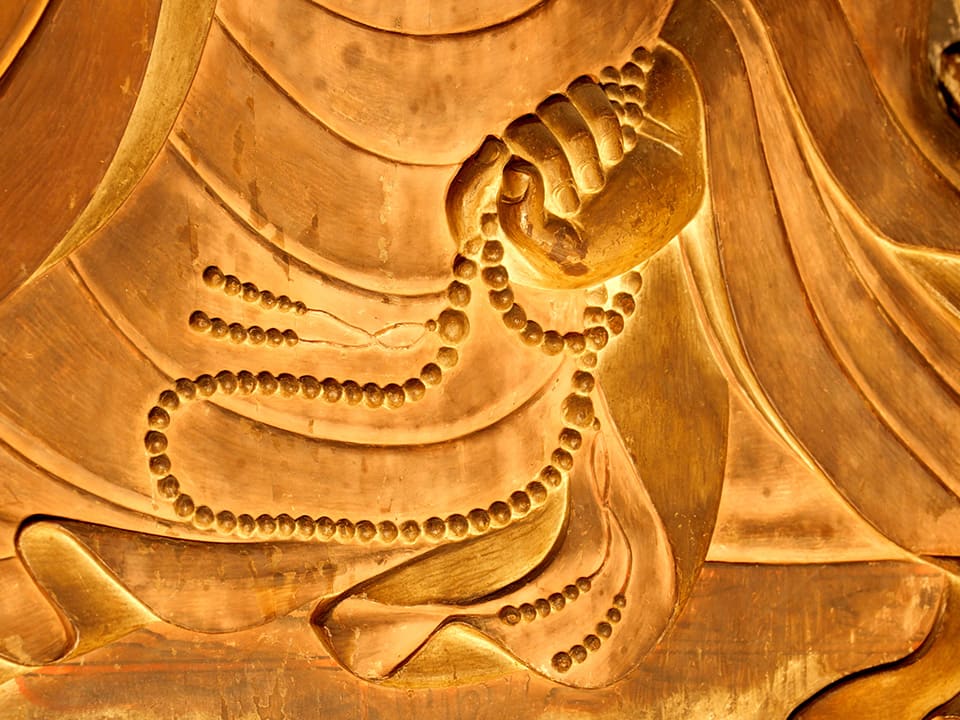
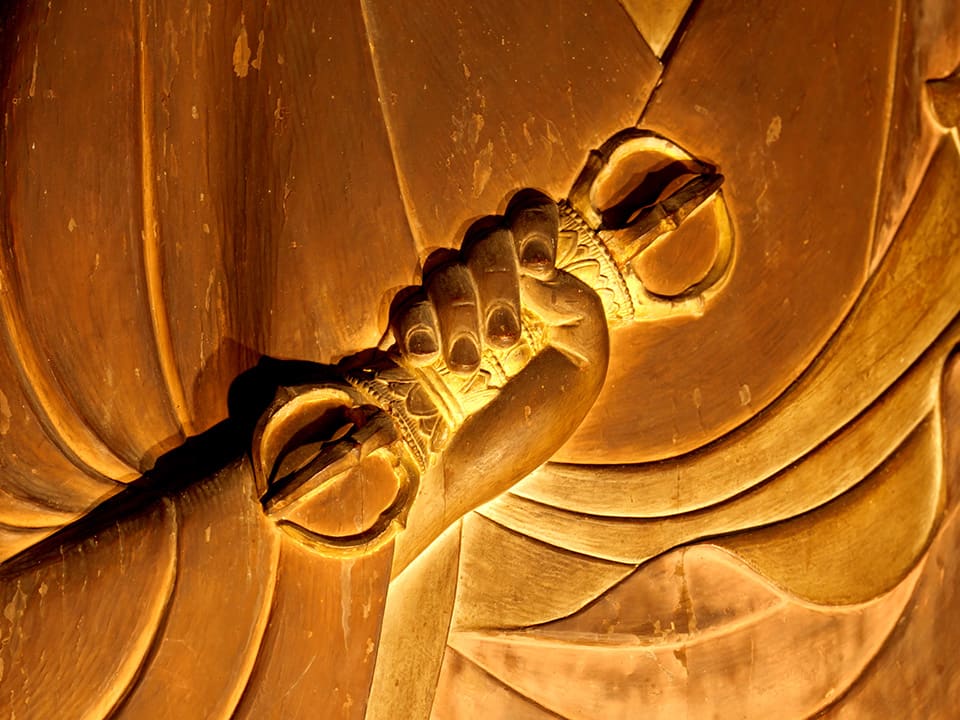
Intricate details, such as the five-pronged club and prayer beads, have been carved with painstaking precision, showcasing Jōki’s skill and artistry as one of the leading Buddhist artists of the Kamakura period(1185–1333).
Kamakura-period
The roughly 150-year period from the founding of the Kamakura shogunate by Minamoto no Yoritomo to the fall of the shogunate, marked by Hojo Takatoki’s suicide in 1333.
Juzu prayer beads
five-pronged club
Gangyokuin
This is a priests’ quarters built by Prince Shōnin (1267–1304) at Jingoji Temple. A statue of Kūkai (774–835) was carved and enshrined here in 1302.
Kongōchōji Temple
This is a Buddhist temple of the Shingon-Buzan sect located in Muroto, Kōchi Prefecture. It is the 26th site on the Shikoku 88 Temple Pilgrimage.
Tosa
The former name of the province that once stretched across what is now Kōchi Prefecture.
Prince Shōnin
Prince Shōnin (1267–1304) was a member of the imperial family in the Kamakura period (1185–1333). He was the fourth son of Emperor Go-Fukakusa (1243–1304). He was heavily involved in Buddhist temple administration as a cloistered imperial prince. His tomb at Jingoji Temple lies next to the tomb of Saint Mongaku.
Emperor Go-Fukakusa
Emperor Go-Fukakusa (1243–1304) was the 89th emperor of Japan and reigned from 1246 to 1259. He was the founder of the Jimyōin imperial line. He was an important figure in medieval Japan when the imperial line split in two, an event known as ryōtō tetsuritsu in Japanese. He was an exceptional poet. In his later years, entered the monastic life.
Dōryōbō Priests’ Quarters
A dwelling named and used by the prominent priest Kūkai (774–835). He lived here for over fourteen years.
Jōki
A Buddhist sculptor active at the beginning of the Kamakura period (1185–1333).
Kūkai (Kōbō Daishi)
A Heian Era priest (774-835). Also known as Kobo Daishi. He is the founder of the Shingon sect and one of the three great calligraphers of the day.
MOVIE
Experience the video to get one step closer.
This video, accompanied by narration, introduces the charms of Image of Kōbō Daishi Carved in Relief. Experience its charms even more deeply through the video.
Duration: (audio included)


Please take part in the survey.
Takes about 30 seconds