Kondō Hall
1935
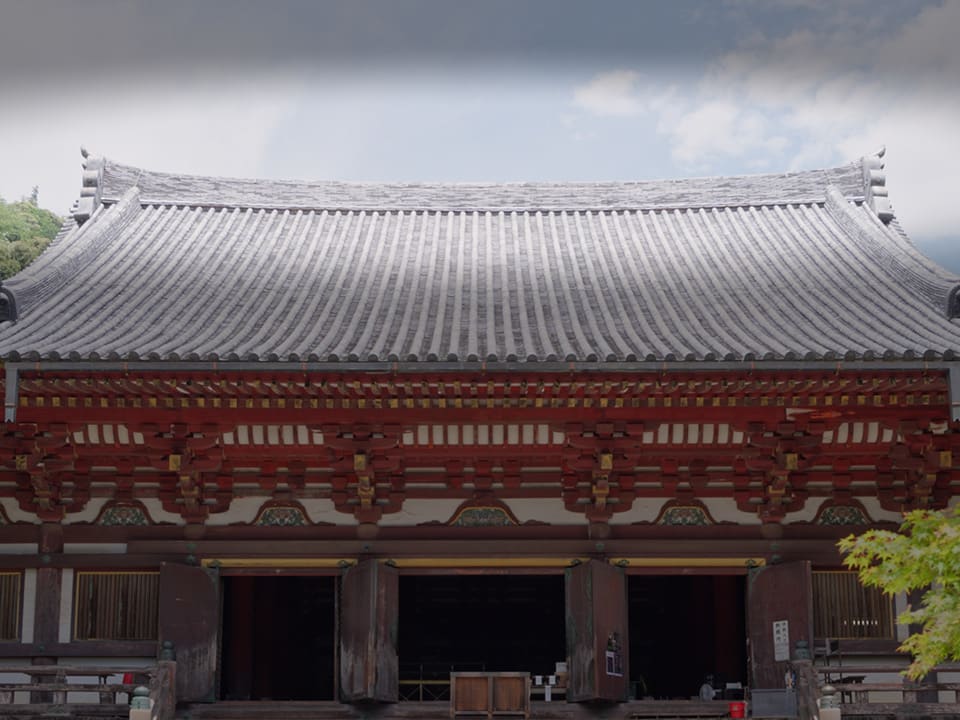
hip-and-gable style (irimoya-zukuri)
tiled roof (hongawarabuki)
Frontage width: Over 20 m
This article can be read in about 2 minutes.
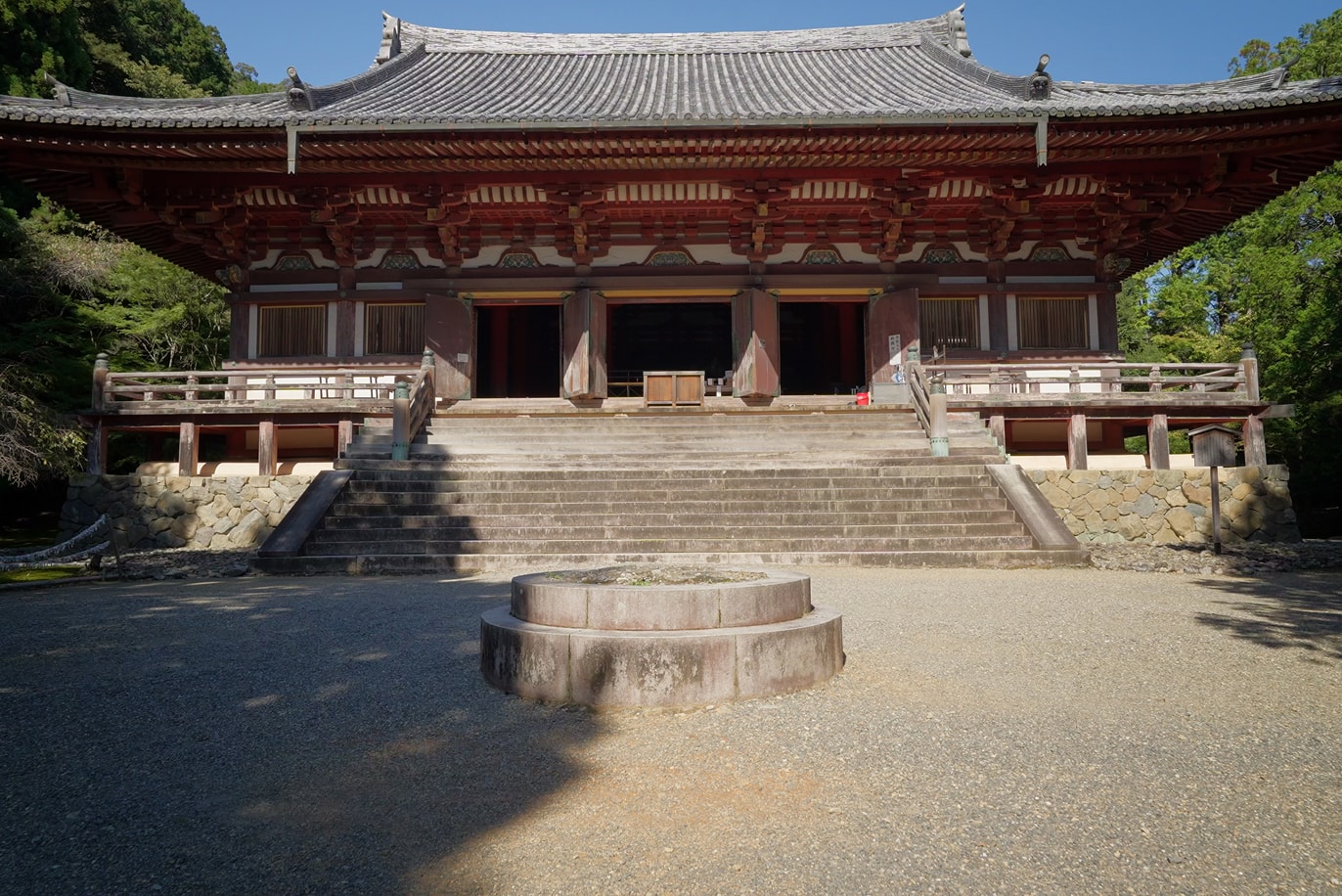
The heart of this ancient temple
brilliant in vermillion and white
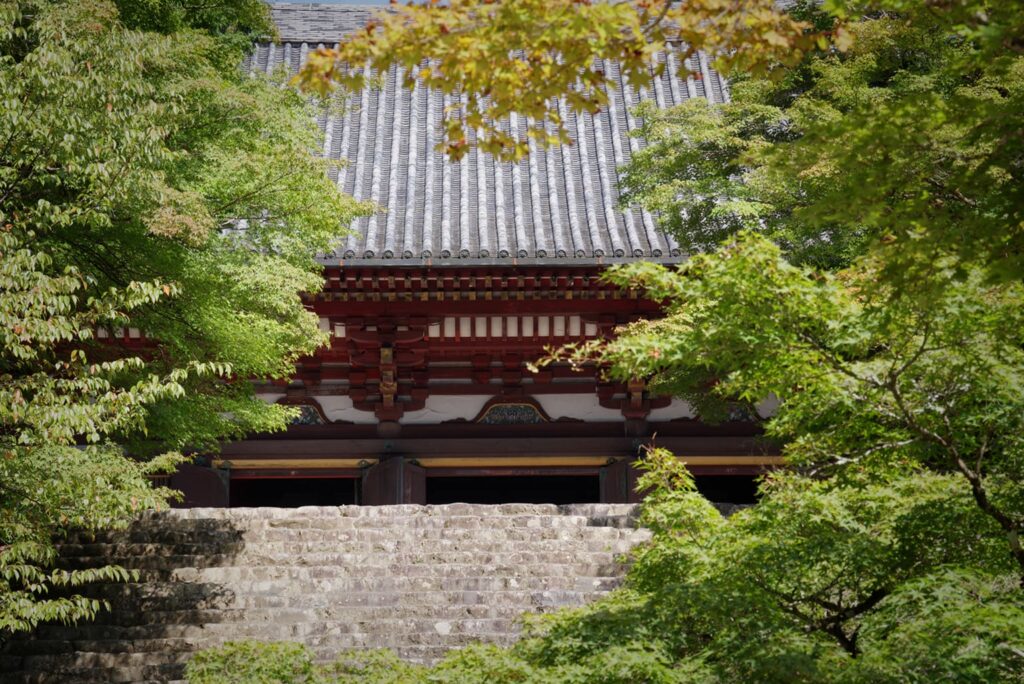
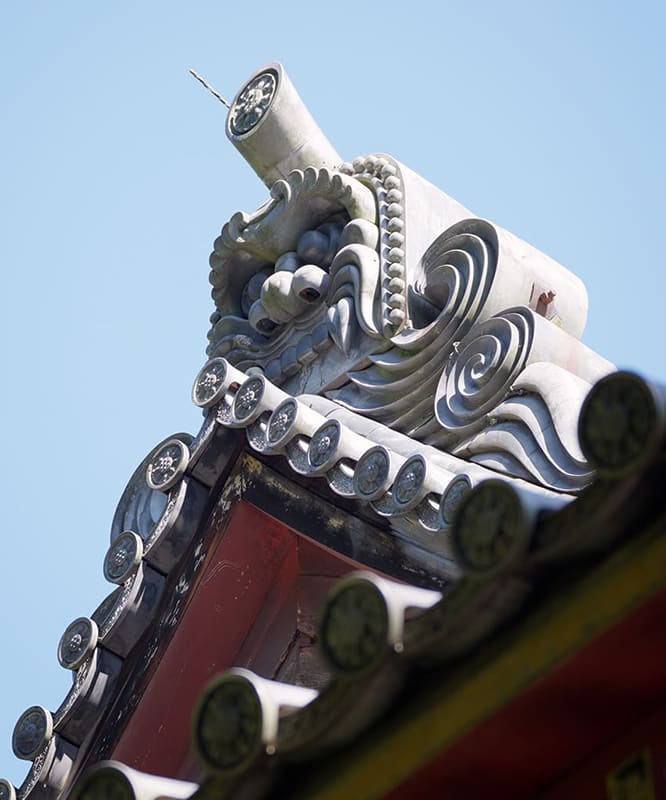
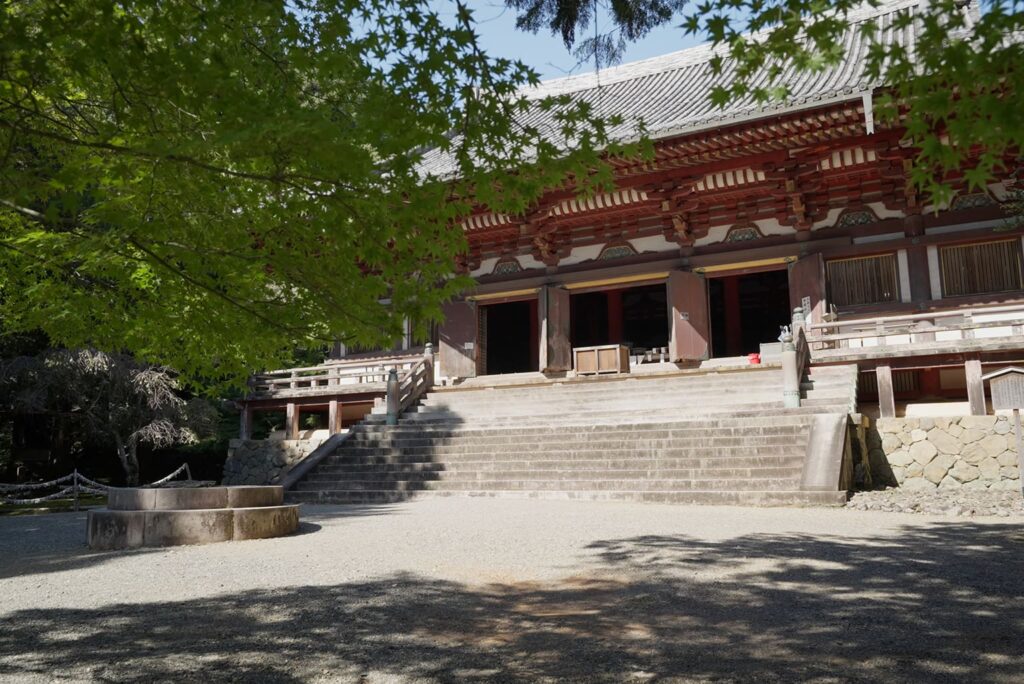
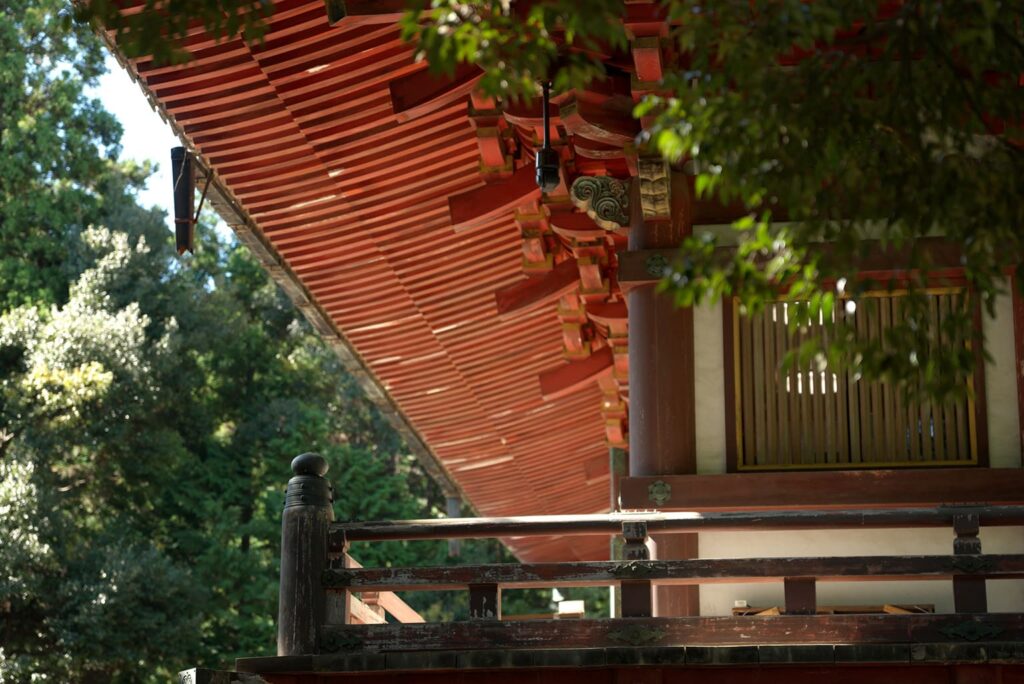
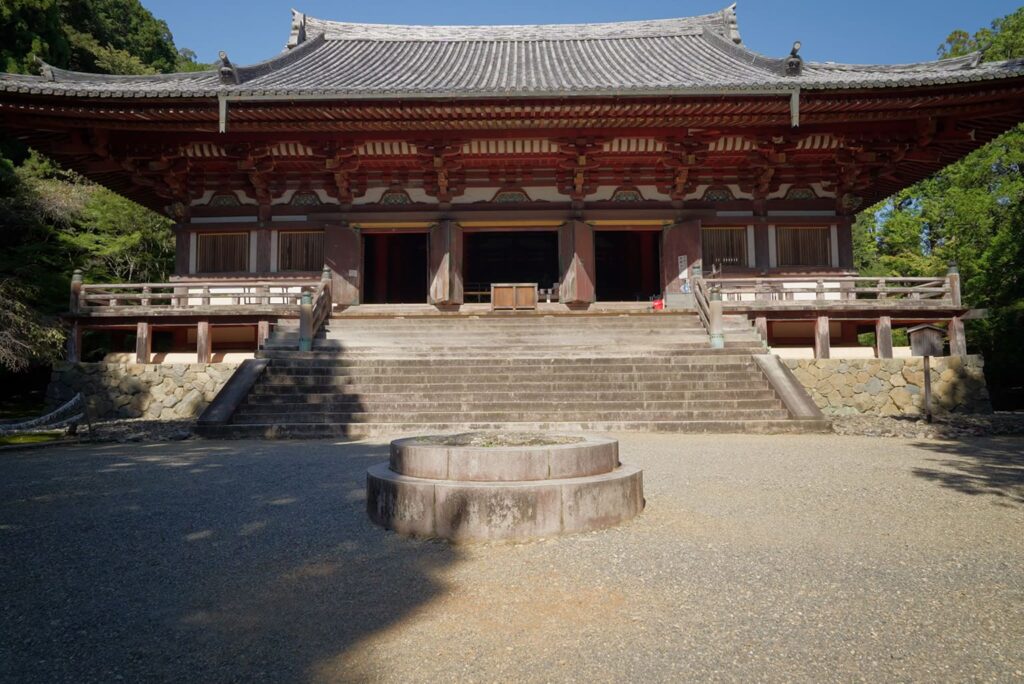
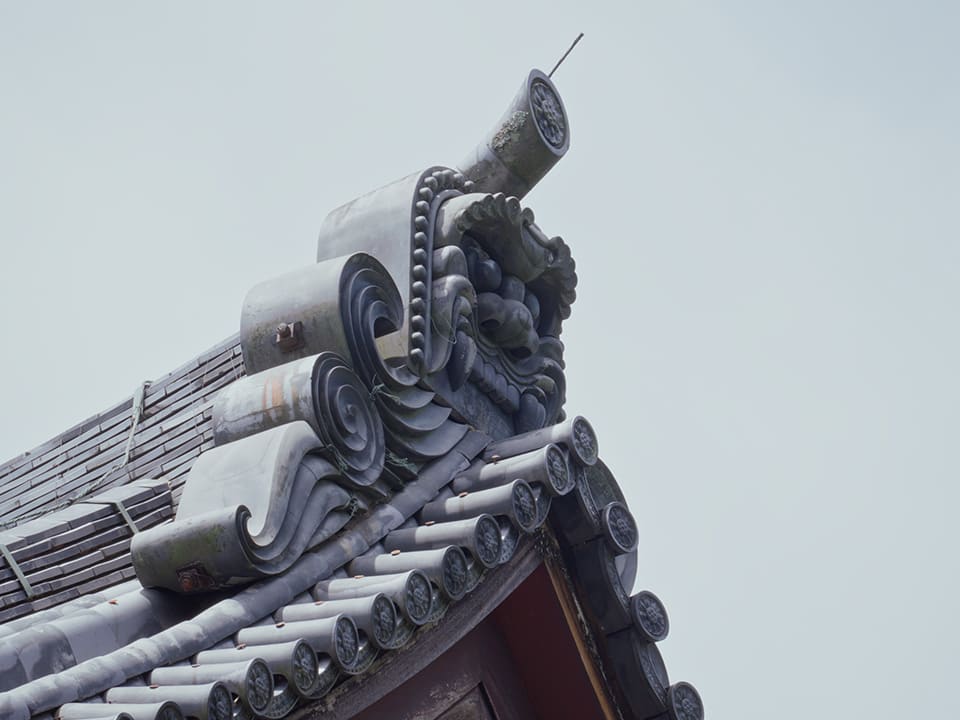
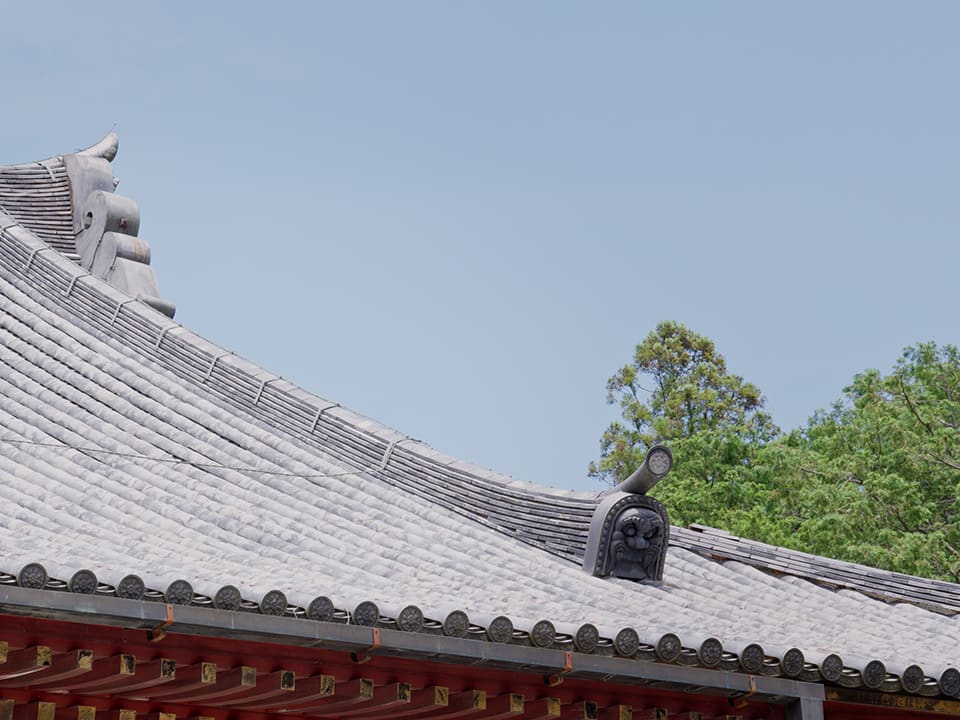
The Kondō Hall stands at the center of Jingoji Temple's grounds at the top of a long stone staircase. It is a large building with a hip-and-gable roof covered in traditional Japanese tiles, including a large demon-faced tile set atop the roof’s main ridge. In the spring and autumn, the Kondō Hall’s vermilion-lacquered pillars and white walls stand out strikingly among the cherry blossoms and red foliage, respectively.
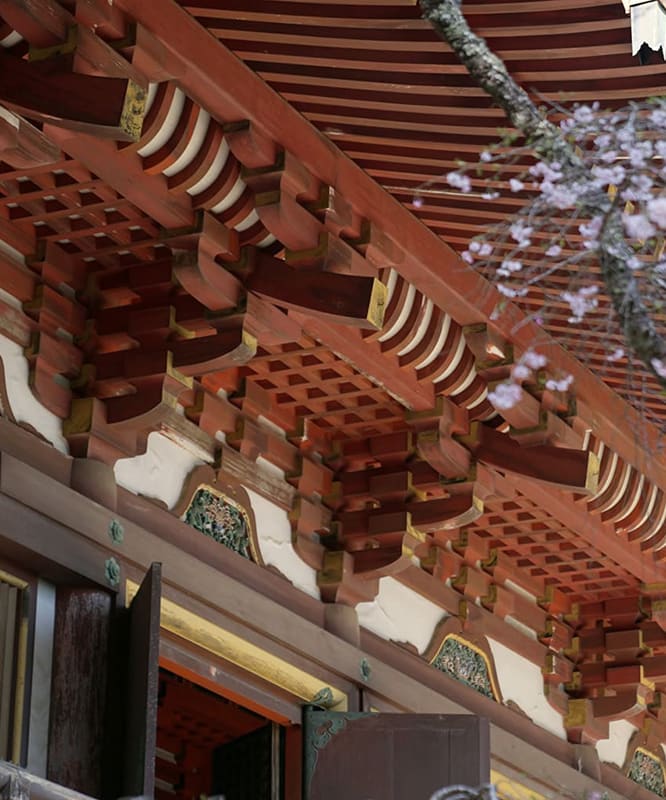
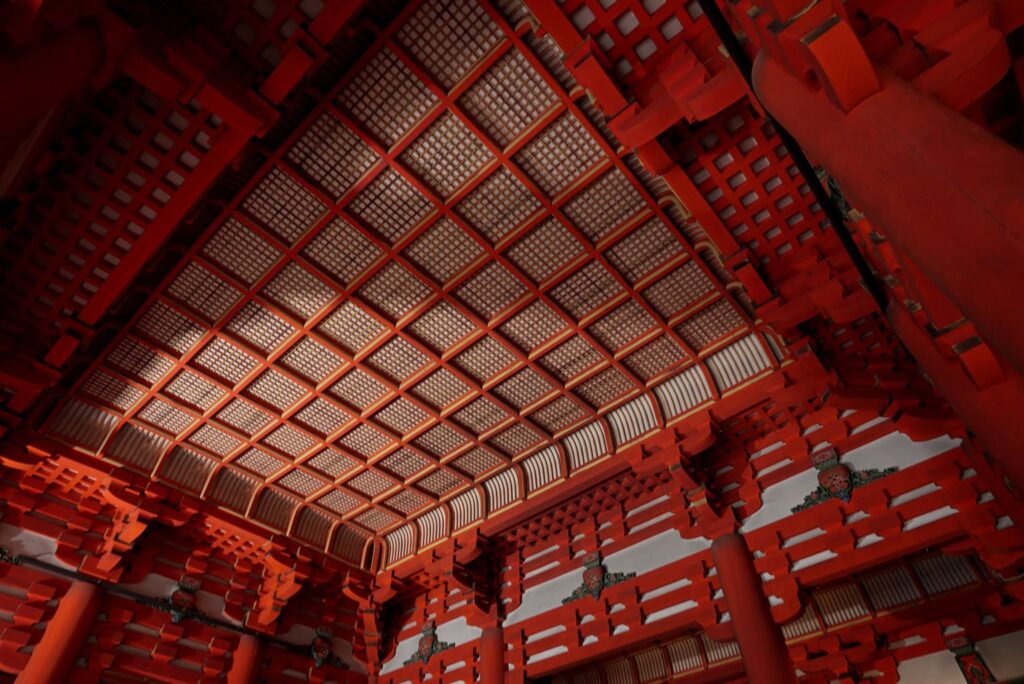
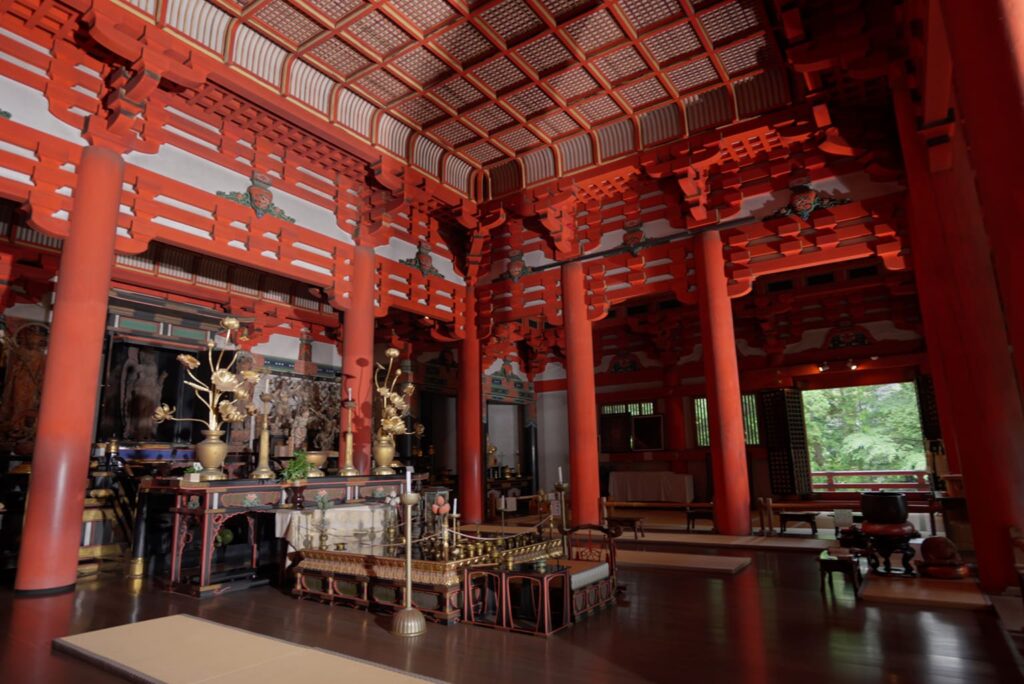
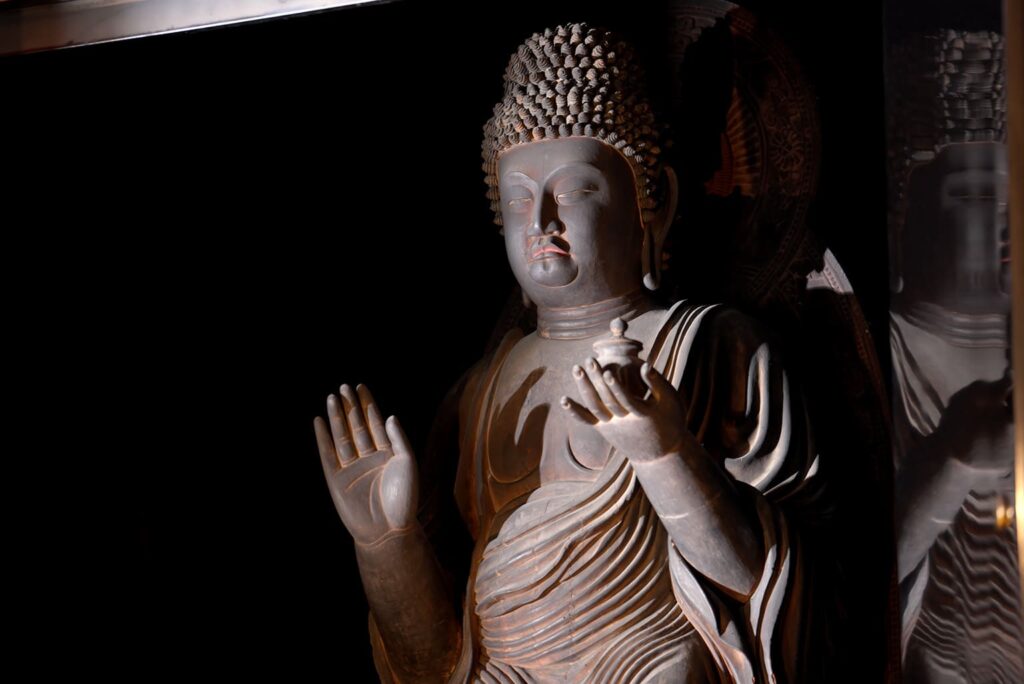
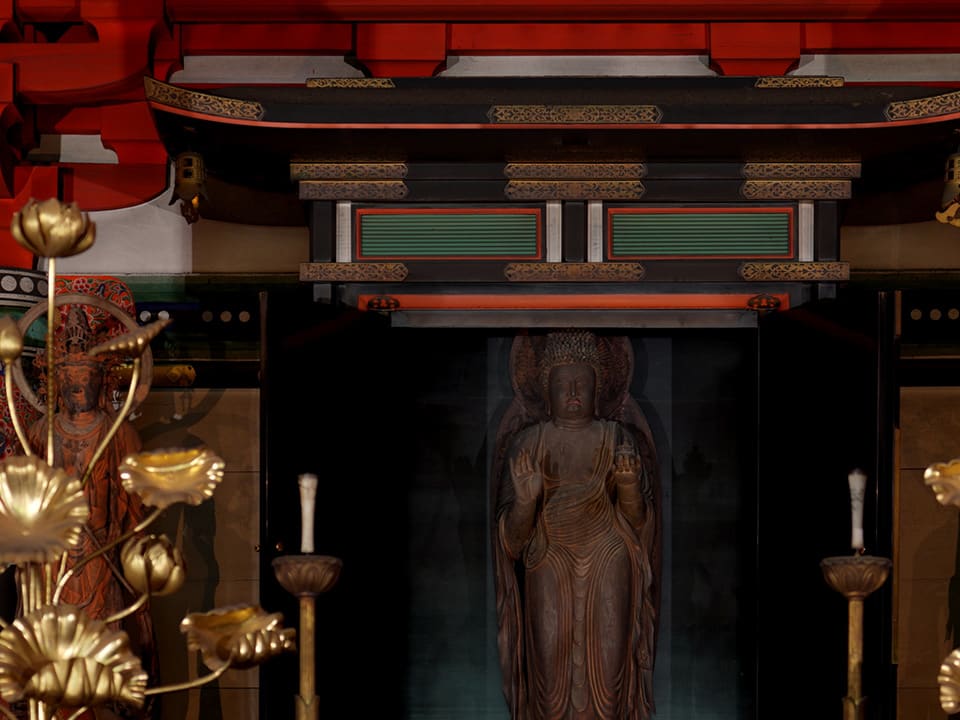
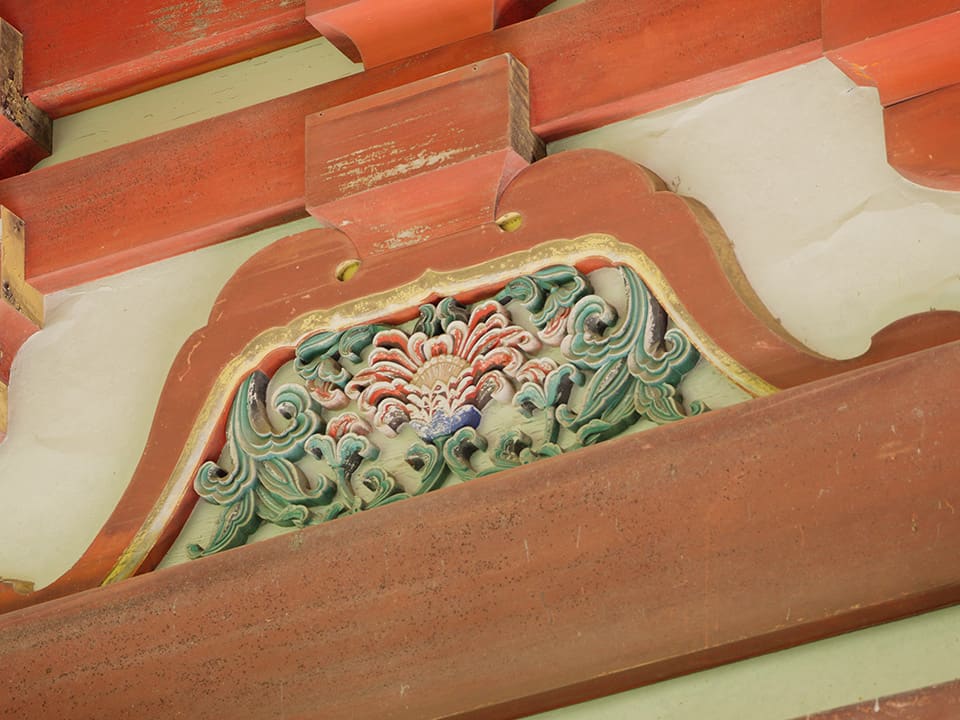
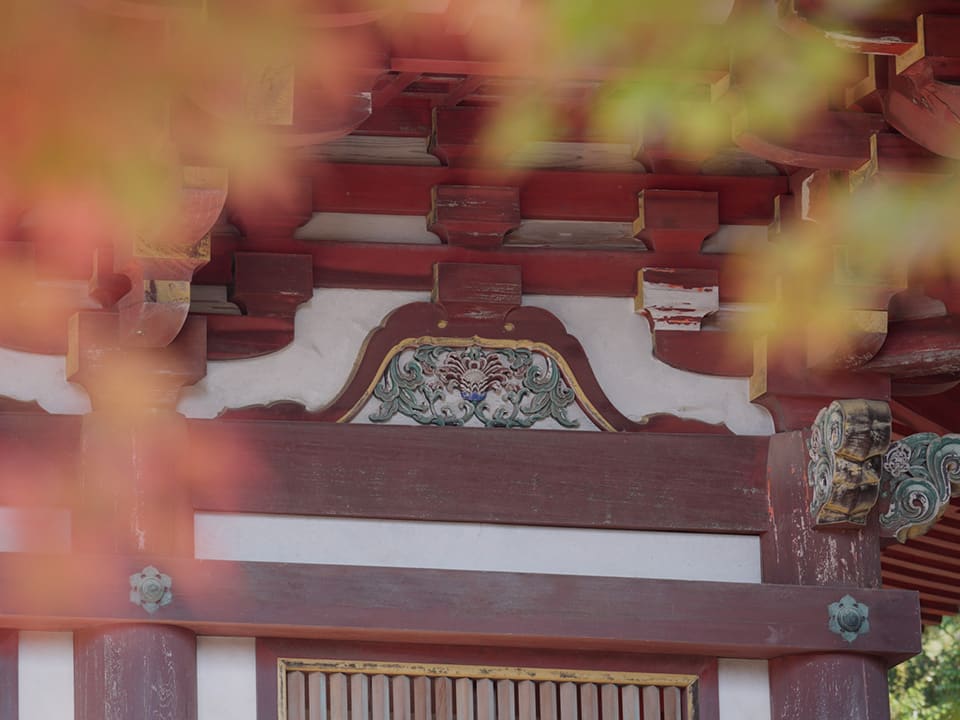
Inside the hall, the pillars and curved support brackets on the main beams are adorned with vividly colored hōsō flower patterns. The hall’s central space is designated as the inner sanctuary. It houses the temple’s principal object of worship, the Standing Statue of Yakushi (Bhaisajyaguru), a National Treasure, surrounded by other sacred statues.
Rebuilt in the early Shōwa era (1926–1989), this hall is regarded as a pinnacle of modern Buddhist temple architecture.
miniature shrine
A sacred space for enshrining items such as Buddhist statues, relics, and sutra scrolls.
Shōwa period
The Shōwa period (1926–1989) corresponds to the reign of Emperor Shōwa (Hirohito) (1901–1989), the 124th emperor of Japan.
dais
A platform used for enshrining statues of Buddhas and other figures.
flower pattern
frog-leg strut (kaerumata)
It is a part, both sides of which widen towards the bottom with curves, like a frog opening its legs (kaeru means a frog, and mata means crotch) and is located between two connecting beams. Otherwise, its name reportedly derives from karimata, the shape of the arrowhead, the edge of which splits into two.
onigawara roof tiles
These are decorative roof tiles placed on the edges of the main ridge and hip of the roof. The tiles often take the shape of a demon’s face or spiritual beast. They serve a practical purpose in protecting the structure from rain and wind but also symbolize religious authority and the protection against evil.
main ridge
This is the main ridge on the peak of the roof. It holds religious significance in temple and shrine architecture.
tiled roof (hongawarabuki)
A roofing method with two types of roof tiles, concaved roof tiles and semi-cylindrical convex tiles, are laid alternatively. This historical method has been used since the Asukadera Temple was built. It was the first full-scale temple in Japan and was built at the end of the sixth century.
inner sanctuary
The innermost chamber within the temple or shrine where the sacred shintai (object regarded as the divinity’s manifestation or symbol) or the principal Buddhist image is enshrined.
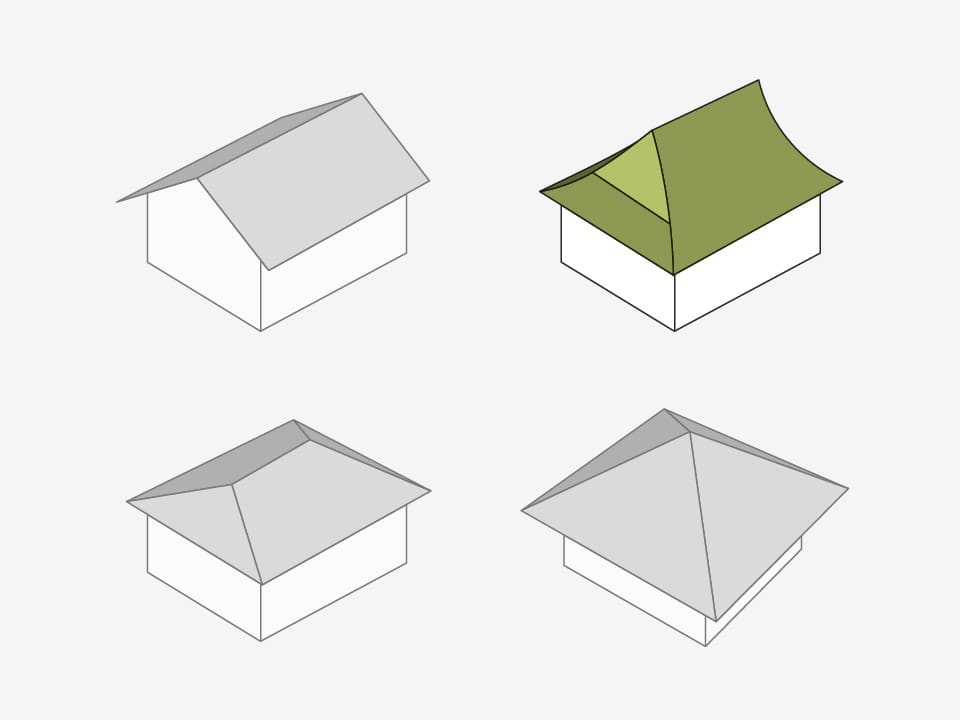
hip-and-gable style (irimoya-zukuri)
A gable (kirizuma-zukuri) is right above the core and a hipped roof are attached to the four sides on the lower part of the gable. (hip-and-gable roof construction)
MOVIE
Experience the video to get one step closer.
This video, accompanied by narration, introduces the charms of Kondō Hall. Experience its charms even more deeply through the video.
Duration: (audio included)


Please take part in the survey.
Takes about 30 seconds