Kyoto Prefecture Designated Tangible Cultural Property
Bishamondō Hall
1623
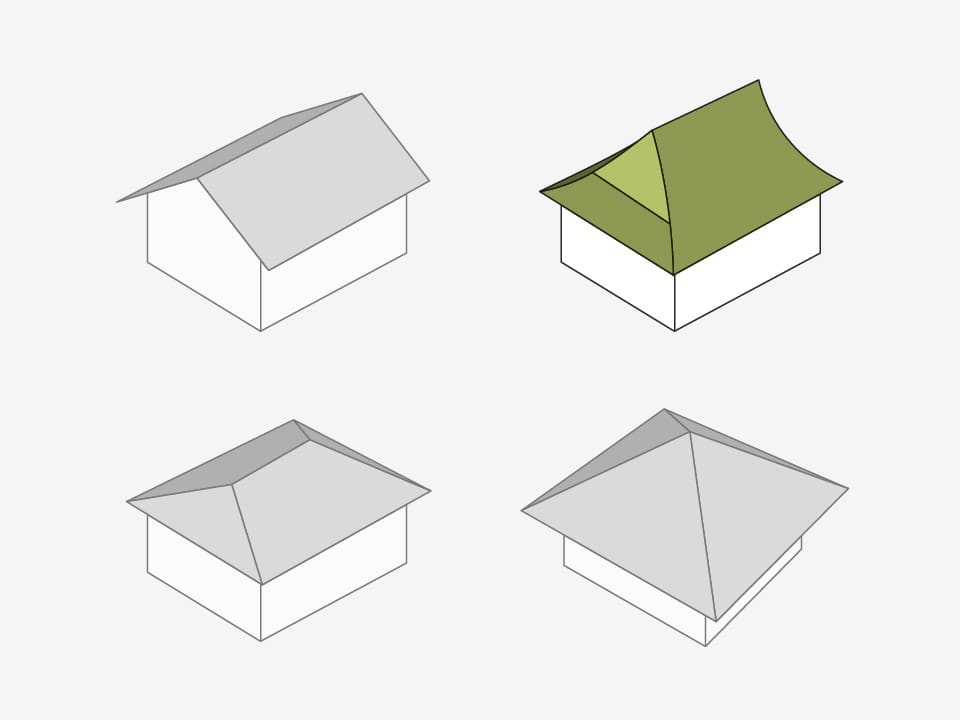
hip-and-gable style (irimoya-zukuri)
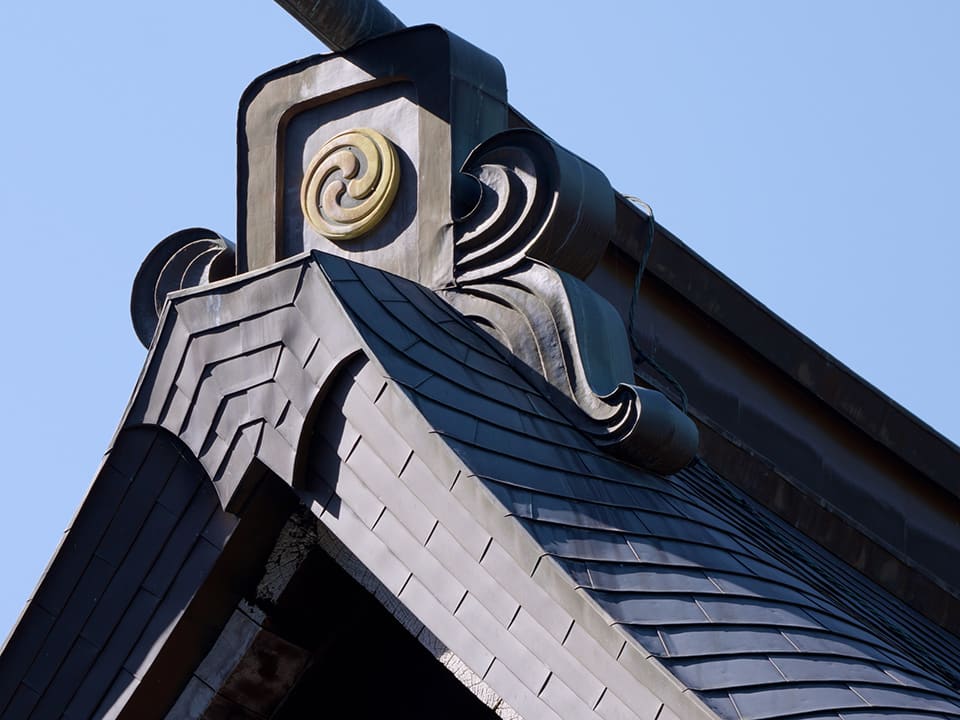
copper roofing
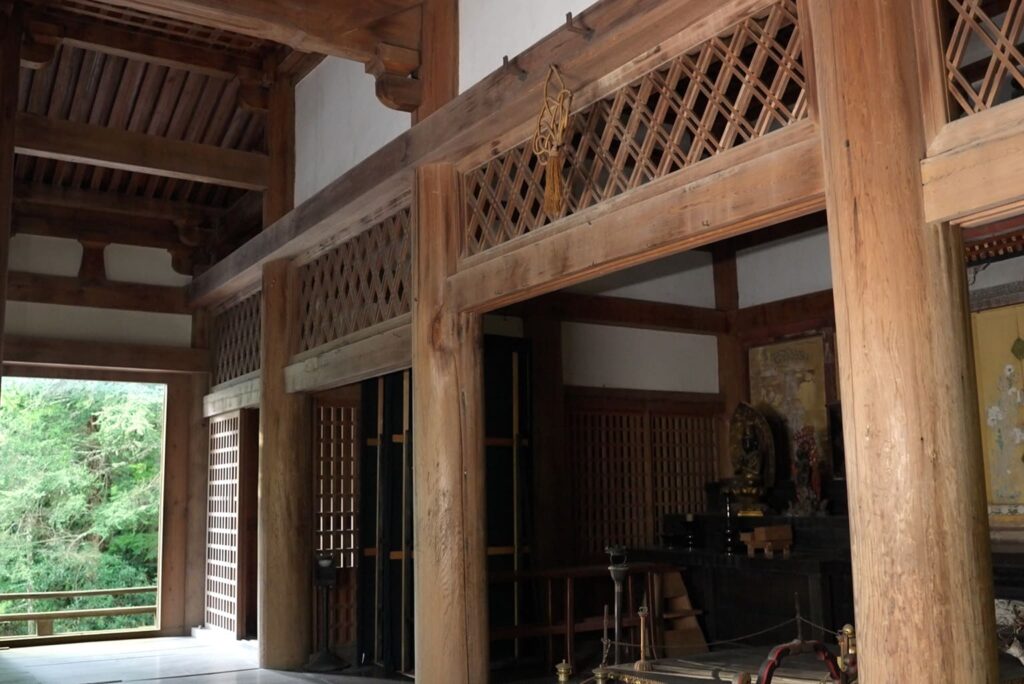
Inner Sanctuary: Fukiyose diamond-lattice transom
This article can be read in about 2 minutes.
A subtle design symbolizing
the temple’s autumn leaves
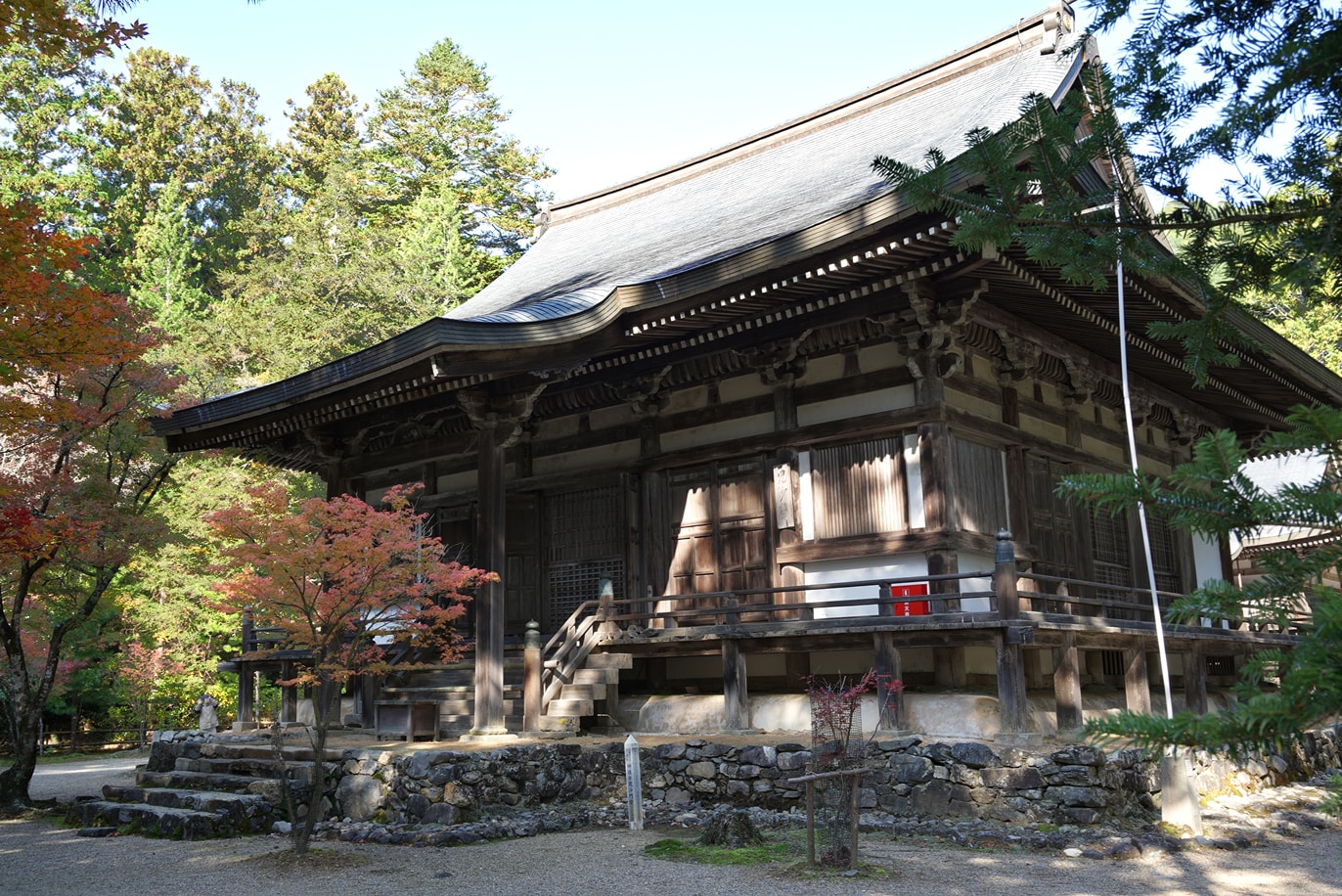
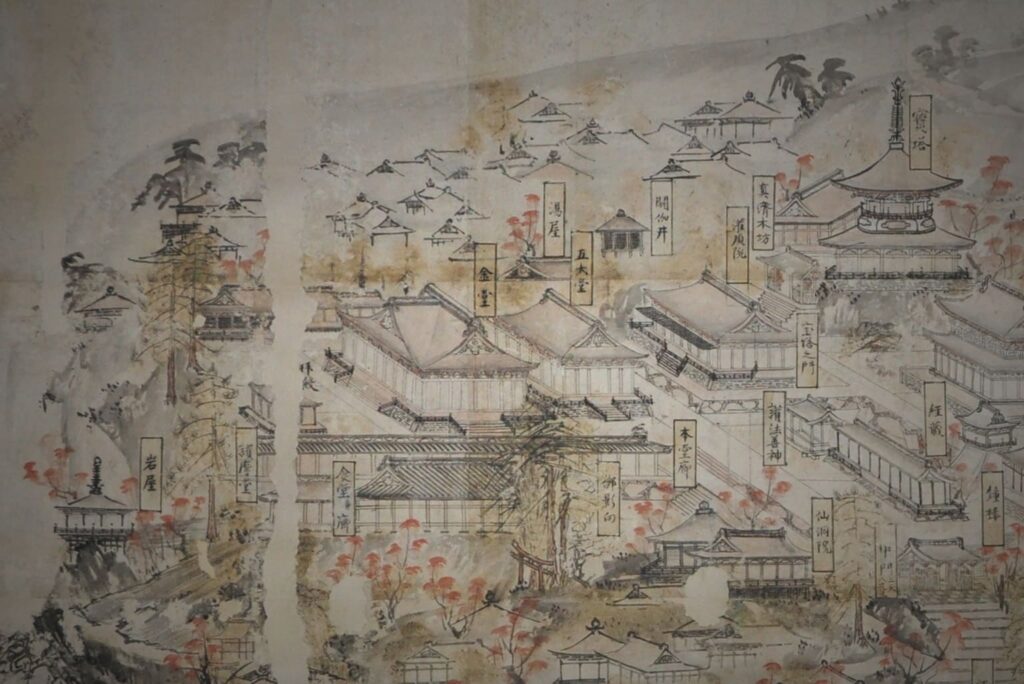
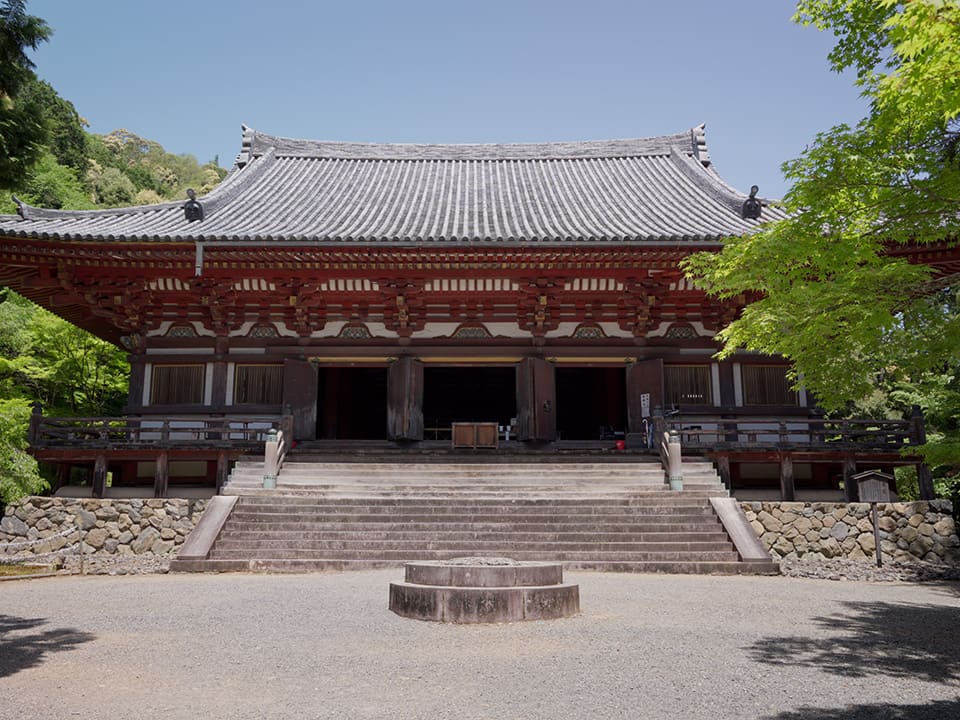
The Bishamondō Hall was rebuilt in 1623 along with the Godaidō Hall and other temple buildings. Before the construction of Jingoji Temple’s current main hall in the early Shōwa era (1926–1989), the Bishamondō Hall was the temple's main hall and enshrined the Standing Statue of Yakushi (Bhaisajyaguru), a National Treasure.
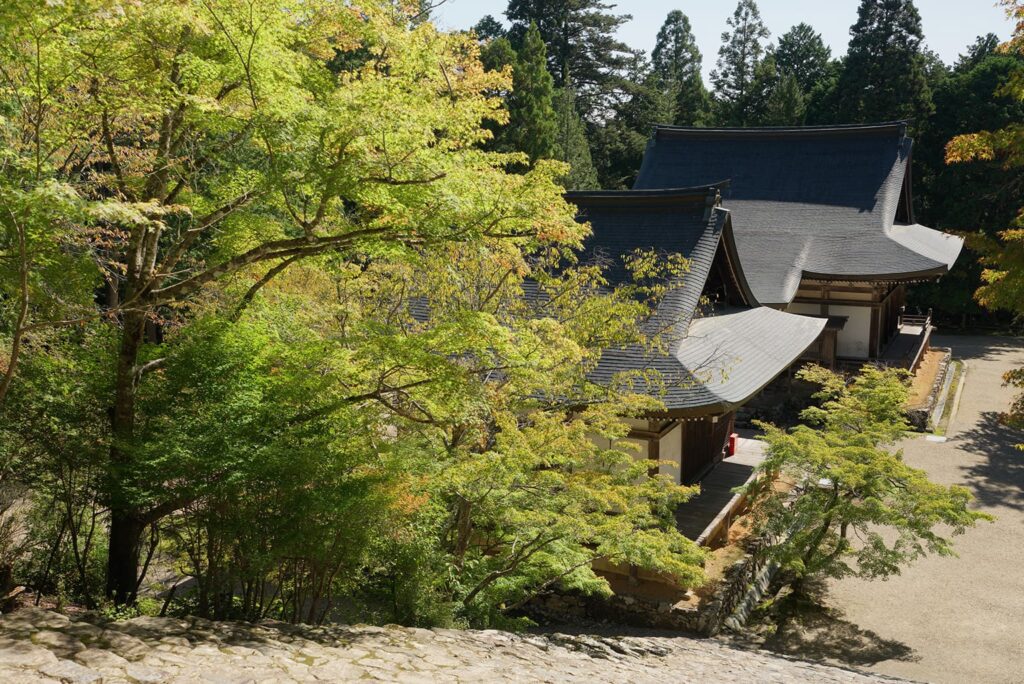
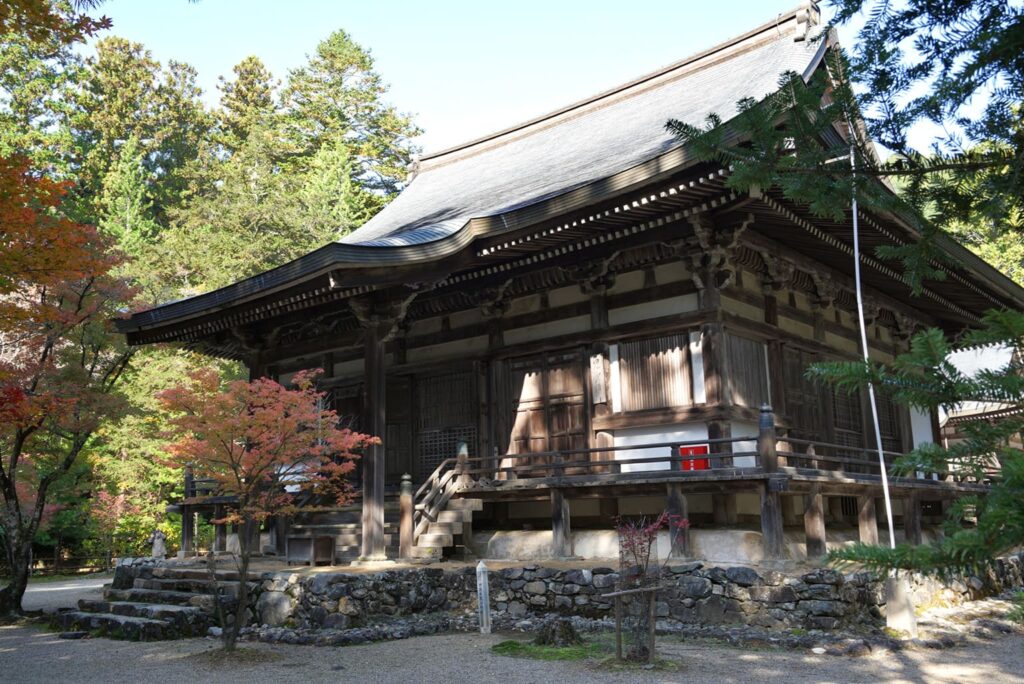
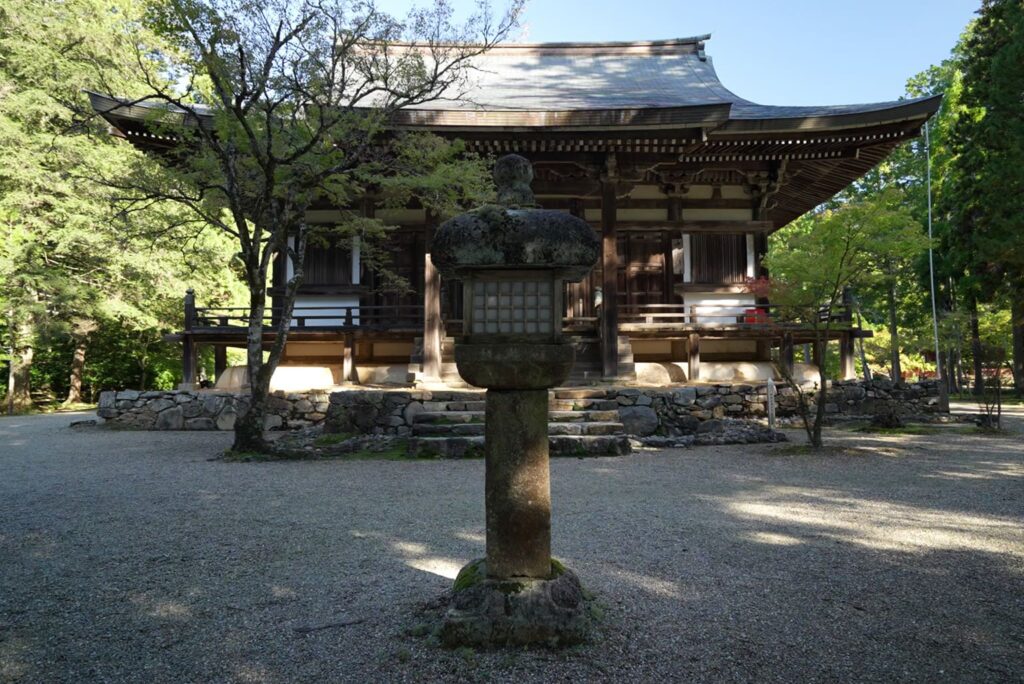
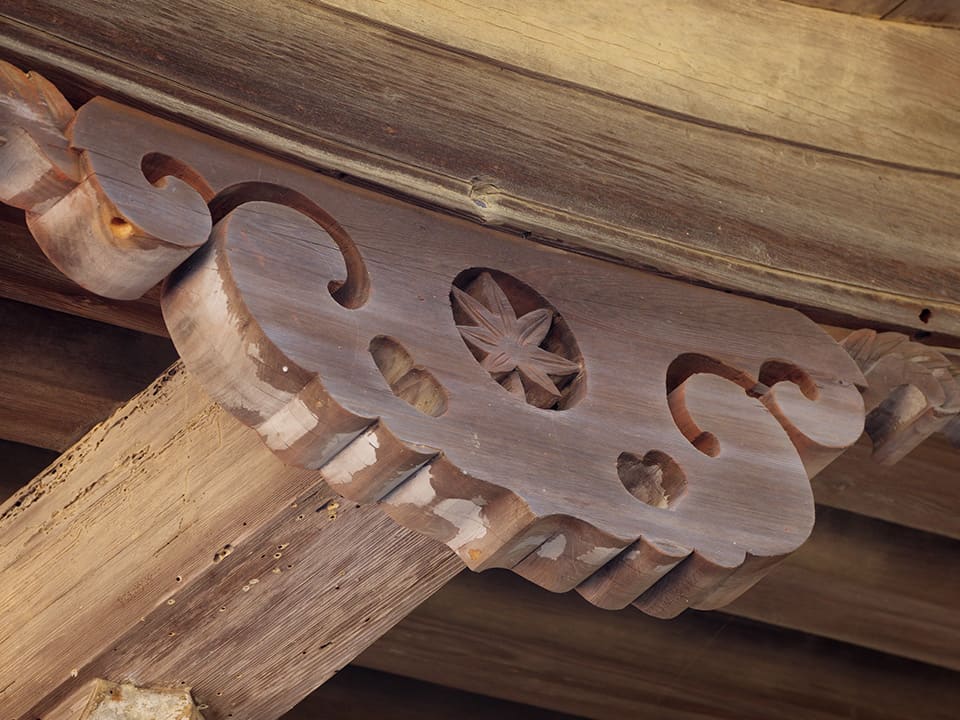
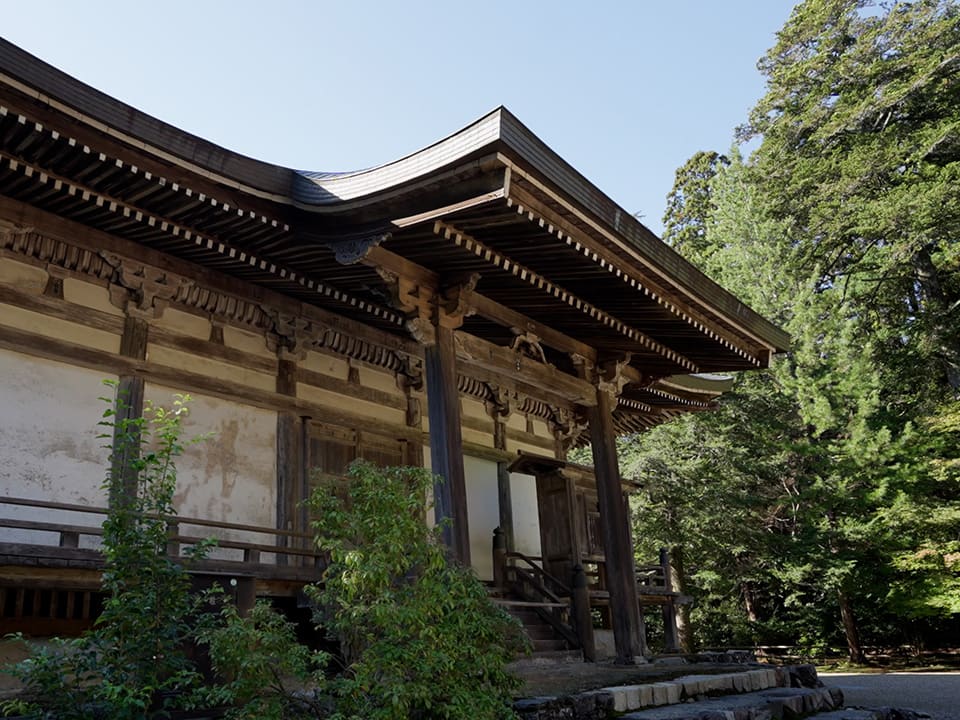
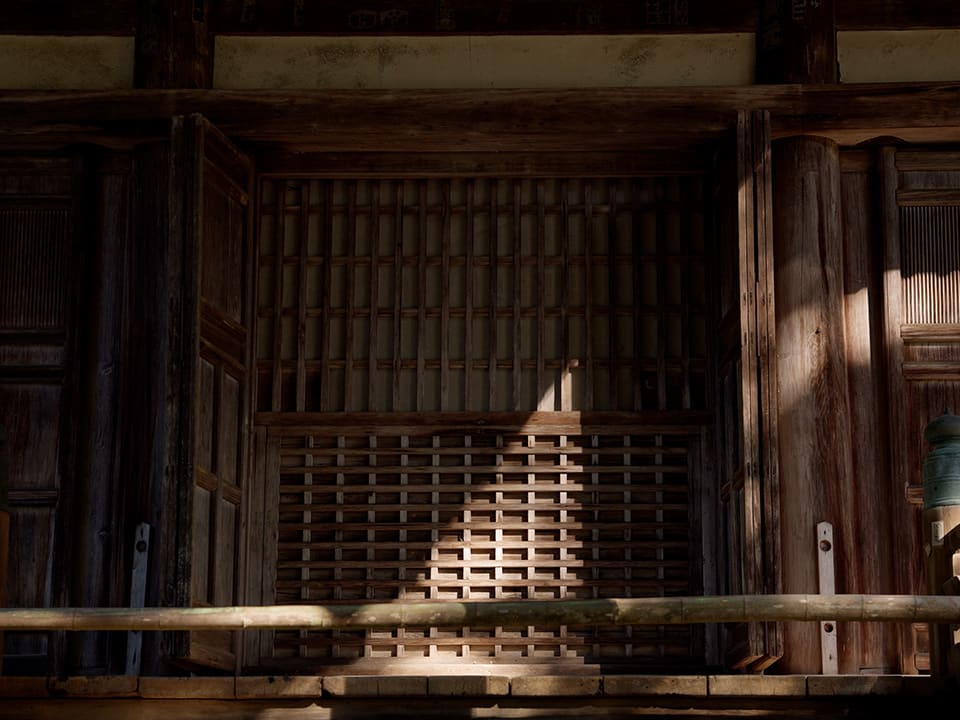
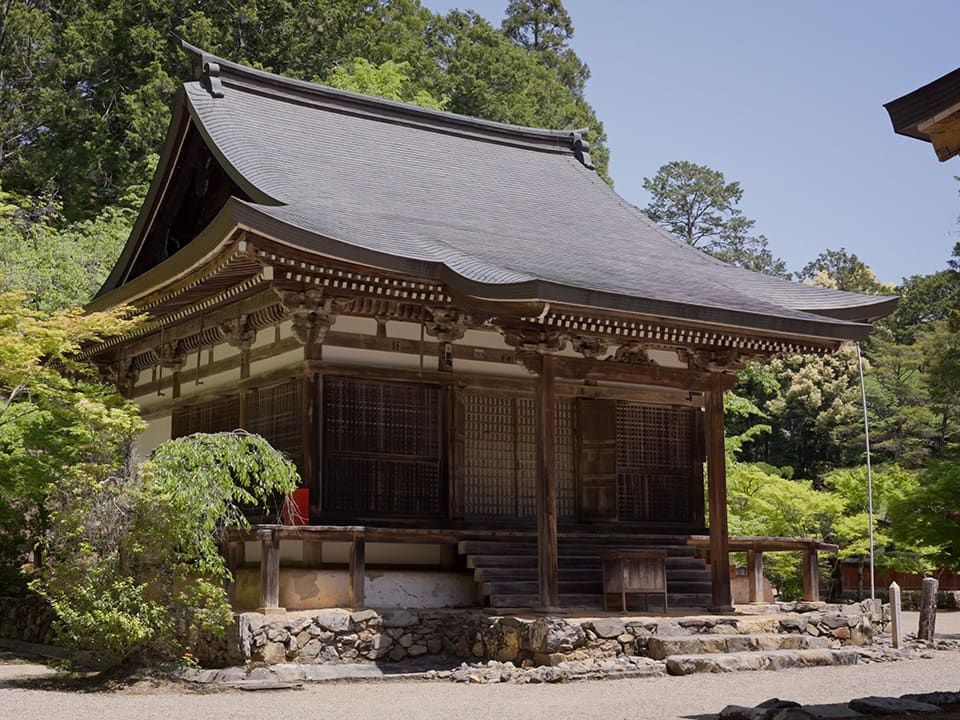
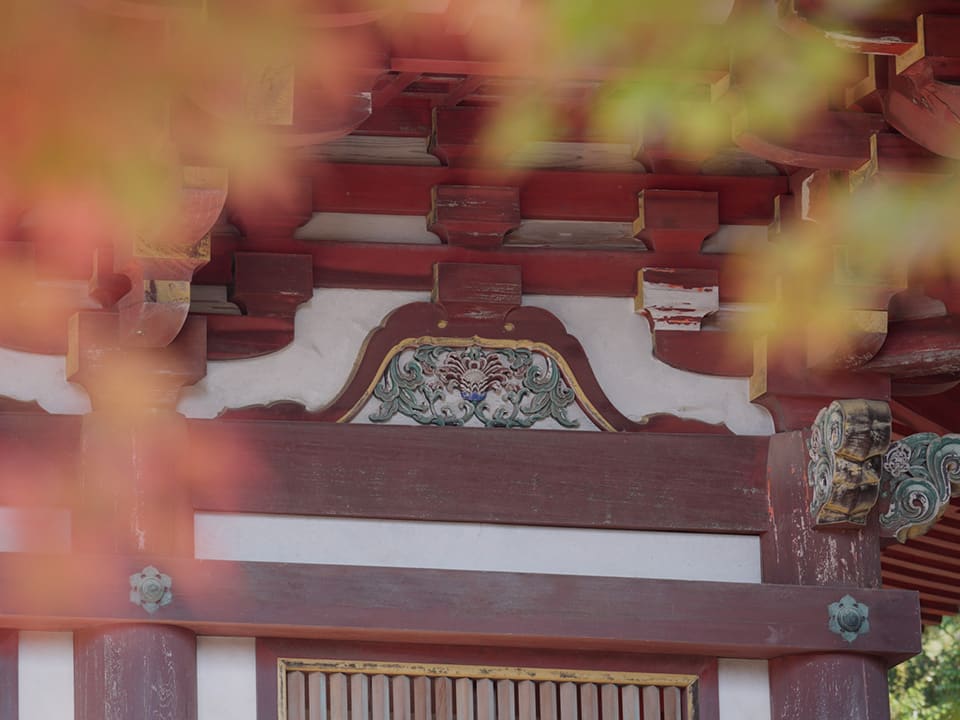
The building has a hip-and-gable roof that originally had wooden shingles but now has copper tiles. On its south face, it is furnished with paneled wooden doors and lattice windows. The hall has canopy roofs over the steps on its north and south sides. Design elements celebrating autumn foliage can be seen throughout the building, such as the hawk on the beam bracket and the maple leaf patterns adorning the step canopy roofs.
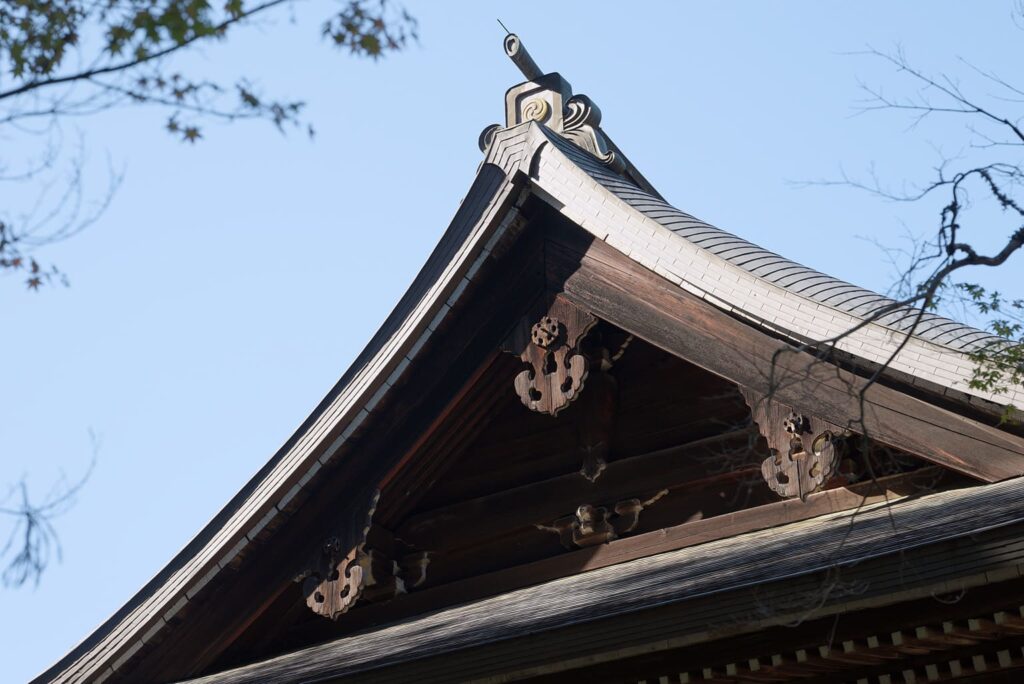
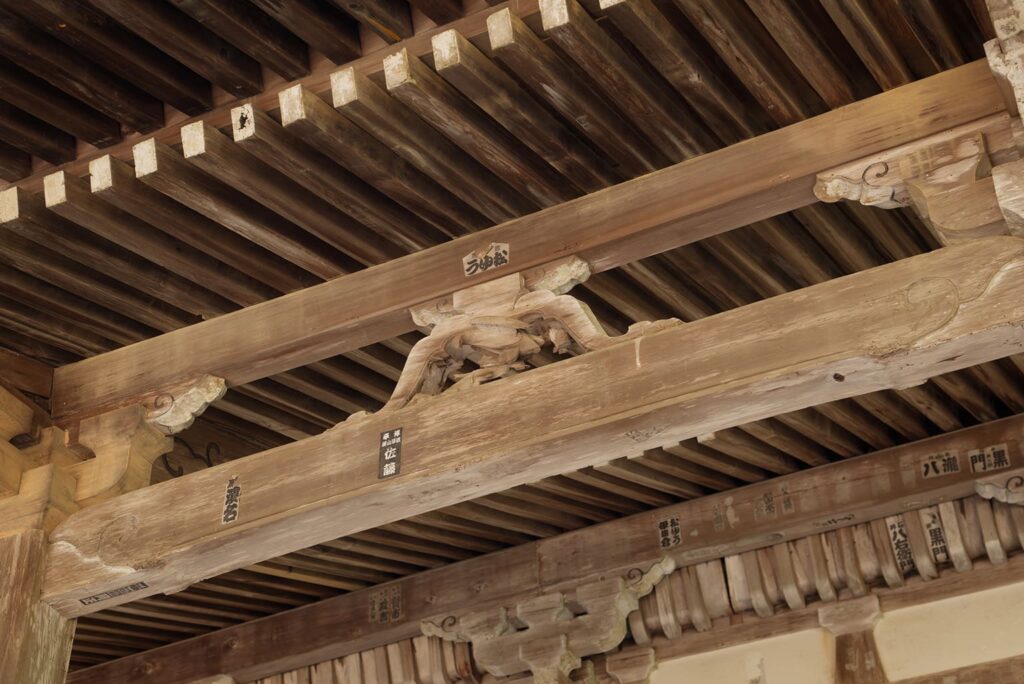
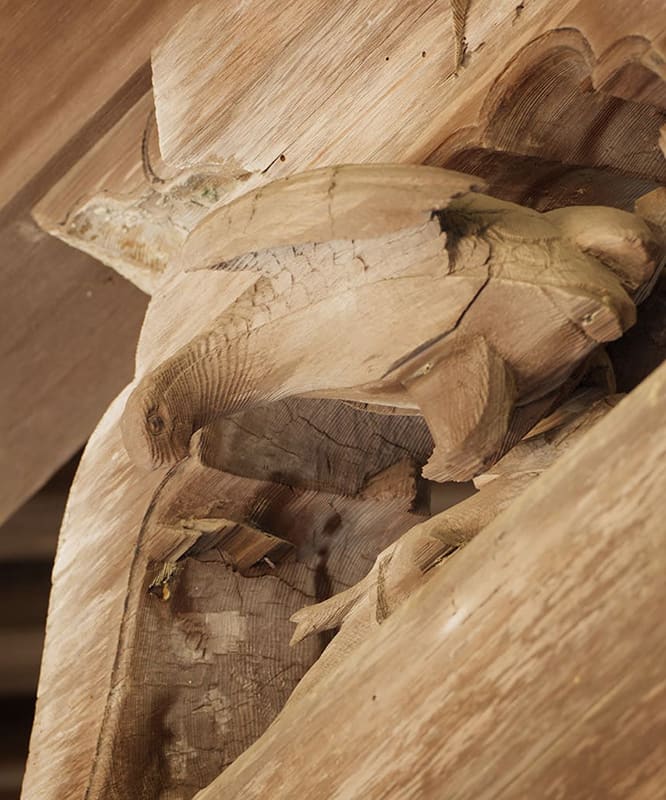
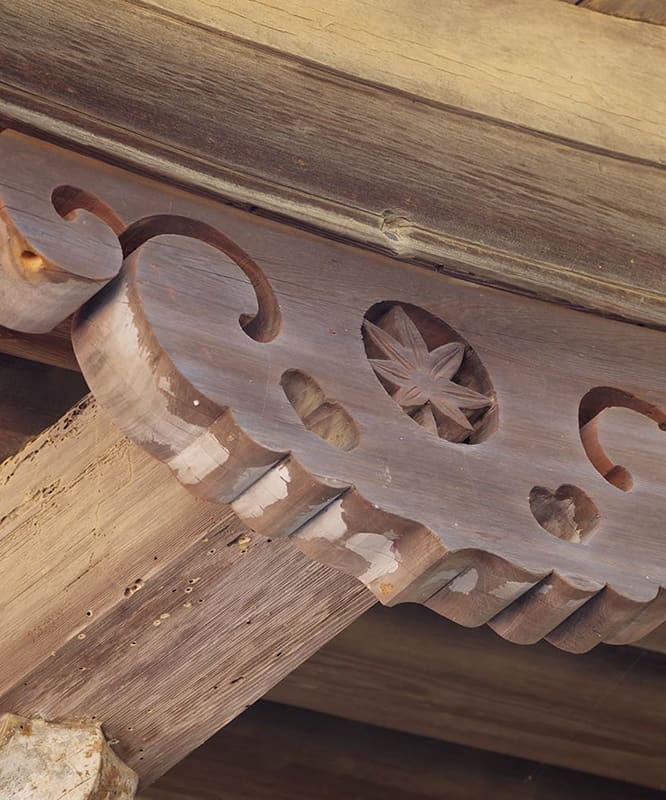
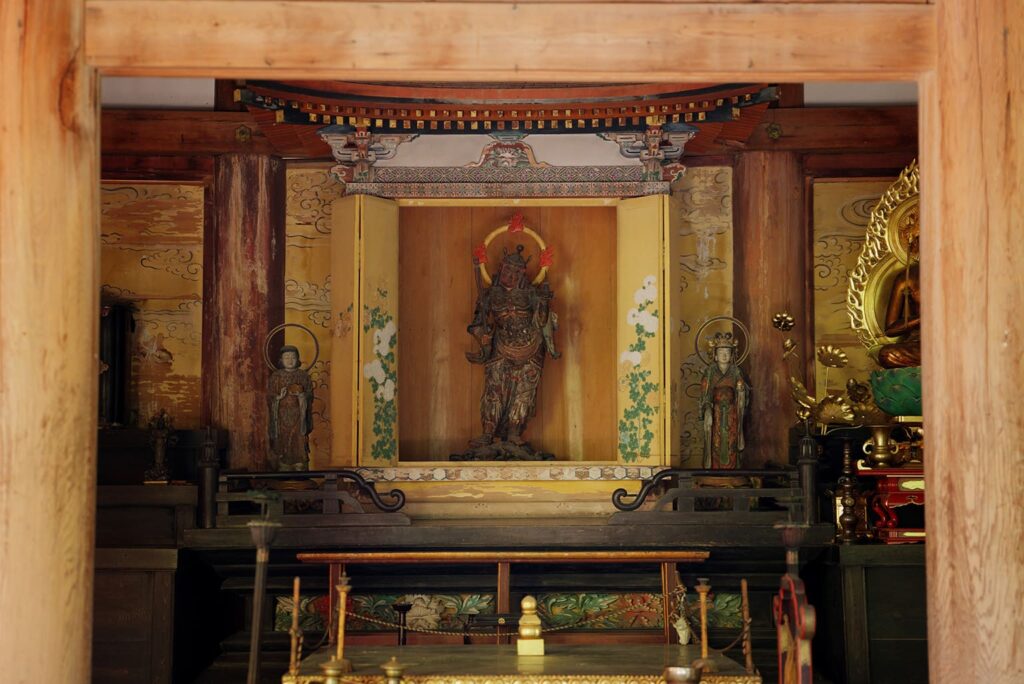
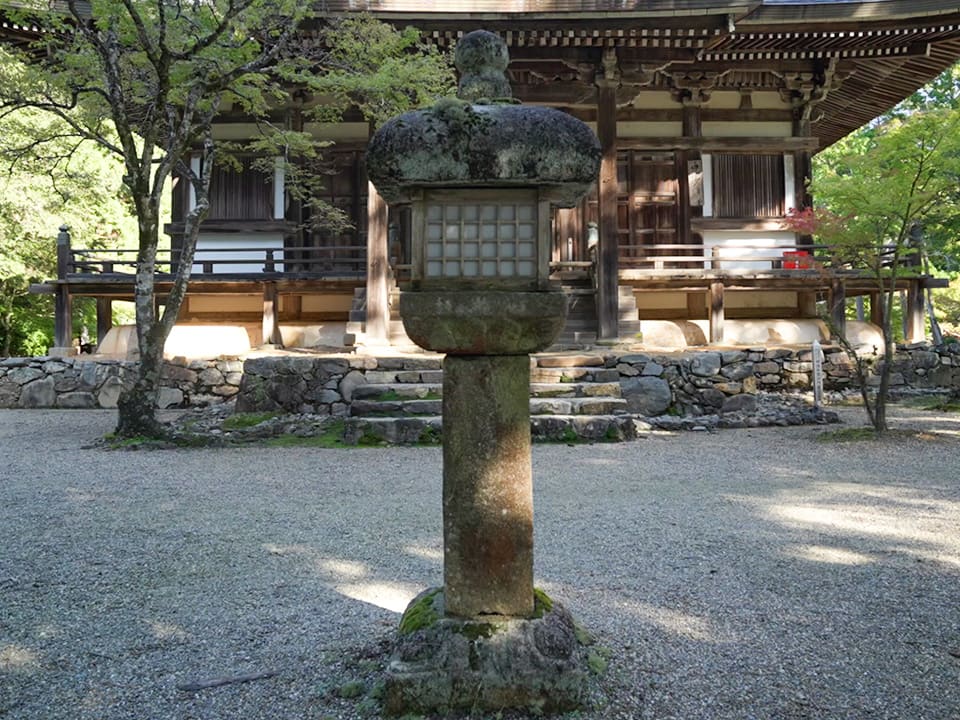
Today, the hall houses the Standing Statue of Bishamonten (Vaisravana), an Important Cultural Property. A stone pagoda stands in front of the hall surrounded by cedars, weeping cherry and maple trees, and rhododendron bushes that change into an array of colors throughout the seasons.
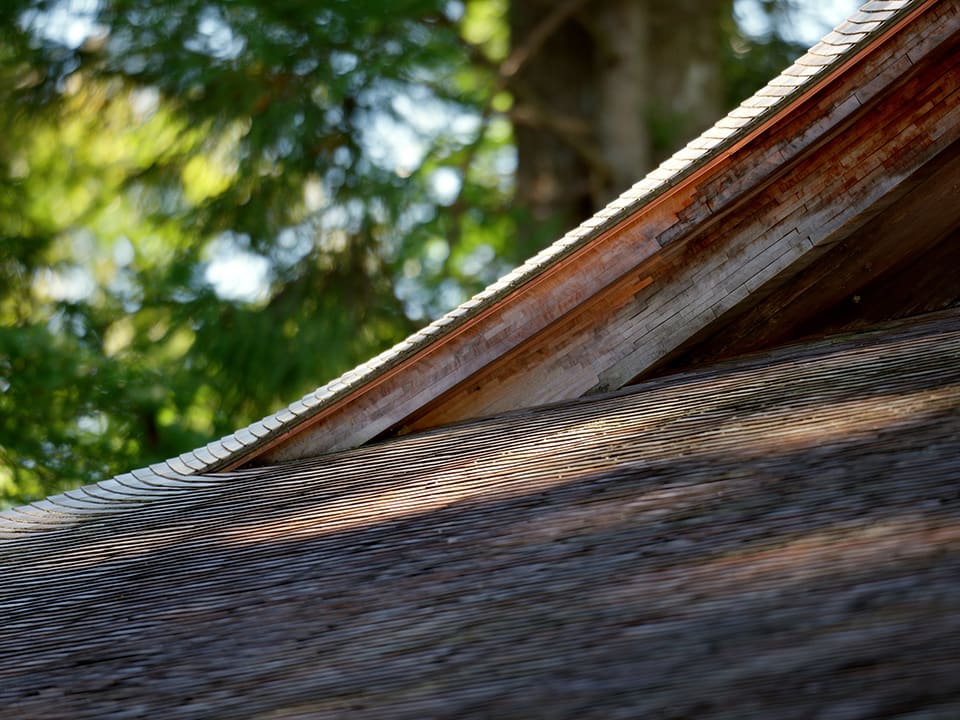
shingled (roof)
A type of roofing. It involves attaching wooden shingles with bamboo nails, using thicker boards for the eaves section. The materials used include thin boards of cedar, cypress, and sawara cypress.
stone pagoda
statue of Bishamonten
maple leaf pattern
pent roof
In shrine and temple architecture, a structure with a roof that protrudes over the front steps. It allows the priest and worshippers to conduct ceremonies or pay respects from the front of the hall.
renji window
This is a traditional window with a lattice design. It is a decorative architectural feature that also provides ventilation and lighting.
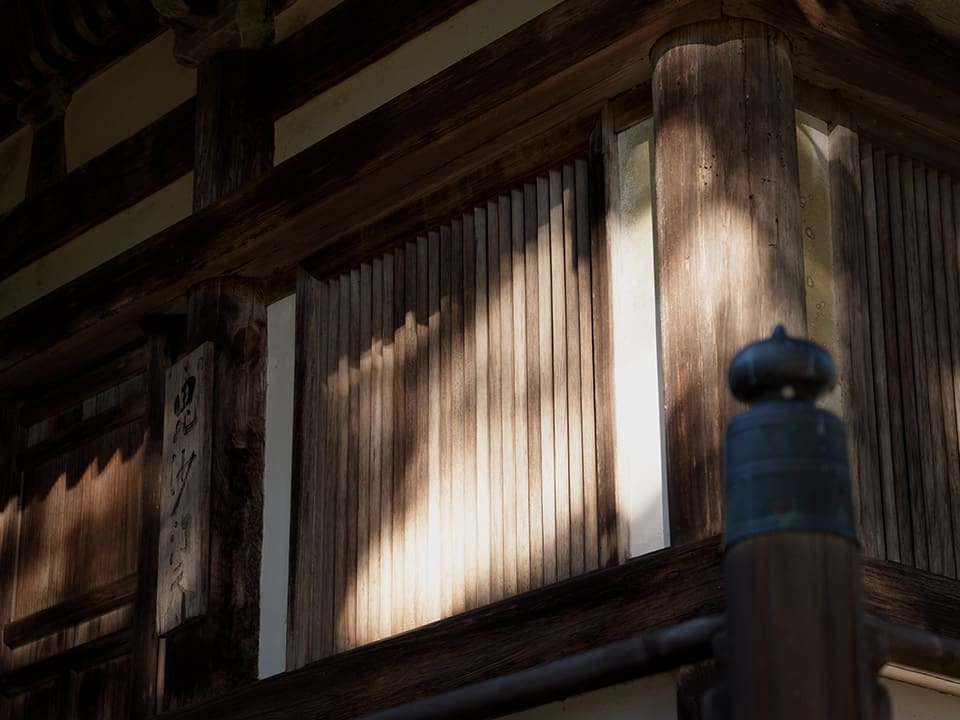
paneled wooden door
A paneled door with thin panels and renji latticework set into small frames in an outer door frame.
copper roofing
current Main Hall
Hall of the Five Wisdom Kings
This building was built in 1623 and was a lecture hall. It is located within Jingoji Temple and serves as an Esoteric Buddhist hall that enshrines the Five Wisdom Kings (Vidyārāja).
frog-leg strut (kaerumata)
It is a part, both sides of which widen towards the bottom with curves, like a frog opening its legs (kaeru means a frog, and mata means crotch) and is located between two connecting beams. Otherwise, its name reportedly derives from karimata, the shape of the arrowhead, the edge of which splits into two.
hip-and-gable style (irimoya-zukuri)
A gable (kirizuma-zukuri) is right above the core and a hipped roof are attached to the four sides on the lower part of the gable. (hip-and-gable roof construction)
MOVIE
Experience the video to get one step closer.
This video, accompanied by narration, introduces the charms of Bishamondō Hall. Experience its charms even more deeply through the video.
Duration: (audio included)


Please take part in the survey.
Takes about 30 seconds