About Jingoji Temple
This article can be read in about 2 minutes.
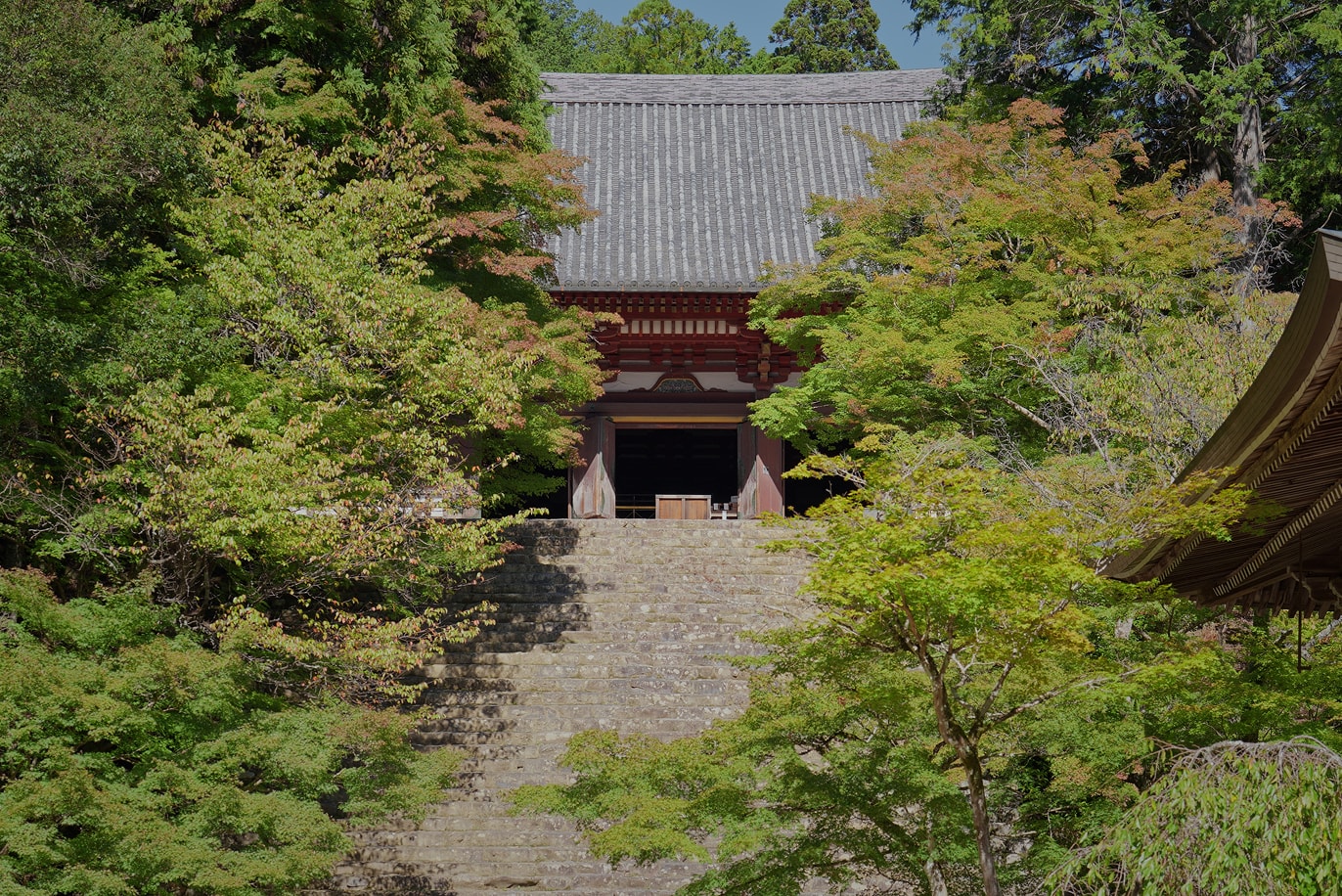
A famed Takao temple
where faith and nature
resonate together
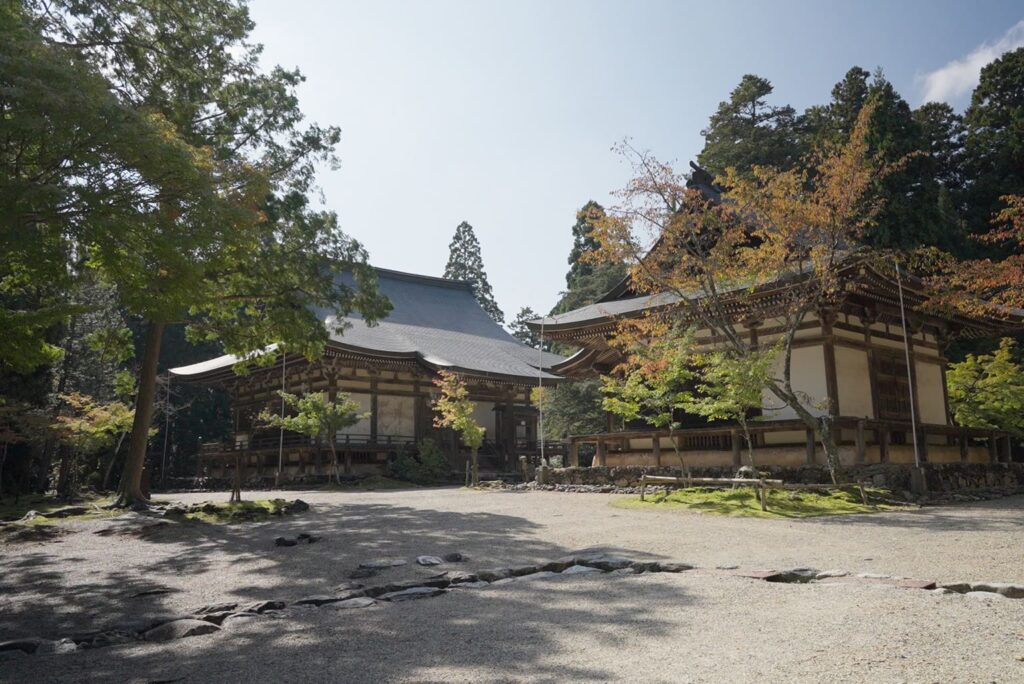
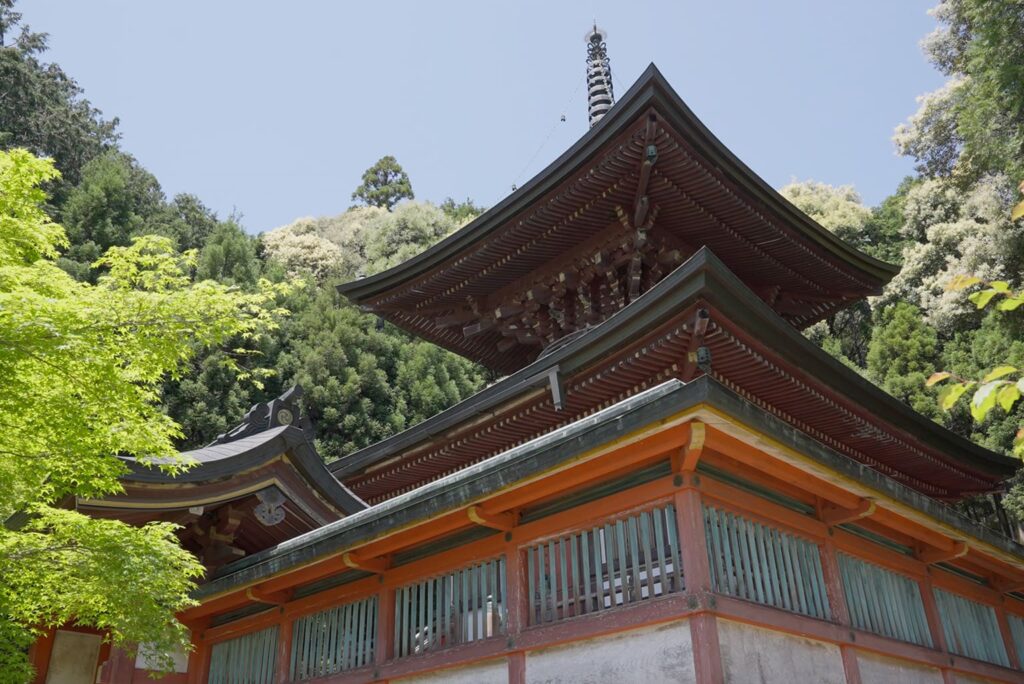
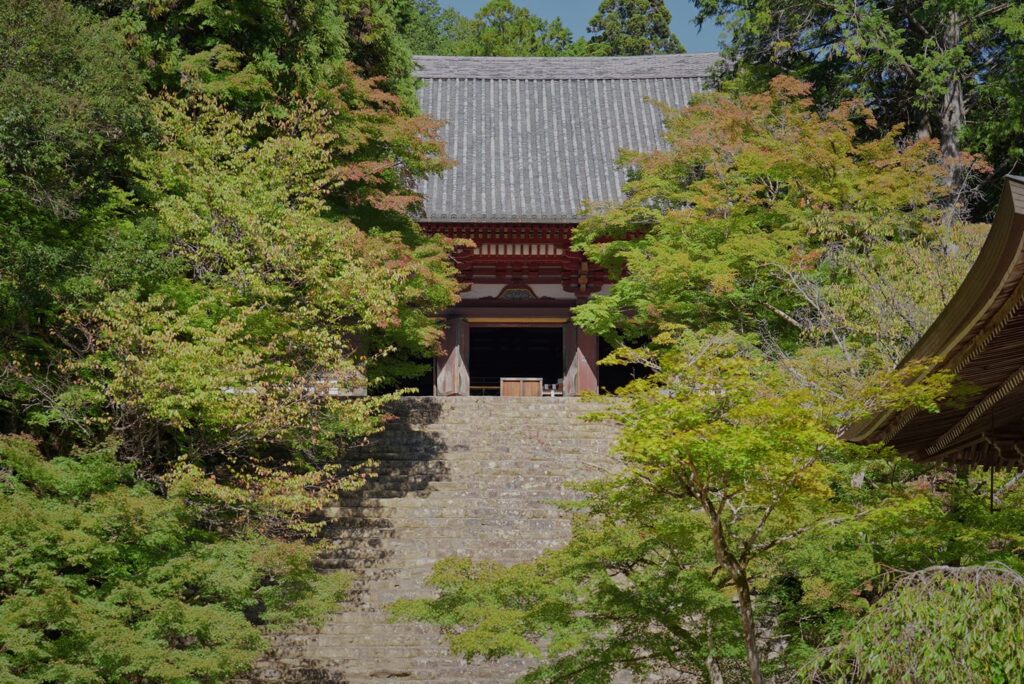
Jingoji Temple was established in 781 by Wake no Kiyomaro (733–799), a high-ranking official of the late Nara period (710–794). Jingoji was established when Jinganji Temple and Takaosanji Temple were merged together to form a larger temple.
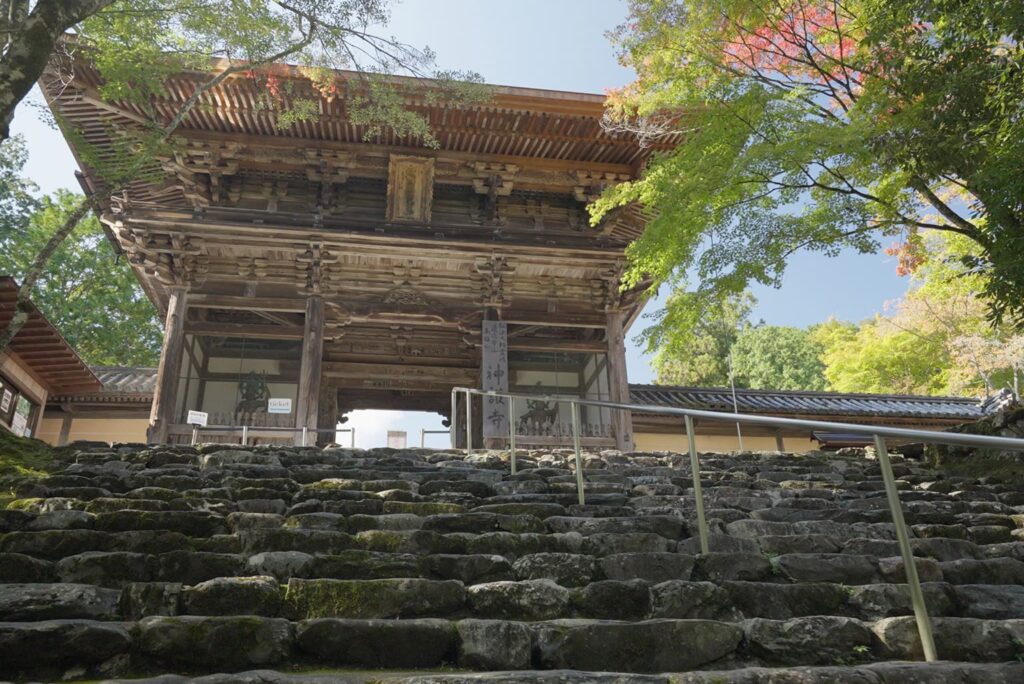
The temple is celebrated as a rare example of the intersection of two different Esoteric Buddhist schools. Saichō (767–822), the founder of the Tendai school, lectured on the Lotus Sutra at Jingoji, and Kōbō Daishi (774–835), the founder of the Shingon school, used it to train people in Esoteric Buddhism.
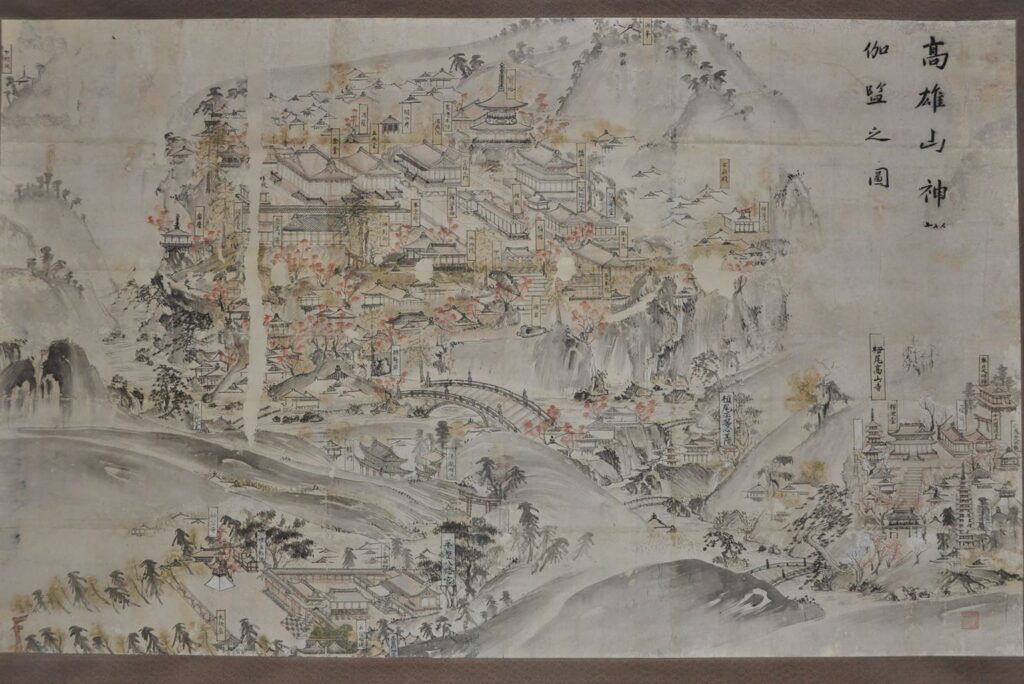
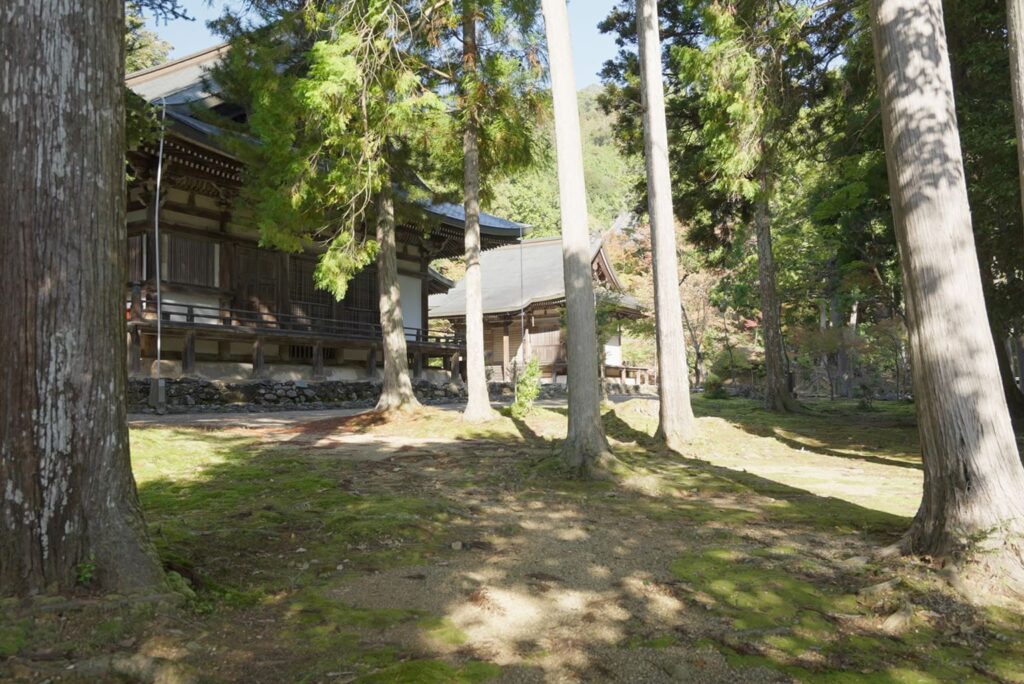
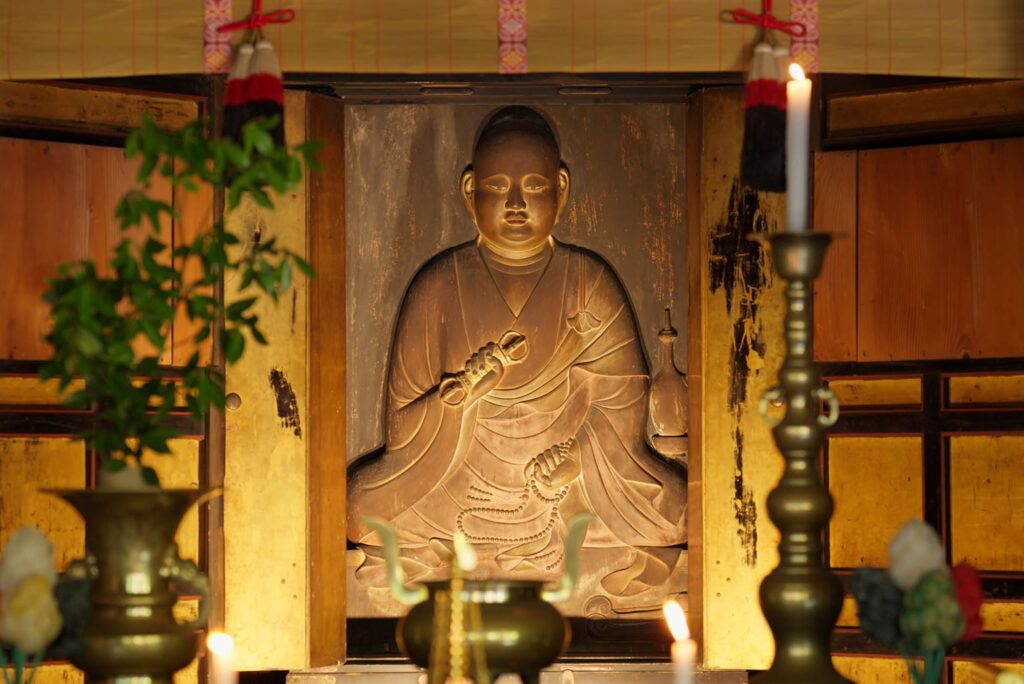
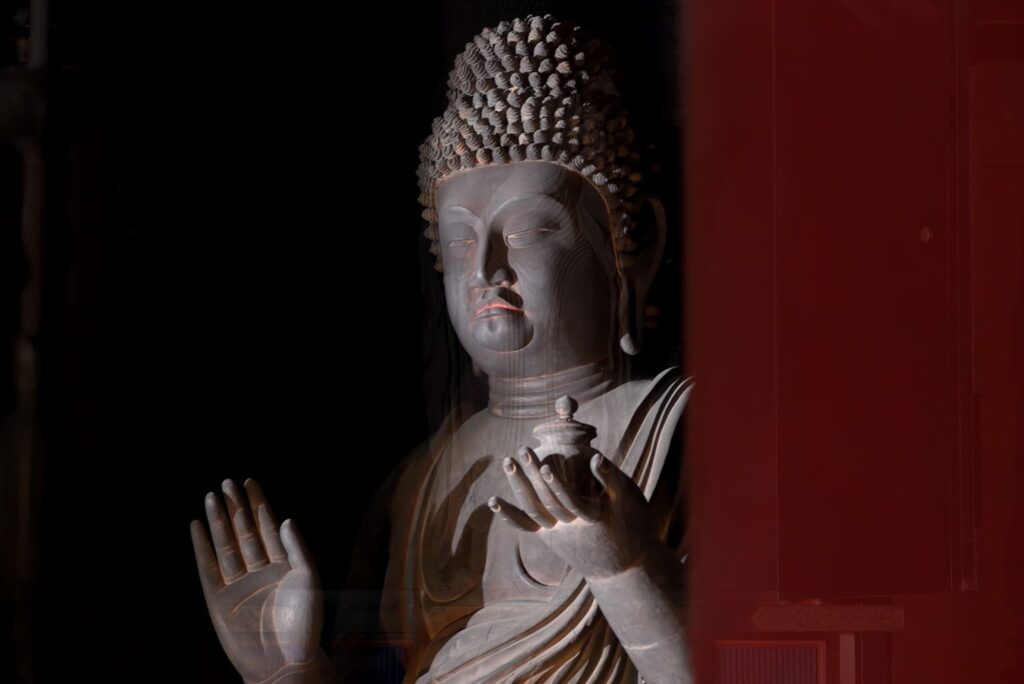
Jingoji houses numerous masterpieces of Buddhist art, such as its principal image, the Standing Statue of Yakushi (Bhaisajyaguru), which is considered one of Japan’s finest Buddhist sculptures. In addition, many outstanding works, such as Buddhist statues, paintings, and works of calligraphy, made during the Heian (794–1185) and Kamakura (1185–1333) periods are preserved at the temple.
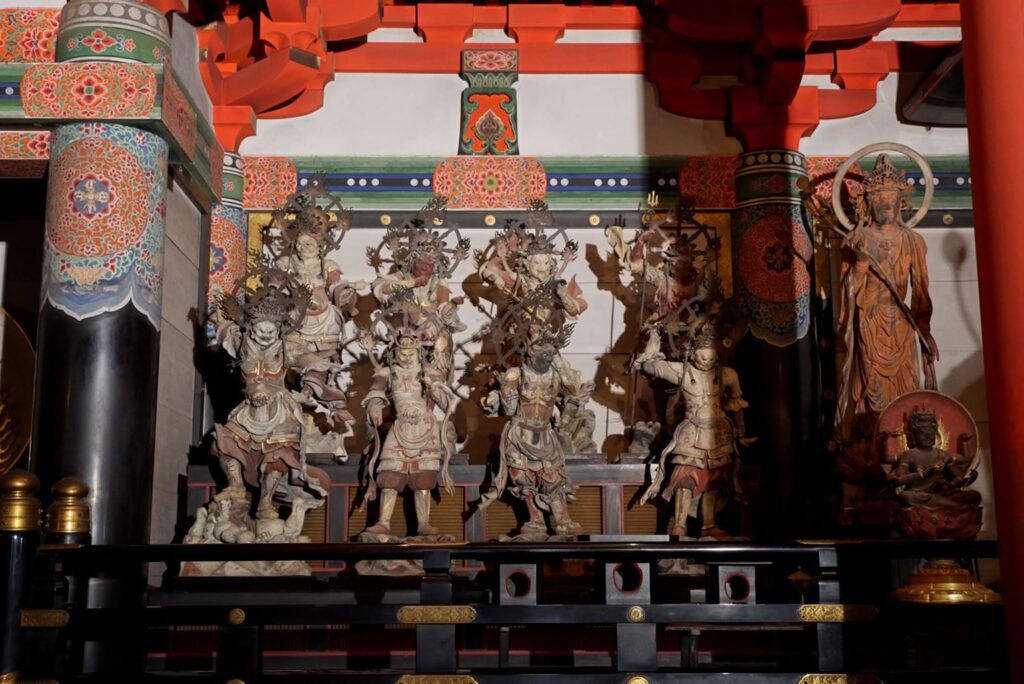
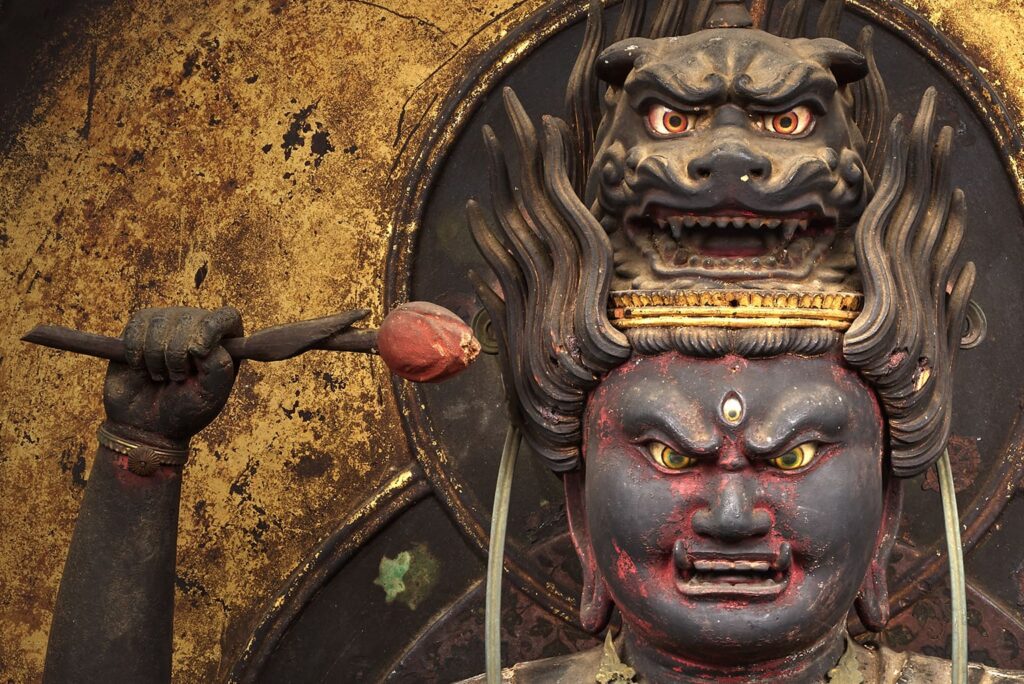
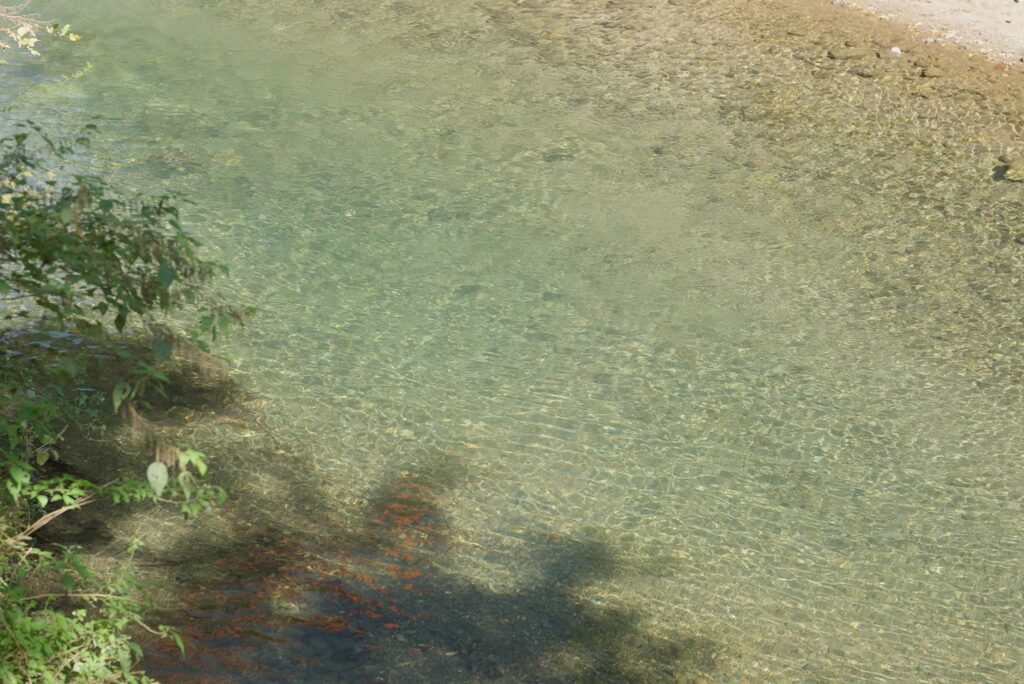
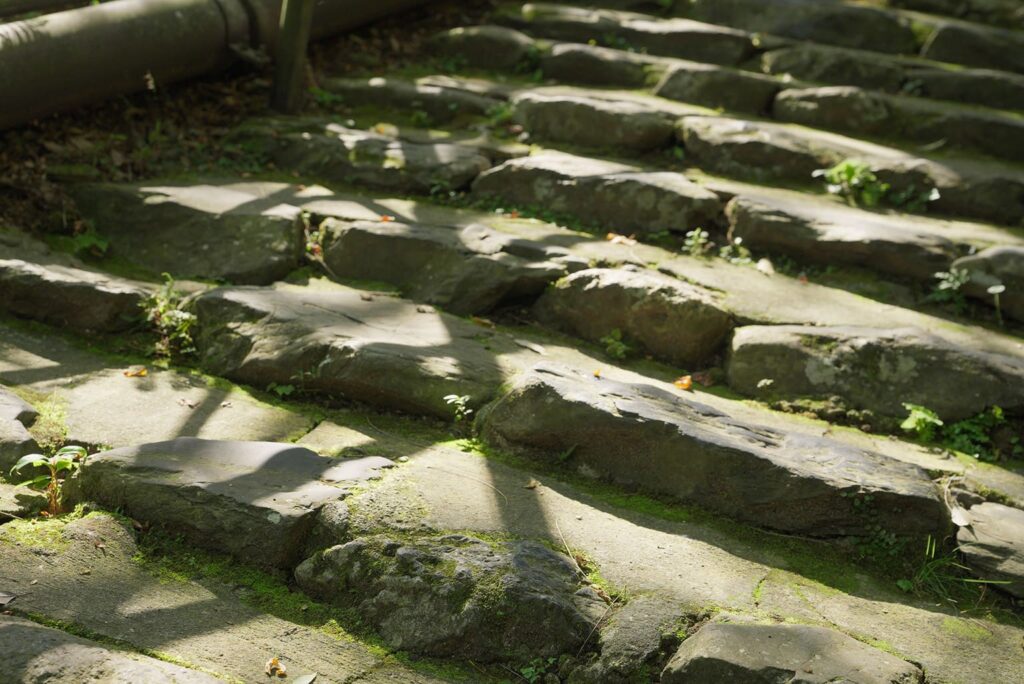
Also famous for its beautiful autumn foliage, Jingoji has captured the hearts of many for its lush natural scenery.
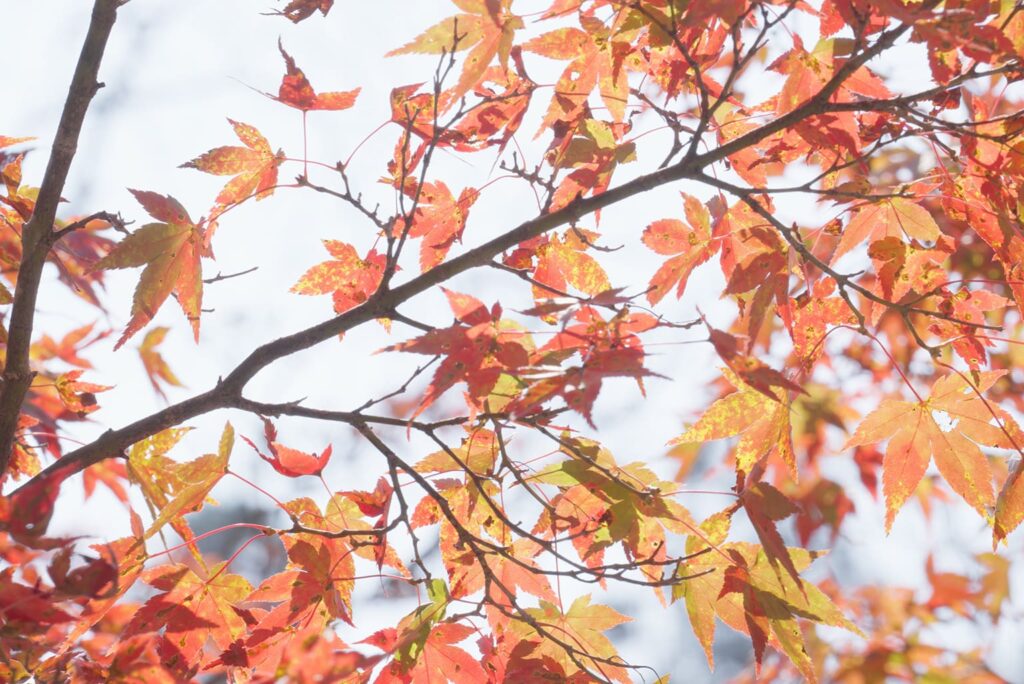
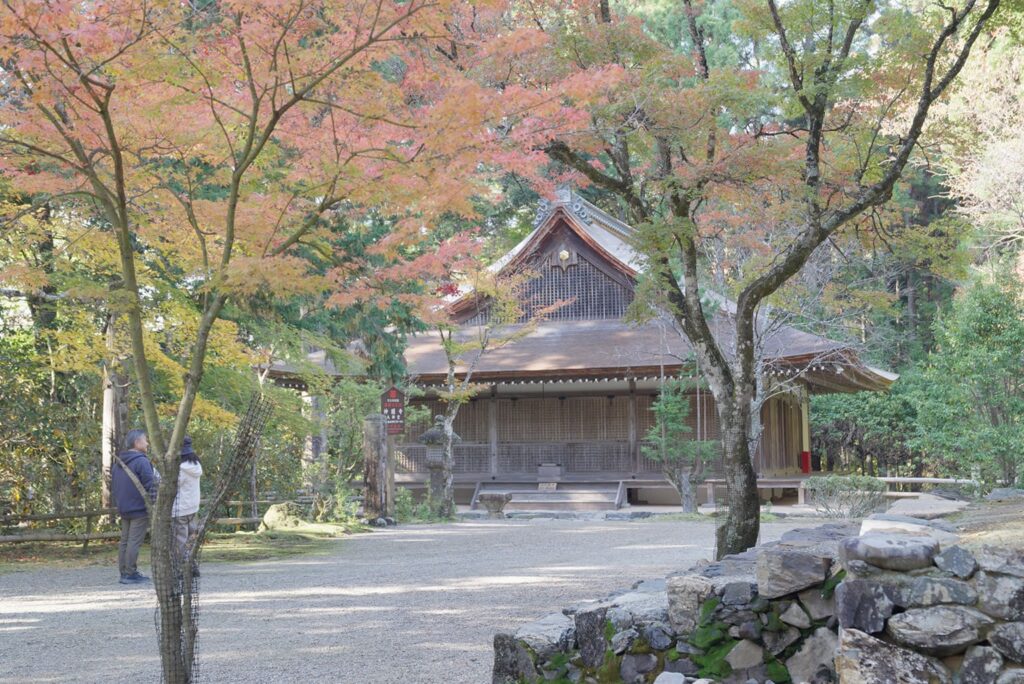
Today, Jingoji Temple remains a revered site, preserving the legacy of Kōbō Daishi’s Shingon Buddhism and serving as an exemplar of the history and artistry of Japanese Buddhism.
Koyasan Shingon Sect
This a sub-sect of the Shingon sect of Buddhism founded by Kūkai (Kōbō Daishi) (774–835) in the ninth century. The sect’s head temple is Kongobuji Temple in Wakayama Prefecture.
Lotus Sutra
This a representative sutra of Mahayana Buddhism. The sutra promotes the idea of universal salvation, which states that all sentient beings can achieve enlightenment, and discusses the nature of Buddha.
Saichō
The founder of the Japanese Tendai school, also known as Saicho. He lived from 767 to 822, and established the Enryaku-ji Temple on Mount Hiei.
Tendai Order
A Buddhist sect that venerates Tiantai Daishi Zhi-yi of China as its founder and regards the Lotus Sutra as its foundational scripture, with Dengyo Daishi Saicho as its Japanese founder. Its head temple is Enryaku-ji, located on Mount Hiei (Otsu City, Shiga Prefecture).
Jinganji Temple
This was a family temple built by Wake no Kiyomaro (733–799) at the beginning of the Heian period (794–1185). It merged with Takaosan-ji Temple to become the precursor to Jingoji Temple.
Wake no Kiyomaro
Wake no Kiyomaro (733–799) was an aristocrat and politician active in the Nara period (710–794). He is known for stopping the priest Dōkyo’s (700–772) attempt to seize the imperial throne during the reign of Empress Kōken (718–770). He also assisted in moving the imperial capital from Nara to Kyoto, and he was enshrined at Go-ō Shrine after his death in recognition of his loyalty. His tomb is located at Jingoji Temple. The shrine moved from the temple grounds to its current location in 1886.
Shingon Buddhism
A Buddhist sect founded by Kukai, who established Mt. Koya as a place of worship.
Kamakura-period
The roughly 150-year period from the founding of the Kamakura shogunate by Minamoto no Yoritomo to the fall of the shogunate, marked by Hojo Takatoki’s suicide in 1333.
Takaosanji Temple
This is a private temple founded by Wake no Kiyomaro (733–799) in the early Heian period (794–1185). It is a holy site used as an ascetic mountain training ground, and the prominent Buddhist religious figures Saichō (767–822) and Kūkai (774–835) refined their knowledge here. Takaosanji was consolidated with nearby Jinganji Temple to form the precursor to Jingoji Temple.
Nara period
Refers to the period between 710 and 784 when the capital was moved to Heijo-kyo, present day Nara. Lasting a little over 70 years the period saw the reign of seven emperors: Genmei, Gensho, Shomu, Kenko, Junnin, Shotoku, and Konin. In art history, the Nara period is sometimes referred to as the Tenpyo period, and is marked by the splendour of the Buddhist statuary and architecture produced.
Yuiseki Head Temple
This refers to the head temple of a religious sect. The name indicates the temple’s ties with the sect founder and high-ranking priests.
Kūkai (Kōbō Daishi)
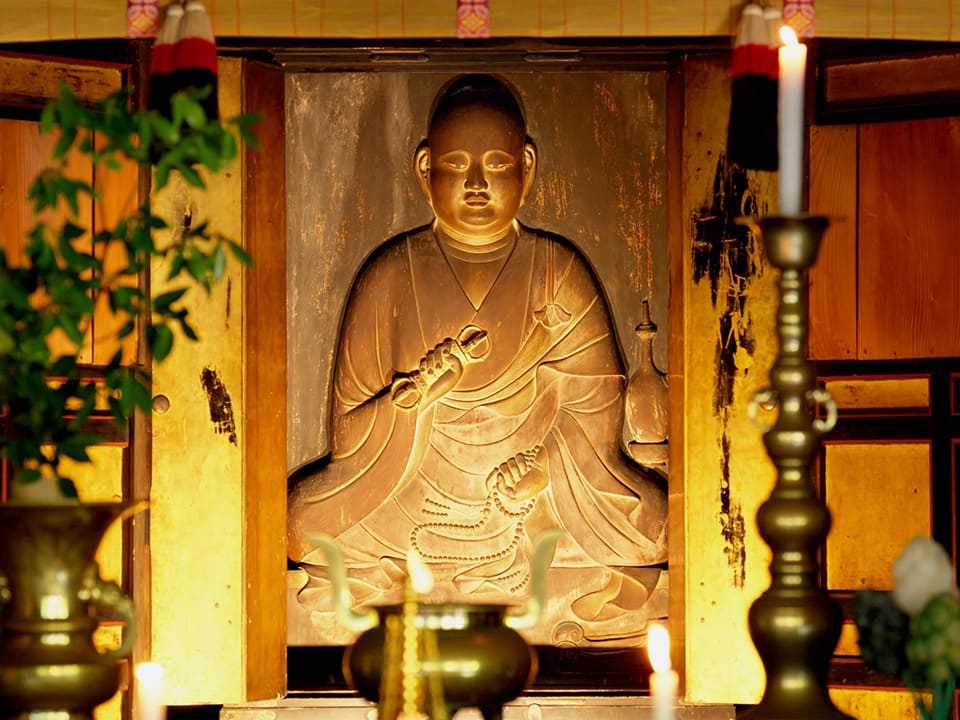
A Heian Era priest (774-835). Also known as Kobo Daishi. He is the founder of the Shingon sect and one of the three great calligraphers of the day.
Heian period
The Heian period lasted for approximately 400 years between the transfer of the capital to Heian-kyo (present day Kyoto) by Emperor Kanmu in 794 and the foundation of the Kamakura Shogunate in 1185. The period is often divided into three sections: the Early, Mid- and Late Heian periods. In other words, the period of reviving the political system based on Ritsuryo codes, the regency period and the Insei period (governed by a retired emperor), respectively. (The end of the Late Heian period was ruled by the Taira clan.) Also referred to as the period of the Heian imperial court.
MOVIE
Experience the video to get one step closer.
This video, accompanied by narration, introduces the charms of About Jingoji Temple. Experience its charms even more deeply through the video.
Duration: (audio included)
INFOMATION
Takaosan Jingoji Temple
5 Takao-cho, Umegahata, Ukyo-ku, Kyoto-shi
【境内拝観時間】
9:00 AM - 4:00 PM
[Admission Fee]
Adults (Junior high and older) : 1,000 yen
Primary school age : 500 yen