Important Cultural Property
Standing Statue of Bishamonten (Vaisravana)
Heian period
Wood, polychrome
1 figure
Enshrined in Bishamondō Hall
Statue height: 112.4 cm
This article can be read in about 2 minutes.
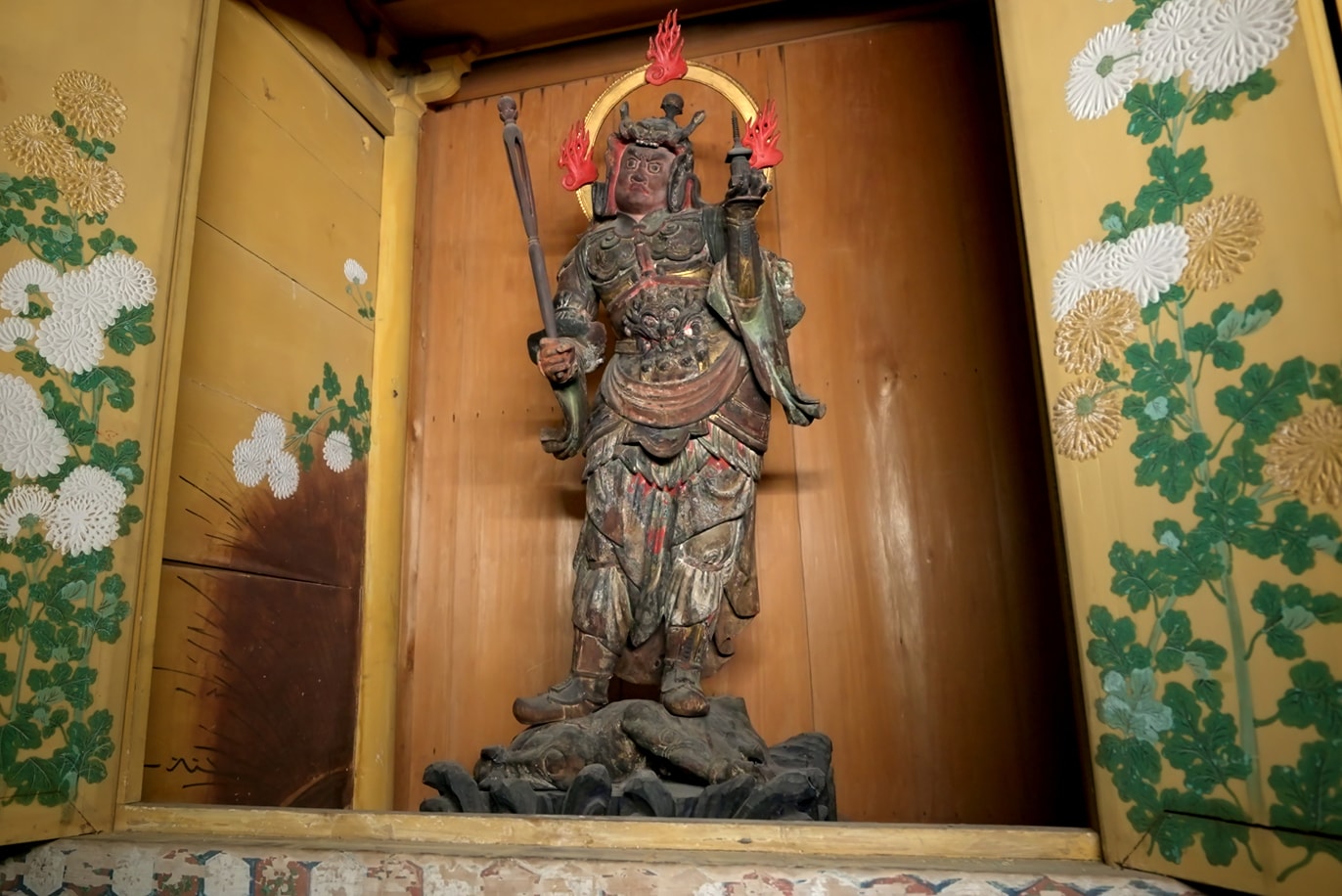
A one-of-a-kind guardian
crowned with a devil-mask helmet
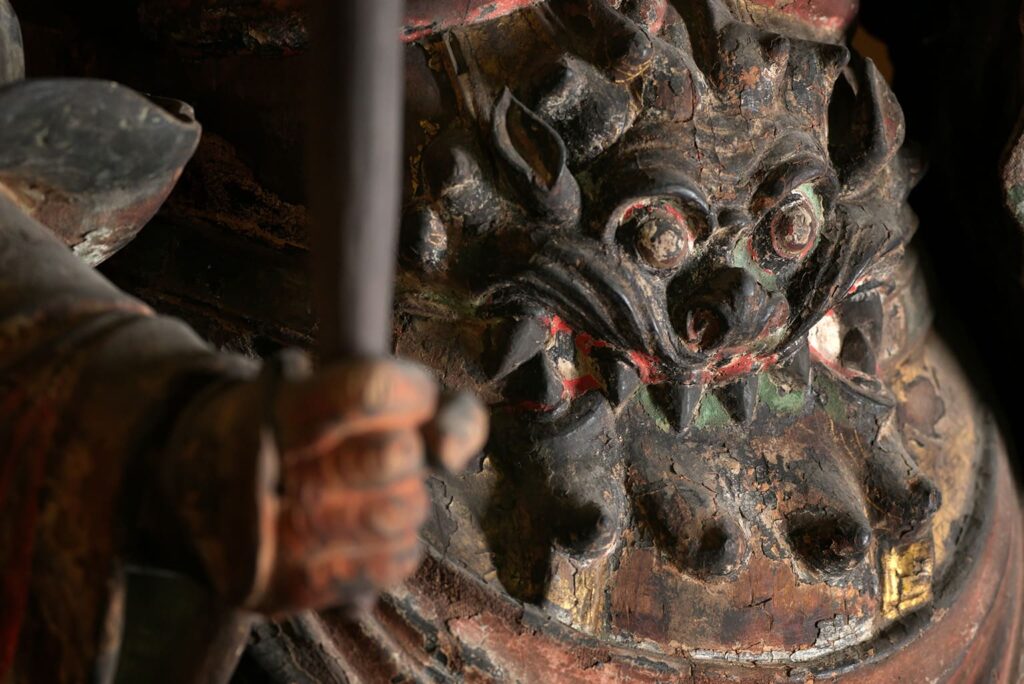
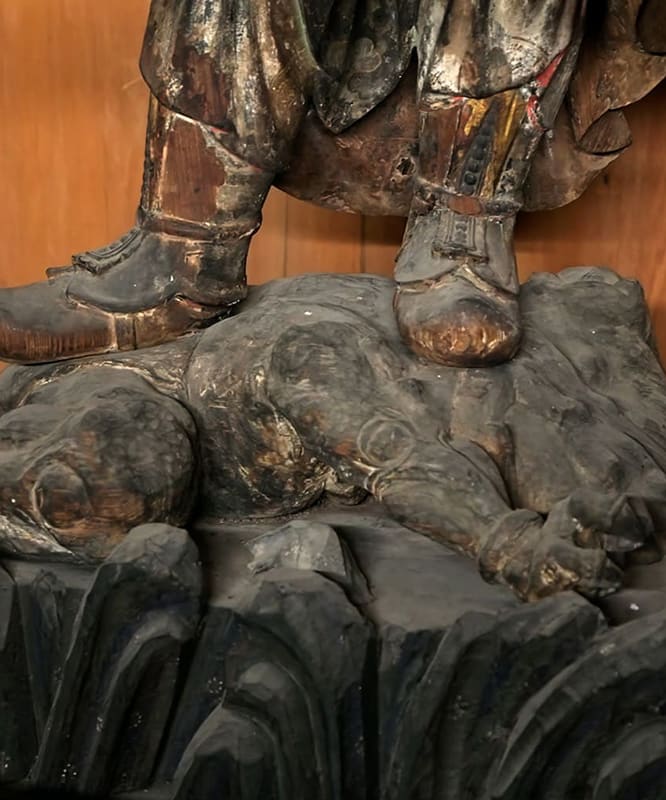
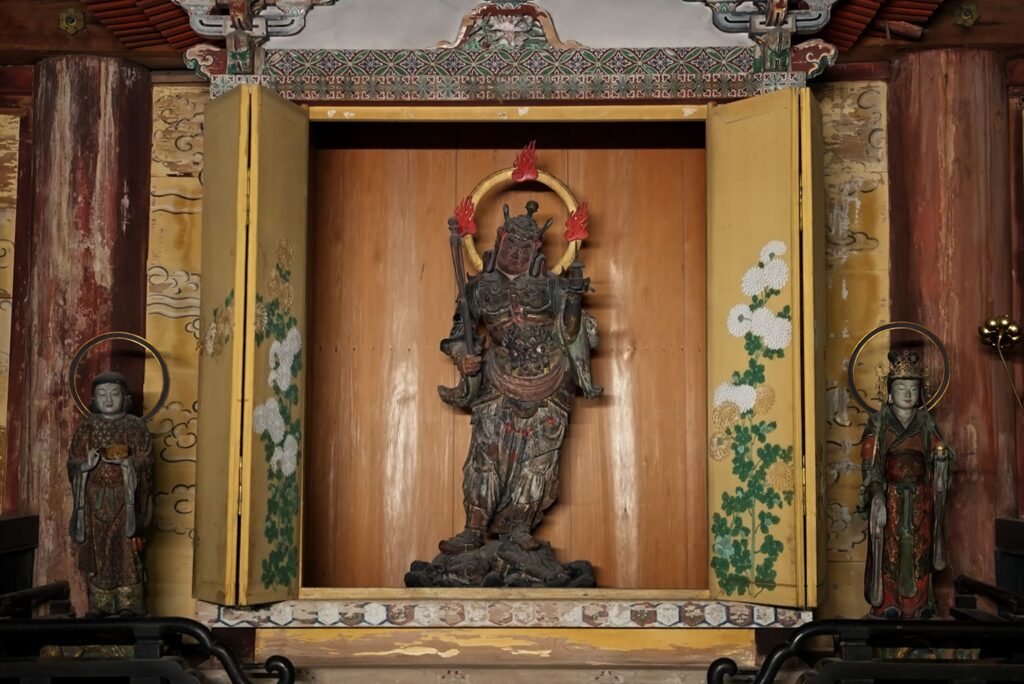
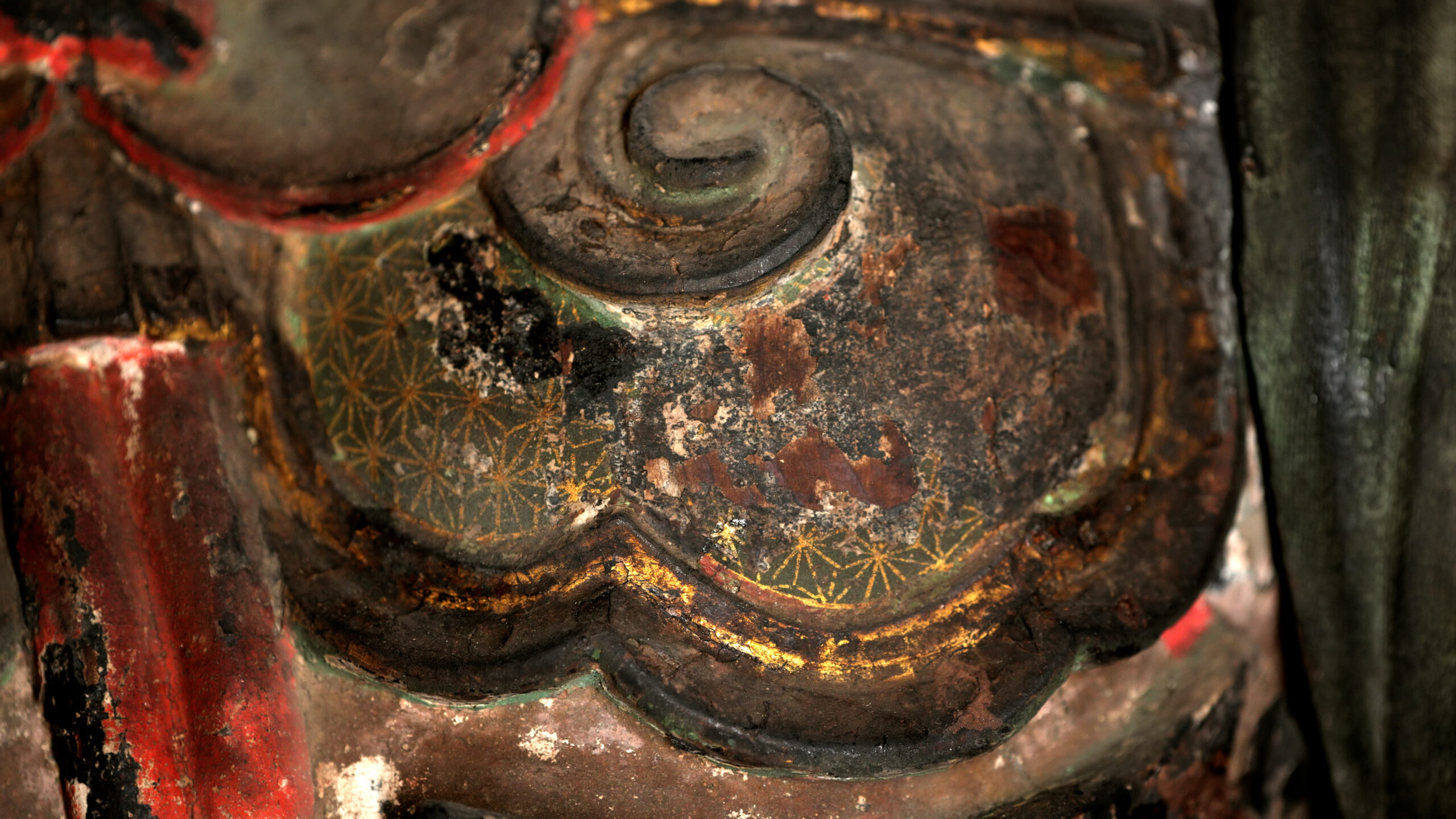
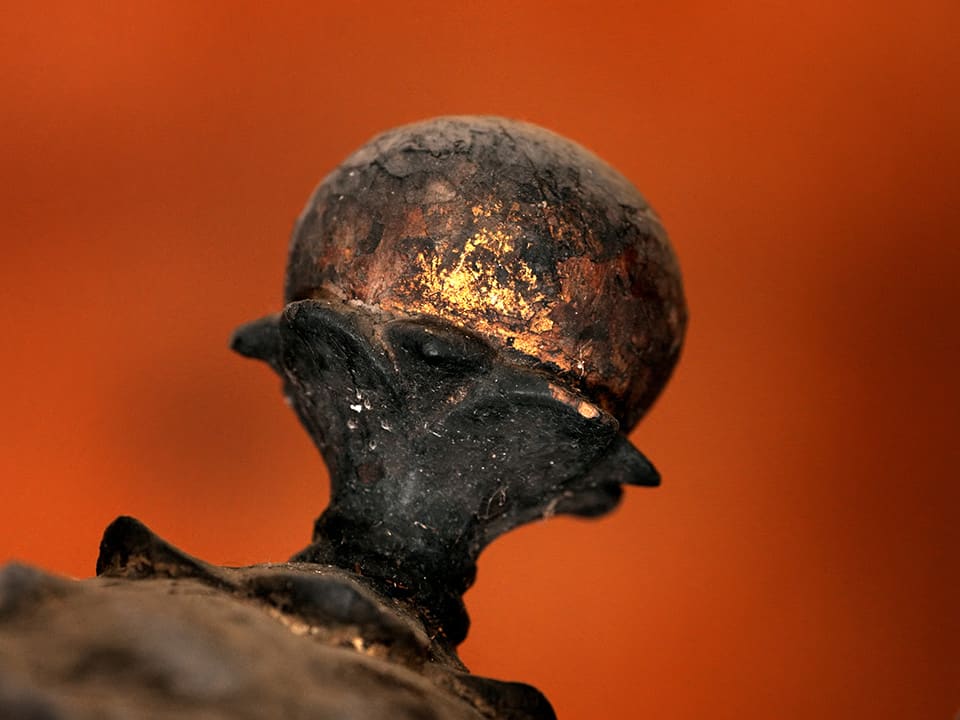
Thought to have been made in the late Heian period (794–1185), this statue of a god of warriors, Bishamonten (Vaisravana) is the principal image of Bishamondō Hall. In keeping with tradition, Bishamonten is depicted trampling an evil demon and clad in armor, which is inlaid with gold leaf. He wields a jeweled mace in one hand and holds a pagoda in the other. The decoration of his helmet, which has an ornament in the shape of a demon's face and is topped by a jewel orb, is unusual.
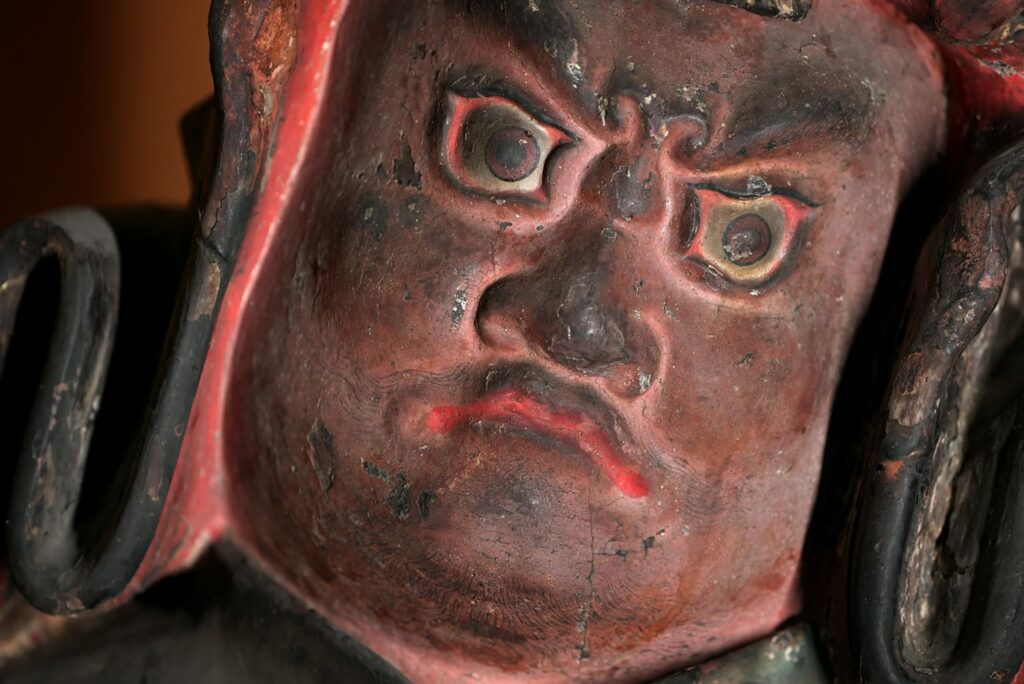
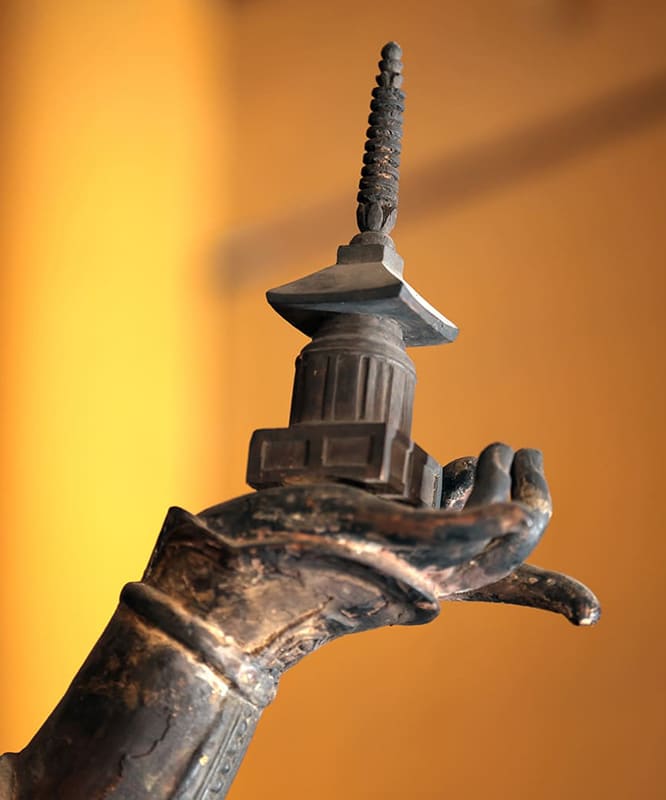
Usually kept in a hall closed to the public, this statue forms a triad with Kichijōten (Sri-mahadevi) and Zennishi Dōji, who are sometimes said to be Bishamonten’s wife and son. Bishamonten’s head is tilted slightly and his gaze is calm and powerful, conveying the quiet dignity favored by Heian aristocrats, rather than the ferocity usually seen in later depictions of this god of warriors.
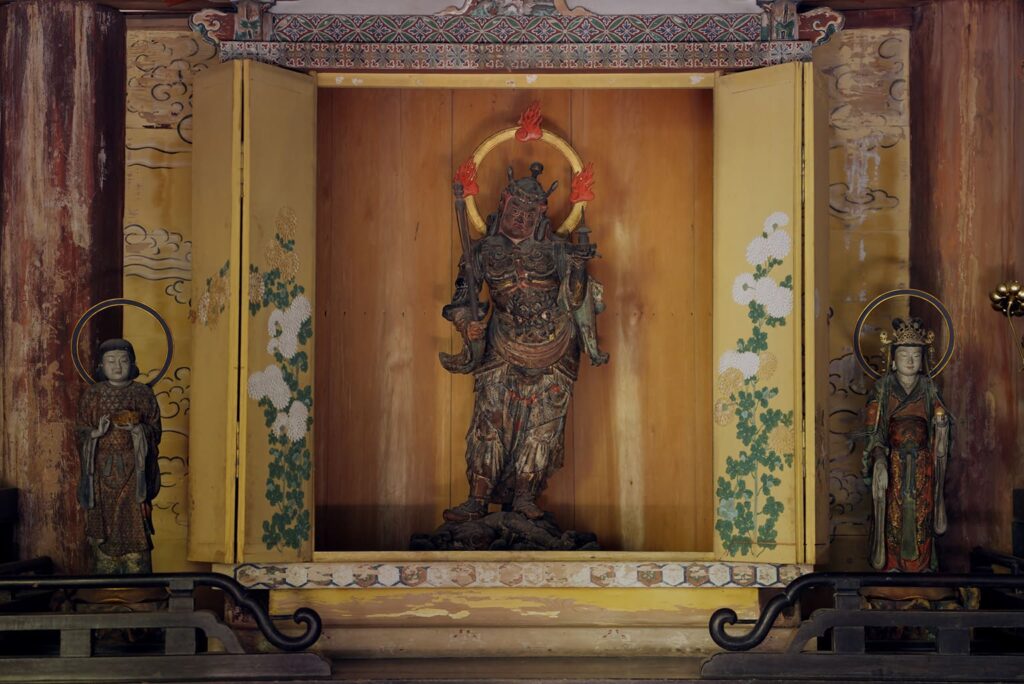
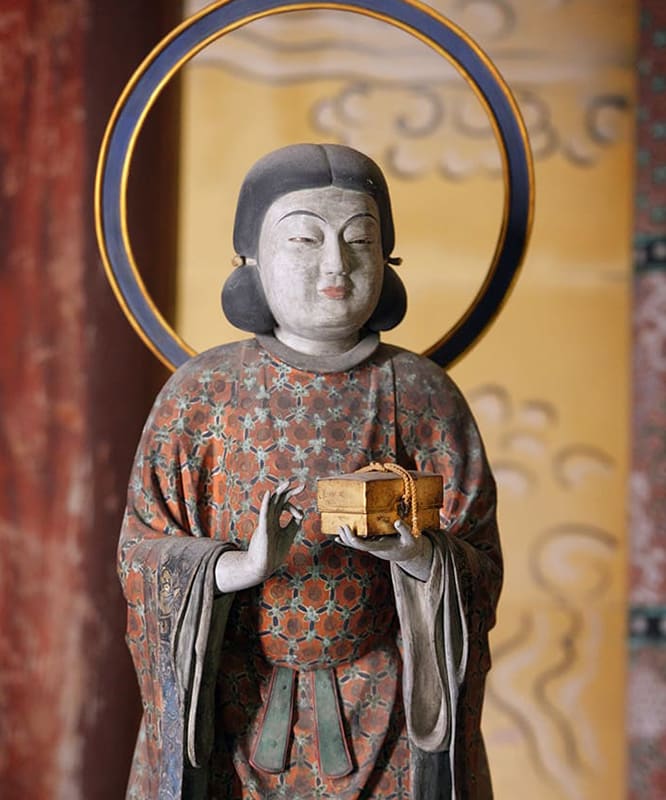
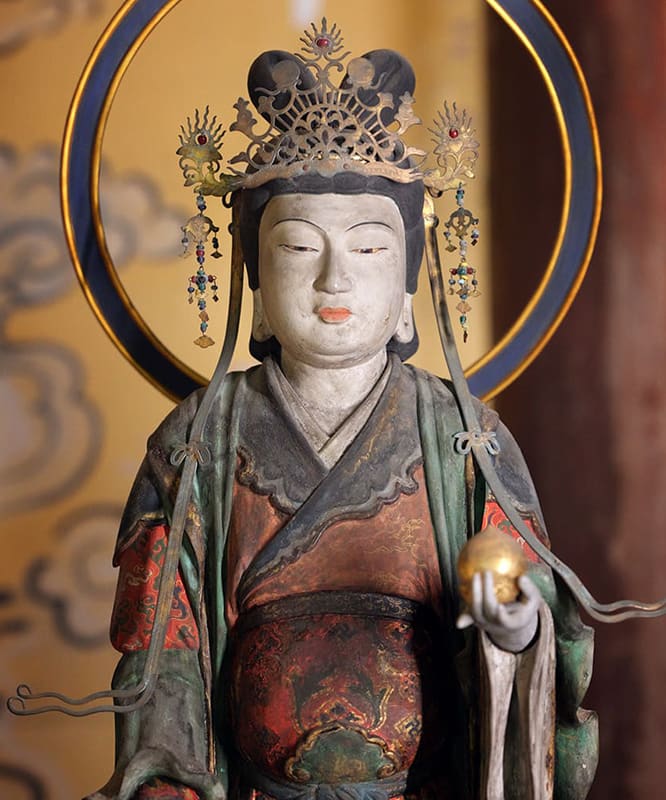
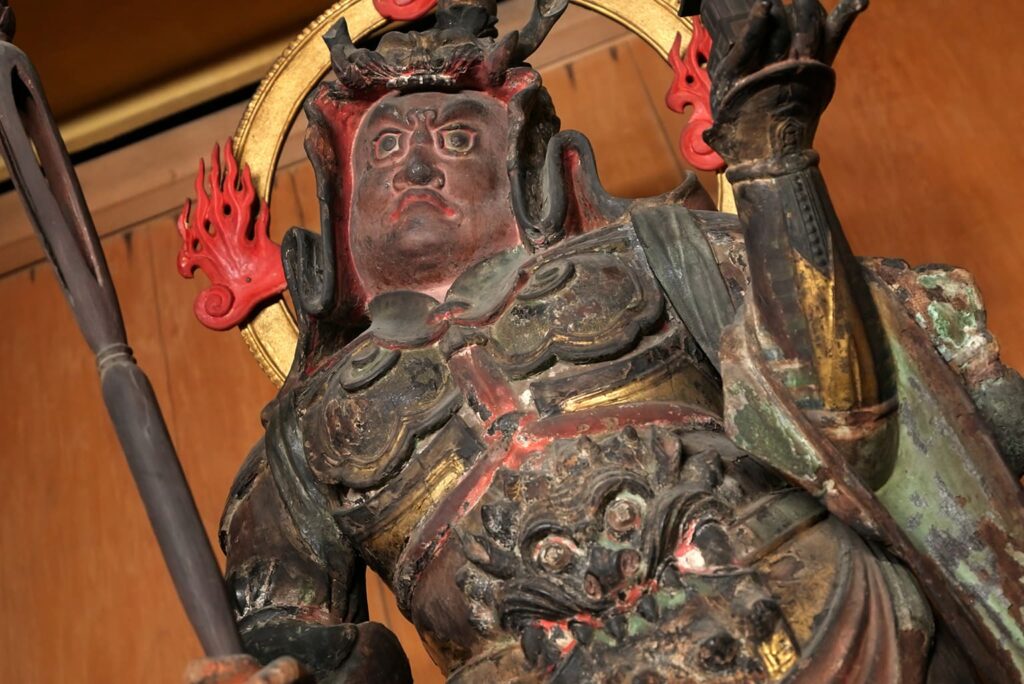
This valuable work offers a glimpse into the historical artistic trends that shaped the sculptures of Jingoji Temple.
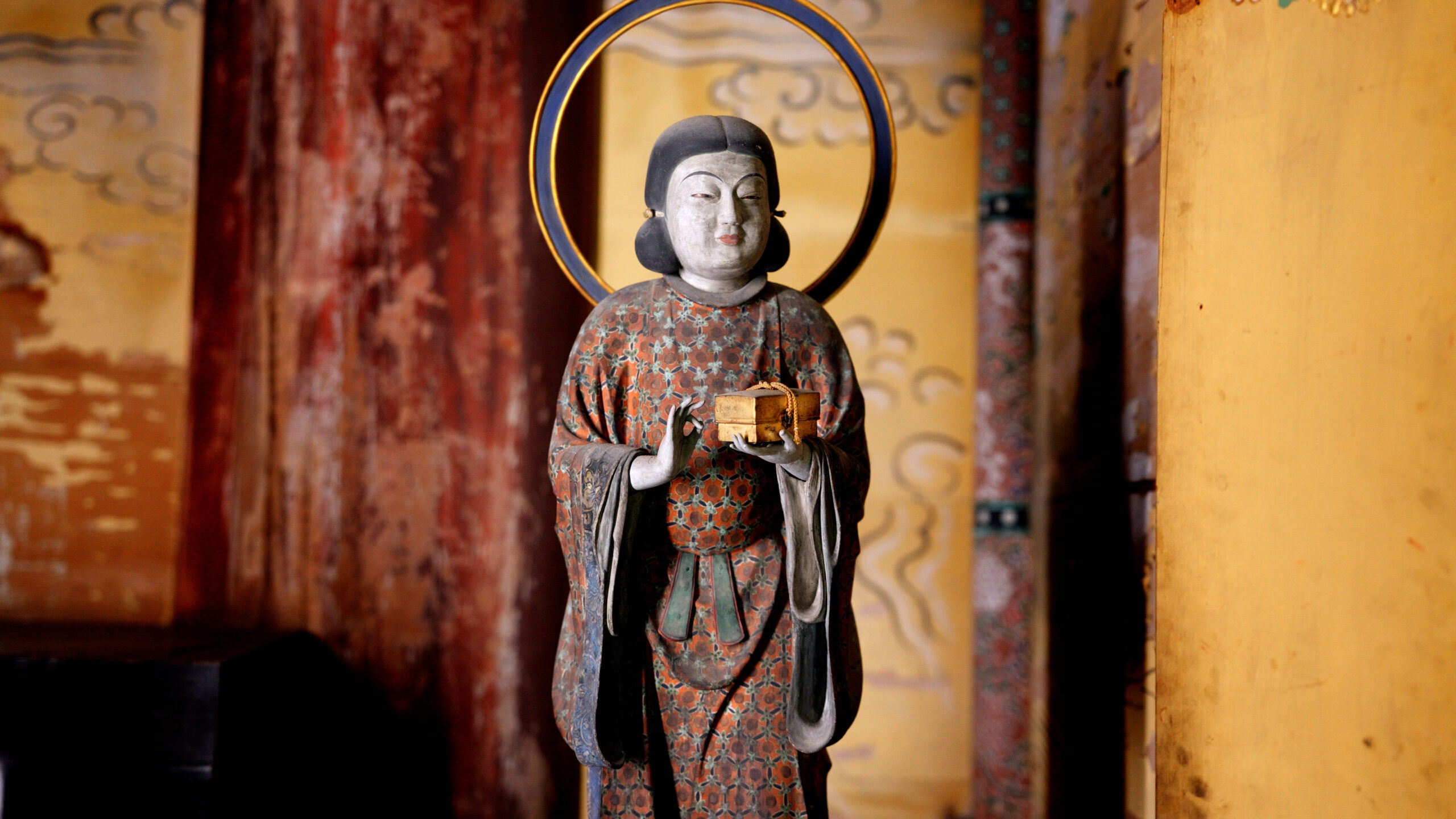
Zennishi Dōji
A child that often appears in Buddhist imagery, particularly in Esoteric Buddhist statues. He symbolizes wisdom and protection.
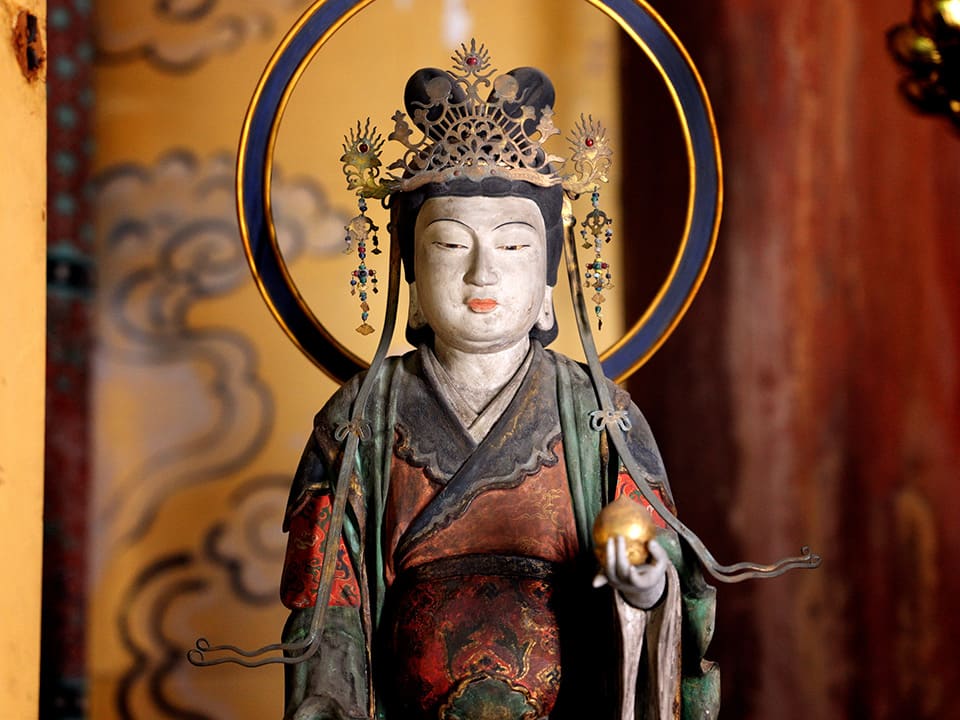
Kisshōten (Śrīmahādevī)
A goddess who symbolizes good fortune, beauty, and prosperity.
kirikane gold leaf
decorative finial
In Japan, the decorative finial is often represented as a pointed spherical shape, known as a jewel, that has the power to ward off calamities and grant wishes.
Bishamondō Hall
This hall was converted from the former Kondo Main Hall built in 1623. The principal image is a Heian-period (794–1185) standing statue of Bishamonten (Vaiśravaṇa) that has been designated as an Important Cultural Property.
Heian period
The Heian period lasted for approximately 400 years between the transfer of the capital to Heian-kyo (present day Kyoto) by Emperor Kanmu in 794 and the foundation of the Kamakura Shogunate in 1185. The period is often divided into three sections: the Early, Mid- and Late Heian periods. In other words, the period of reviving the political system based on Ritsuryo codes, the regency period and the Insei period (governed by a retired emperor), respectively. (The end of the Late Heian period was ruled by the Taira clan.) Also referred to as the period of the Heian imperial court.
MOVIE
Experience the video to get one step closer.
This video, accompanied by narration, introduces the charms of Standing Statue of Bishamonten (Vaisravana). Experience its charms even more deeply through the video.
Duration: (audio included)


Please take part in the survey.
Takes about 30 seconds