Important Cultural Property
Seated Statue of Aizen Myō-ō
Kamakura period (1275)
Wood, polychrome
1 figure
Statue height: 39.7 cm
This article can be read in about 2 minutes.
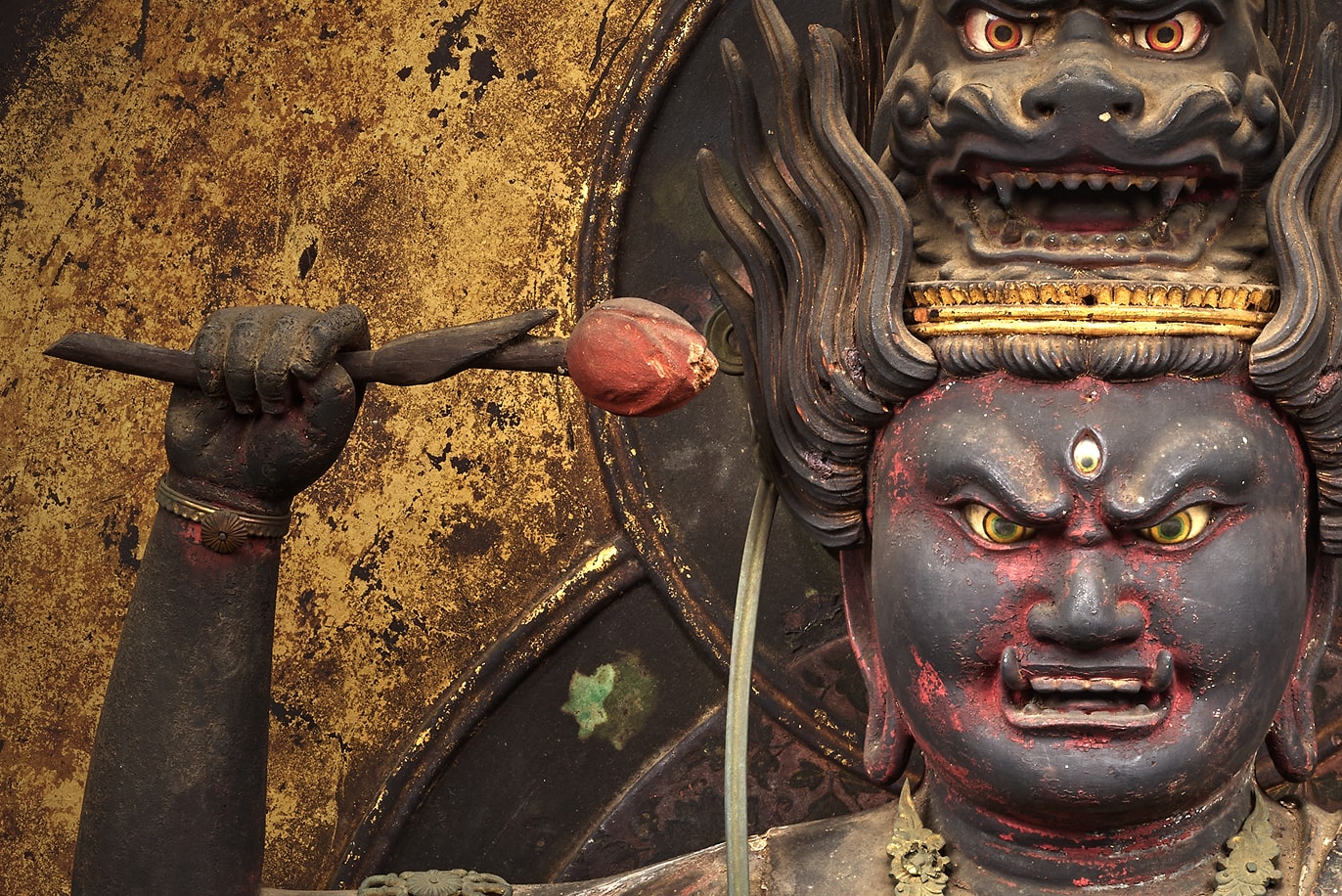
Spirit of Aizen (Ragaraja)
carved by the lineage of Unkei
This statue of Aizen Myō-ō (Rāgarāja) was made in 1275 by Kōen (1207–?), a master artist and grandson of the renowned sculptor Unkei (?–1223). Kōen also created works for other famous temples, such as Sanjūsangendō and Tōdaiji.
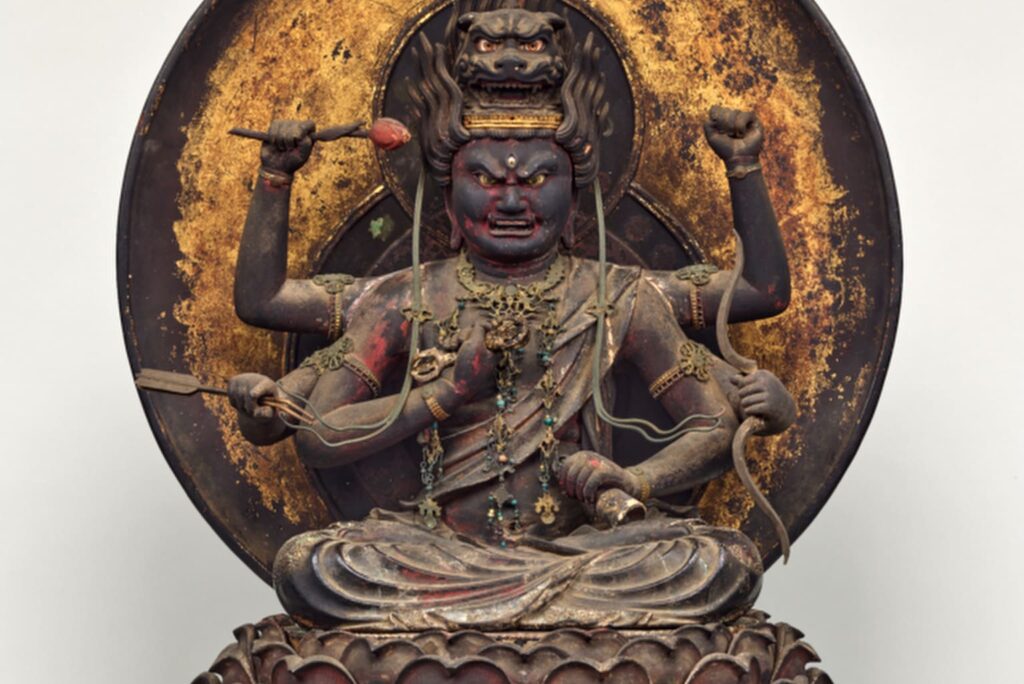
Aizen Myō-ō is an Esoteric Buddhist deity who guides people to enlightenment by liberating them from earthly desires, such as lust and attachment. He is characterized by his angry facial expression, a third eye on his forehead, and his six arms. He is often depicted wearing a lion's head as a crown.
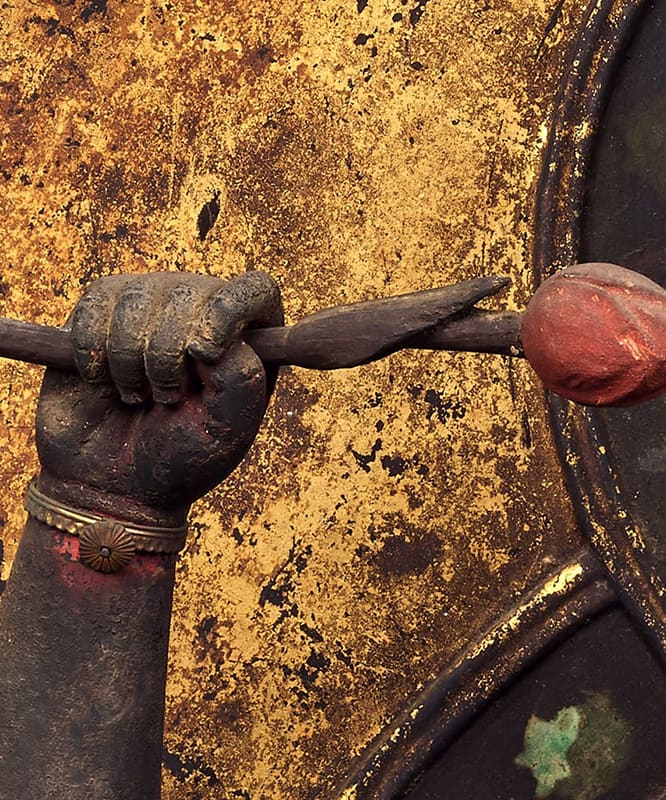
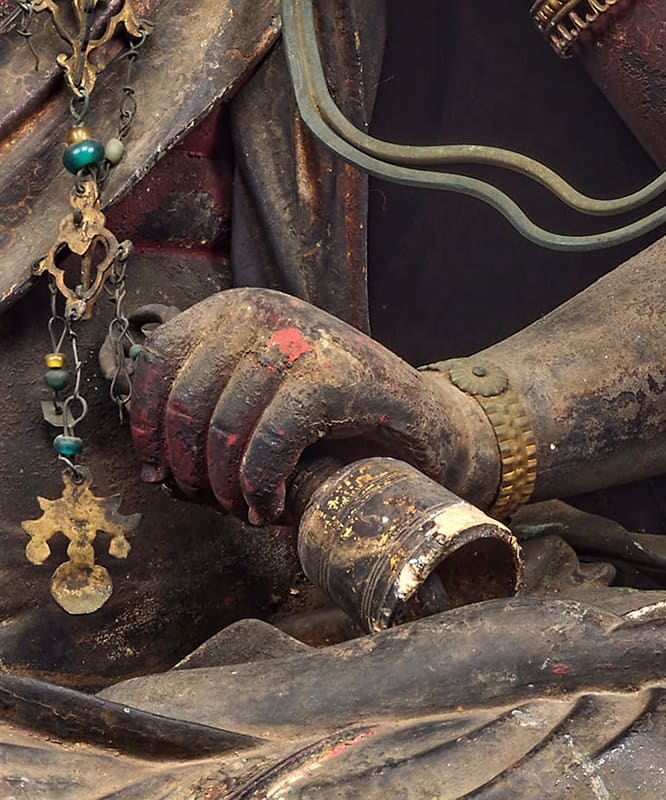
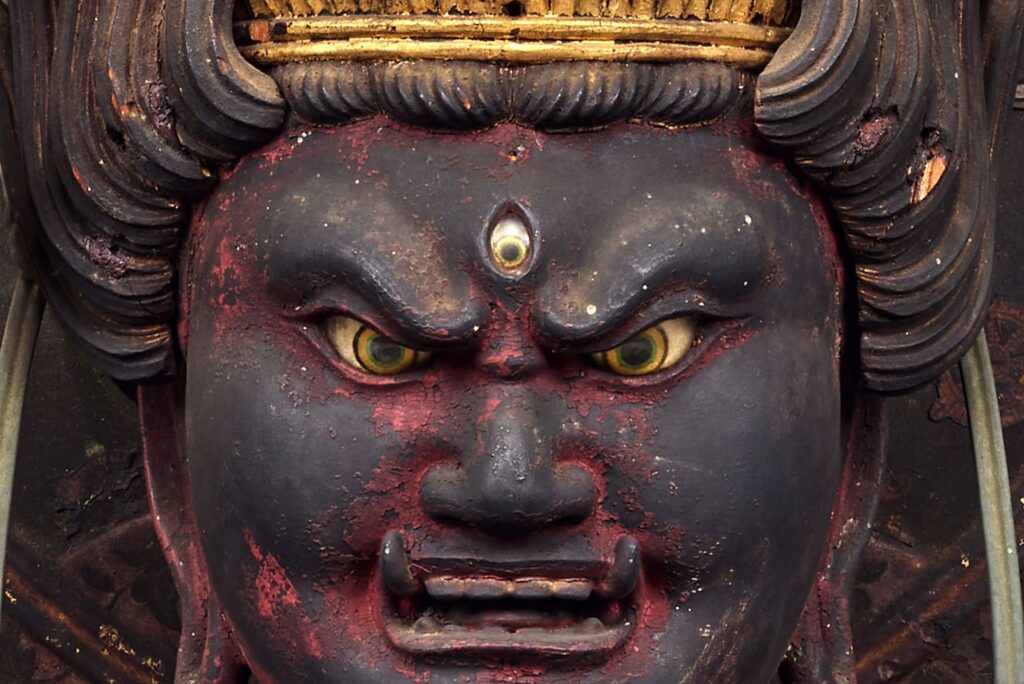
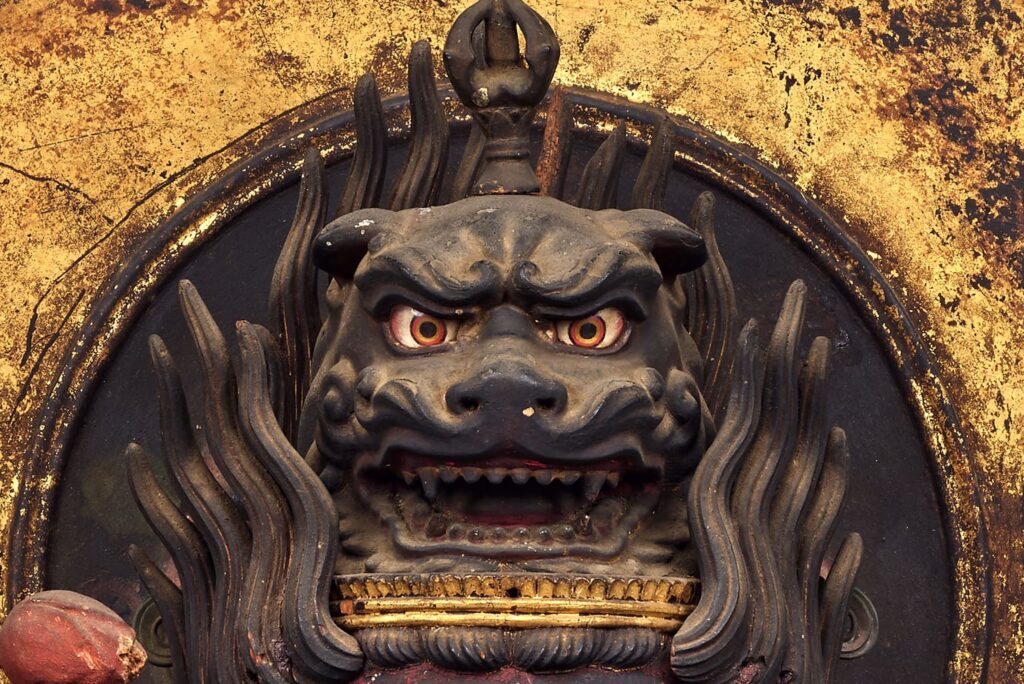
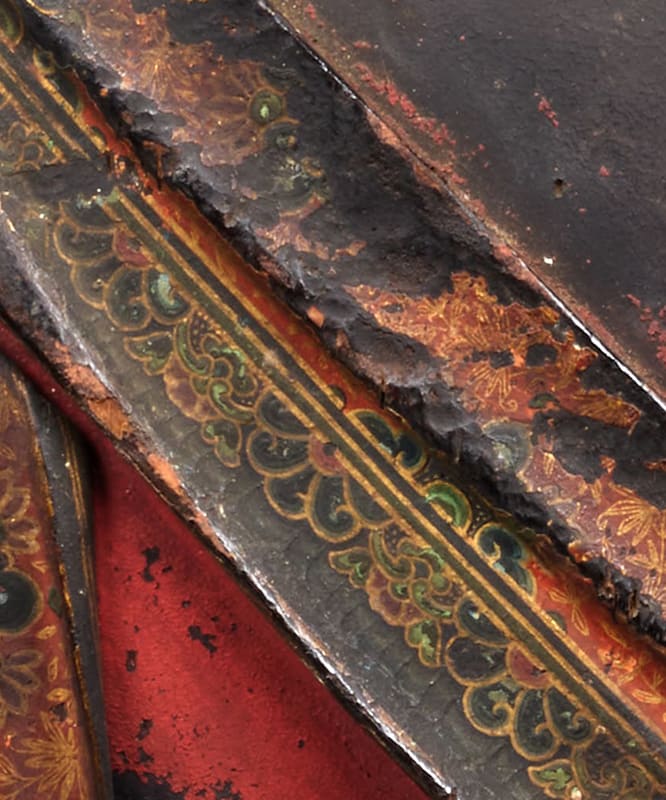
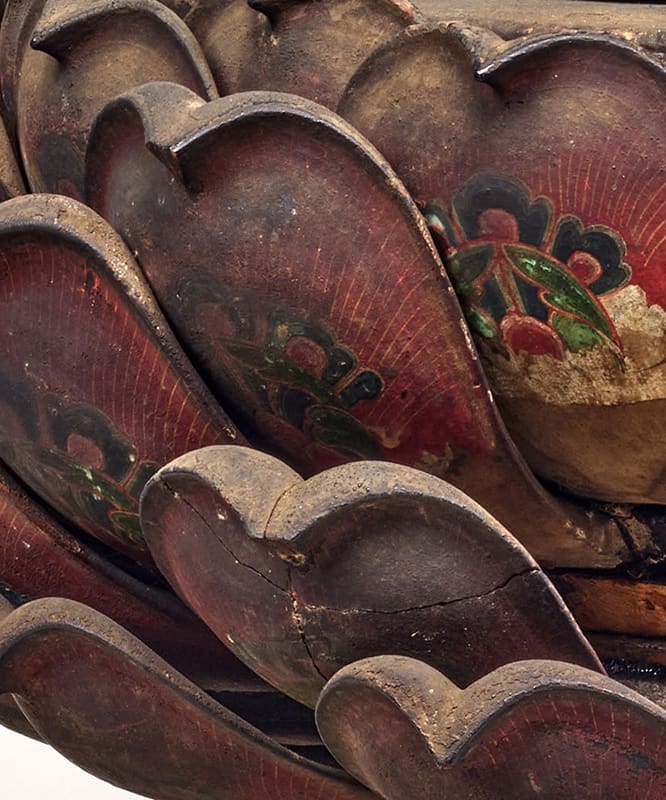
Today, the statue is mostly black, but it was originally covered entirely in red pigment. It still retains the original ornaments on its chest and arms, and delicate workmanship is evident throughout. The statue’s vivid facial expression, lifelike form, and the softly rippling folds of the robe around the waist give the statue an air of dynamic movement.
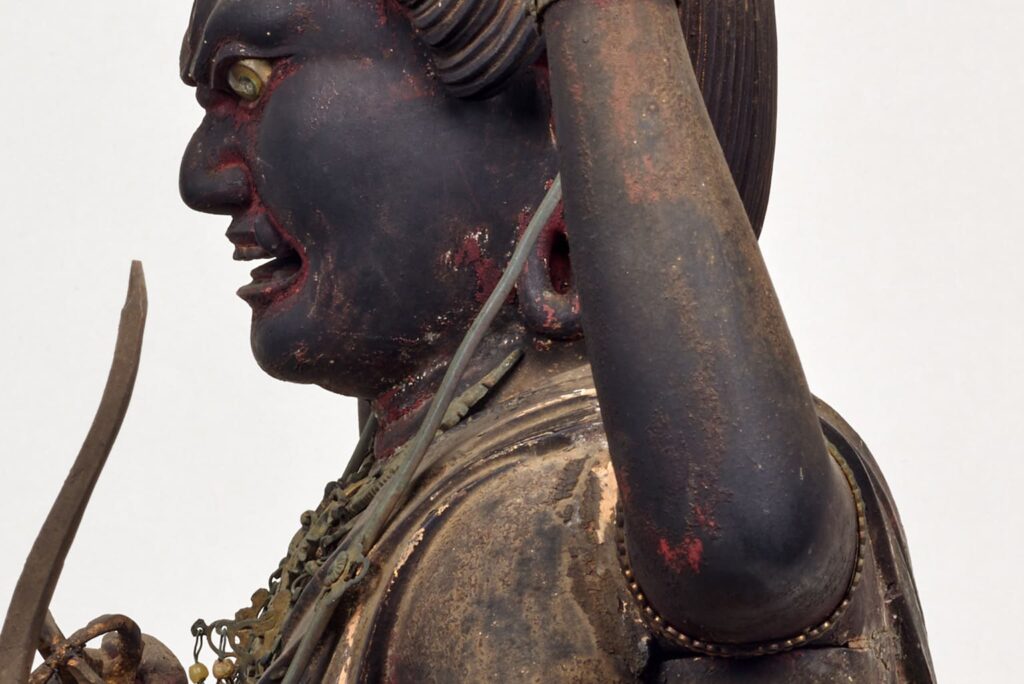
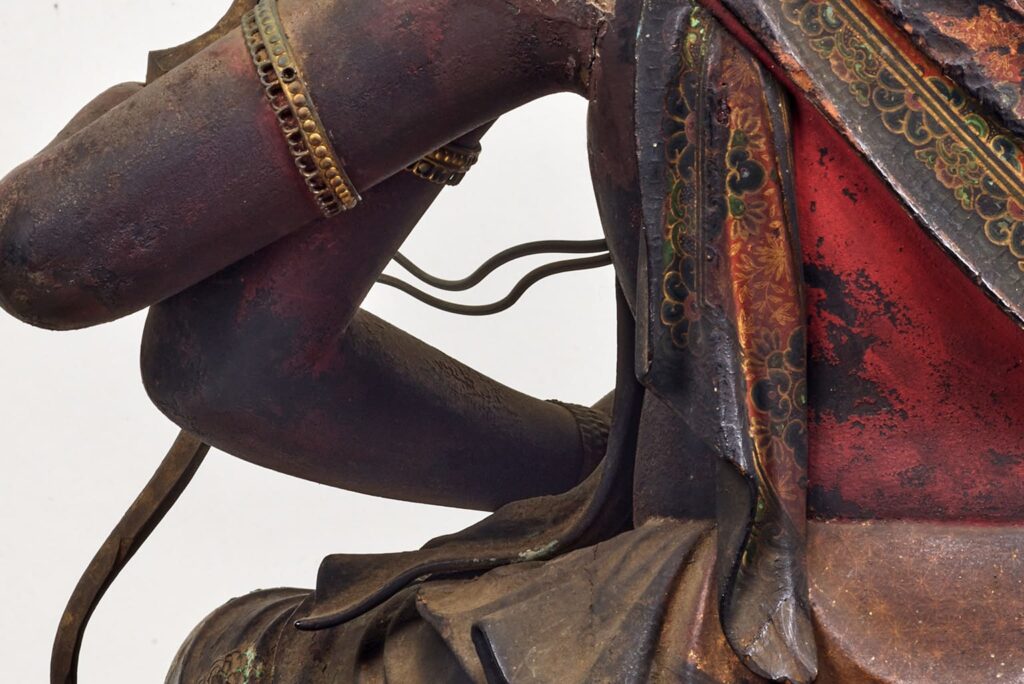
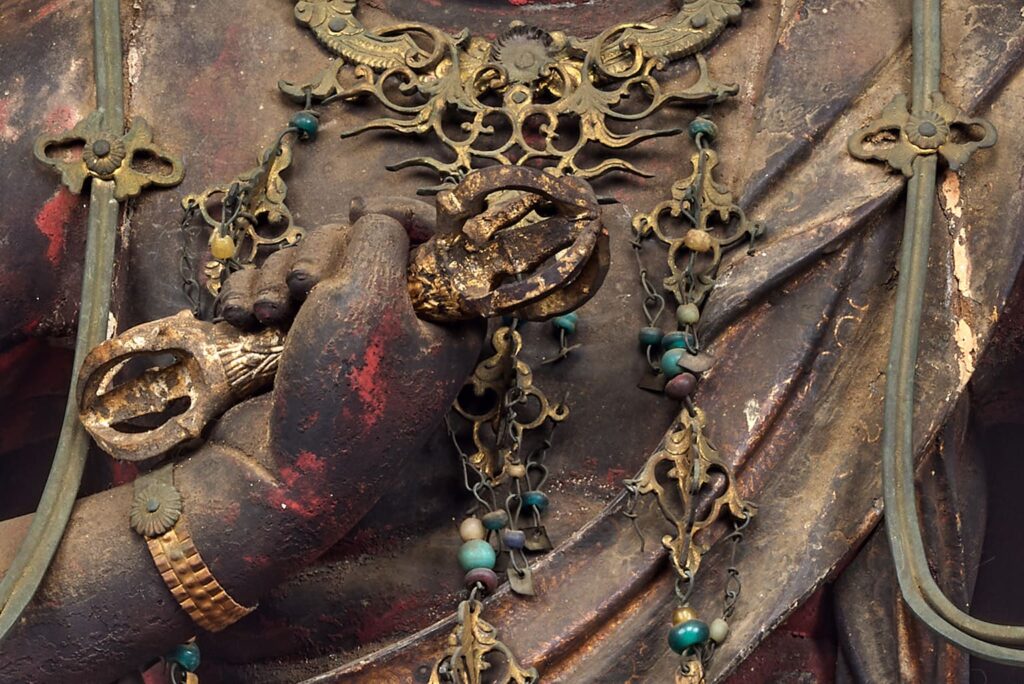
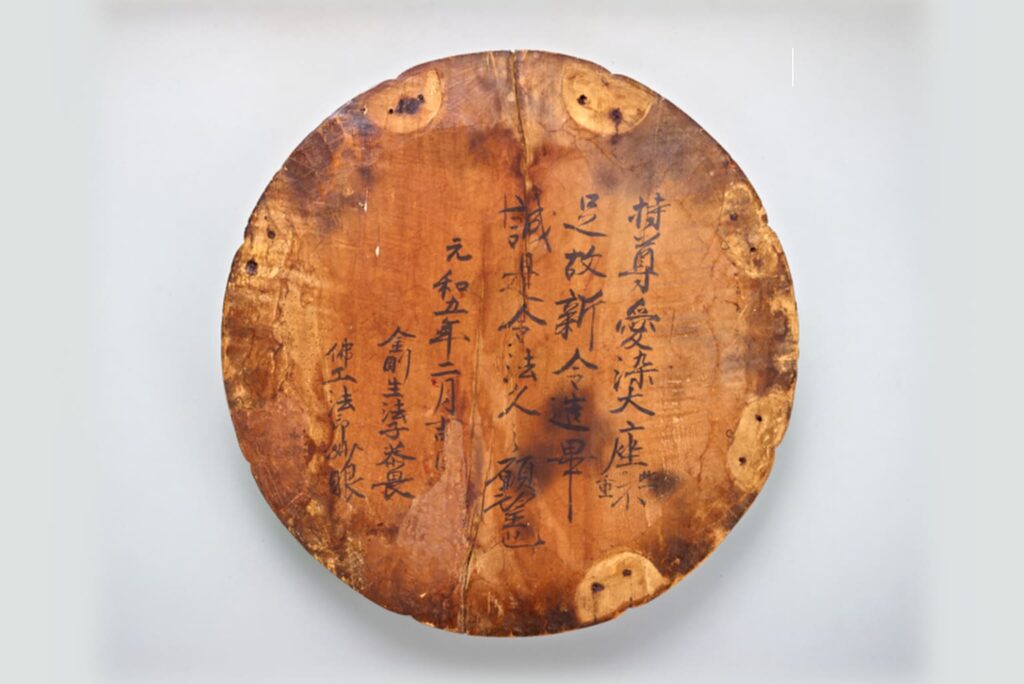
The pedestal bears an inscription stating that the monk Kyōi (1565–1630), who lived in seclusion at Jingoji Temple, made the statue his personal Buddha icon, suggesting it was particularly treasured among Jingoji’s monks.
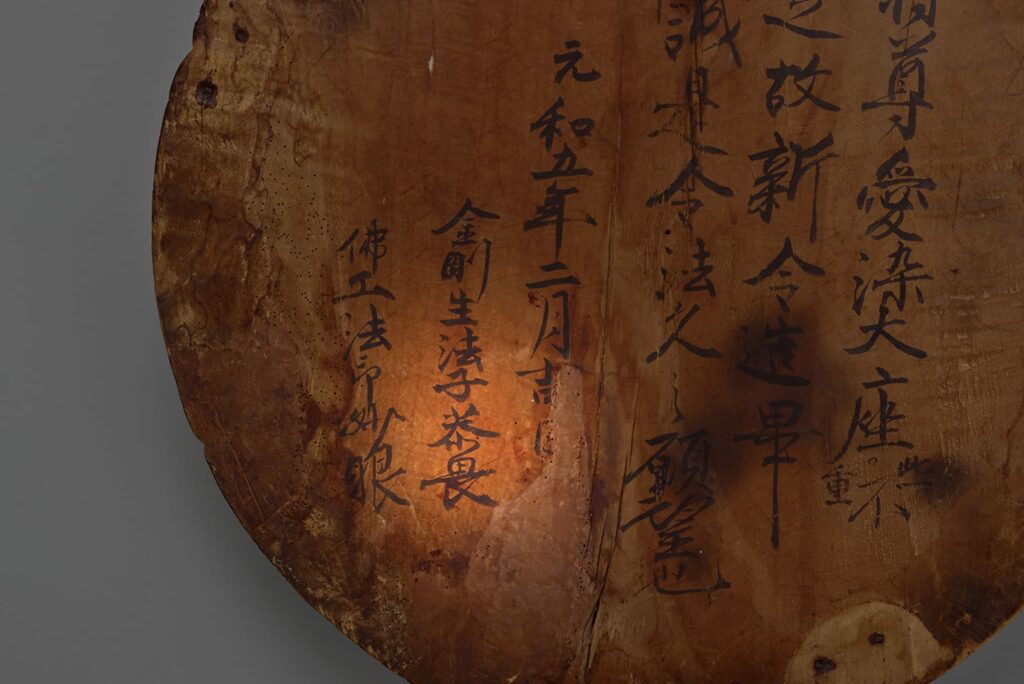
jibutsu miniature statue
A Buddhist statue to be placed nearby a person or worn for personal reverence.
Kyōi
Kyōi (1565–1630) was a Shingon priest active during the early Edo period (1603–1867). He is known for chronicling items related to Jingoji Temple’s seated statue of Aizen Myō-ō in the temple’s written records.
lion head crown
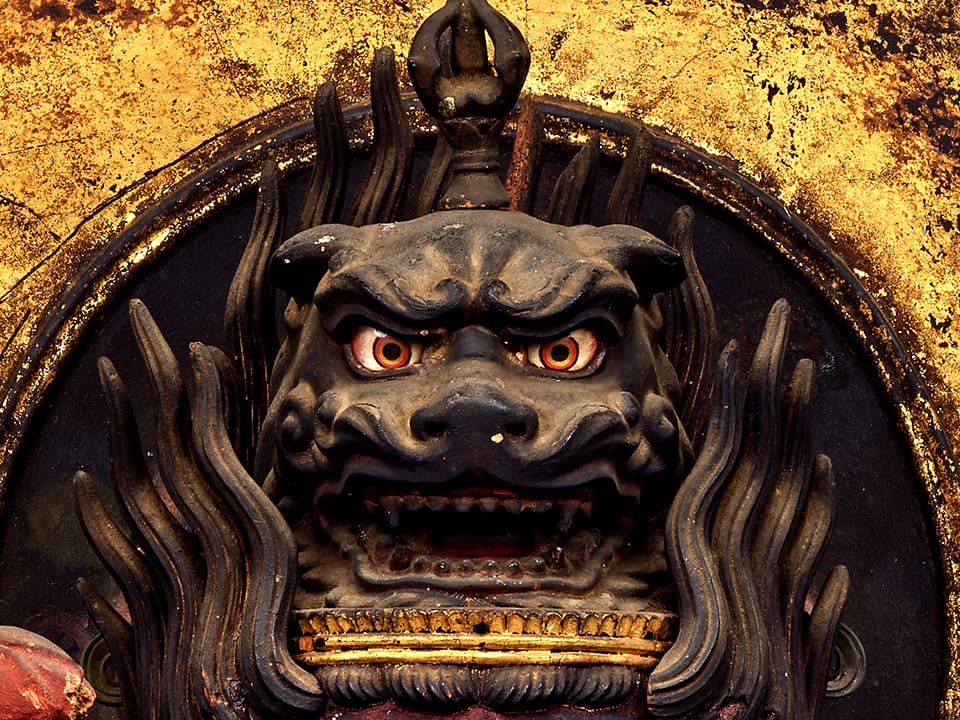
Aizen Myo-o (Ragaraja)
Aizen Myo-o (Ragaraja) is a Wisdom King described in the Yoga Sutras, an Esoteric Buddhist scripture. Aizen Myo-o is often depicted with six arms, a wrathful expression, red skin, and a lion crown. He is typically shown sitting on a lotus dais atop a holy vase with a flaming sun wheel in the background. In his six hands he holds four sacred objects: a five-pronged pestle, five-pronged bell, bow and arrow, and lotus blossom. These symbolize the four virtues of good health, wealth, affection, and spiritual fortitude. It is believed Aizen Myo-o chants twelve great vows to save people from suffering, and he is revered by worshippers as a symbol of the virtue of affection. This virtue relates to happy marriages, successful matchmaking, harmony between husband and wife, and good human relationships. In addition, Aizen Myo-o symbolizes the concept of bonno soku botai, which roughly translates to “suffering is enlightenment,” or the idea that human desire and suffering become catalysts for enlightenment. Aizen Myo-o also embodies the Rishu-kyo scripture, an important text in Esoteric Buddhism.
Todai-ji
Founded in the early 8th century by Emperor Shomu, this temple serves as the head temple of the Kegon sect. The principal image is the Vairocana Buddha, commonly known as the Great Buddha of Nara, and its Great Buddha Hall is one of the largest wooden structures in the world.
Sanjusangendō Hall
This is the common name of the Main Hall of Rengeōin Temple located in Kyoto’s Higashiyama Ward. It is a famous Tendai temple known, and for its principal image, a seated statue of Thousand-Armed Kannon, and its 1,000 standing statues of the Thousand-Arm Kannon. Taira no Kiyomori (1118–1181) built the hall in 1164 after receiving an edict issued by Emperor Go-Shirakawa (1127–1192).
Unkei
A Buddhist sculptor active from the late Heian period to the early Kamakura period who lived until 1224. He was the son of the Nara Buddhist sculptor Kokei, who was based at Kofuku-ji Temple. He perfected a new style of Kamakura sculpture initiated by Kokei.
Kōen
A Buddhist sculptor active during the mid-Kamakura period (1185–1333). He was a member of the Kei school, which was founded by the Buddhist sculptor Unkei (d. 1223), who was Kōen’s grandfather. Known for his use of gentle expressions and exquisite forms, Kōen displayed a style that fused realism with spirituality.
Kamakura-period
The roughly 150-year period from the founding of the Kamakura shogunate by Minamoto no Yoritomo to the fall of the shogunate, marked by Hojo Takatoki’s suicide in 1333.
MOVIE
Experience the video to get one step closer.
This video, accompanied by narration, introduces the charms of Seated Statue of Aizen Myō-ō. Experience its charms even more deeply through the video.
Duration: (audio included)


Please take part in the survey.
Takes about 30 seconds