Important Cultural Property
Daishidō Hall
Momoyama period
Four bays long on the left side
Five bays long on the right side
Three bay transverse span
Single Tier
hip-and-gable style (irimoya-zukuri)
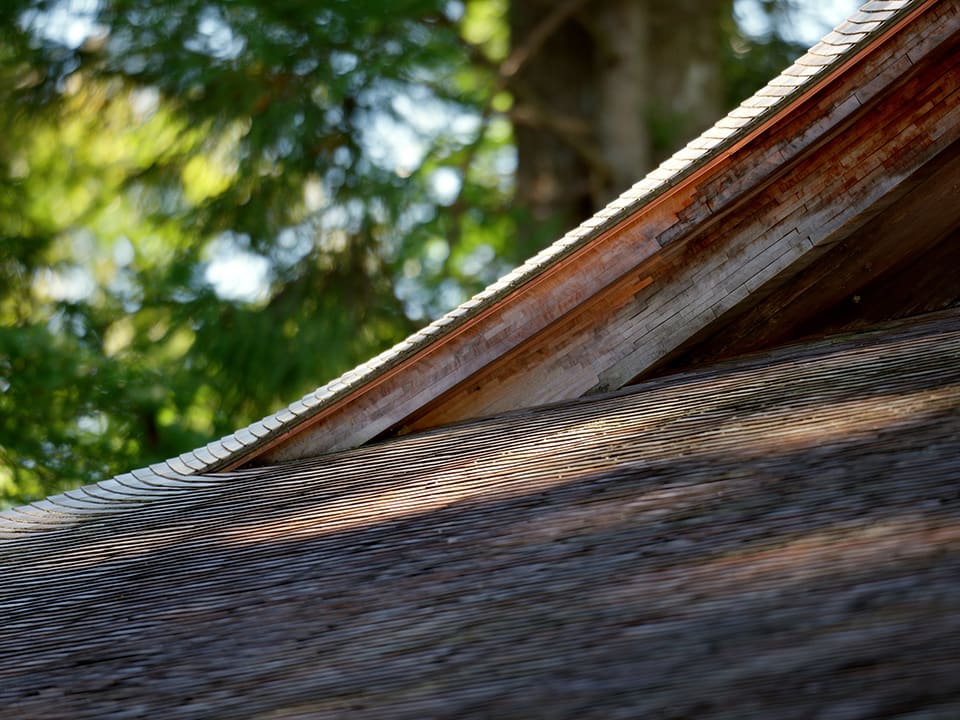
Kokerabuki Shingles
This article can be read in about 2 minutes.
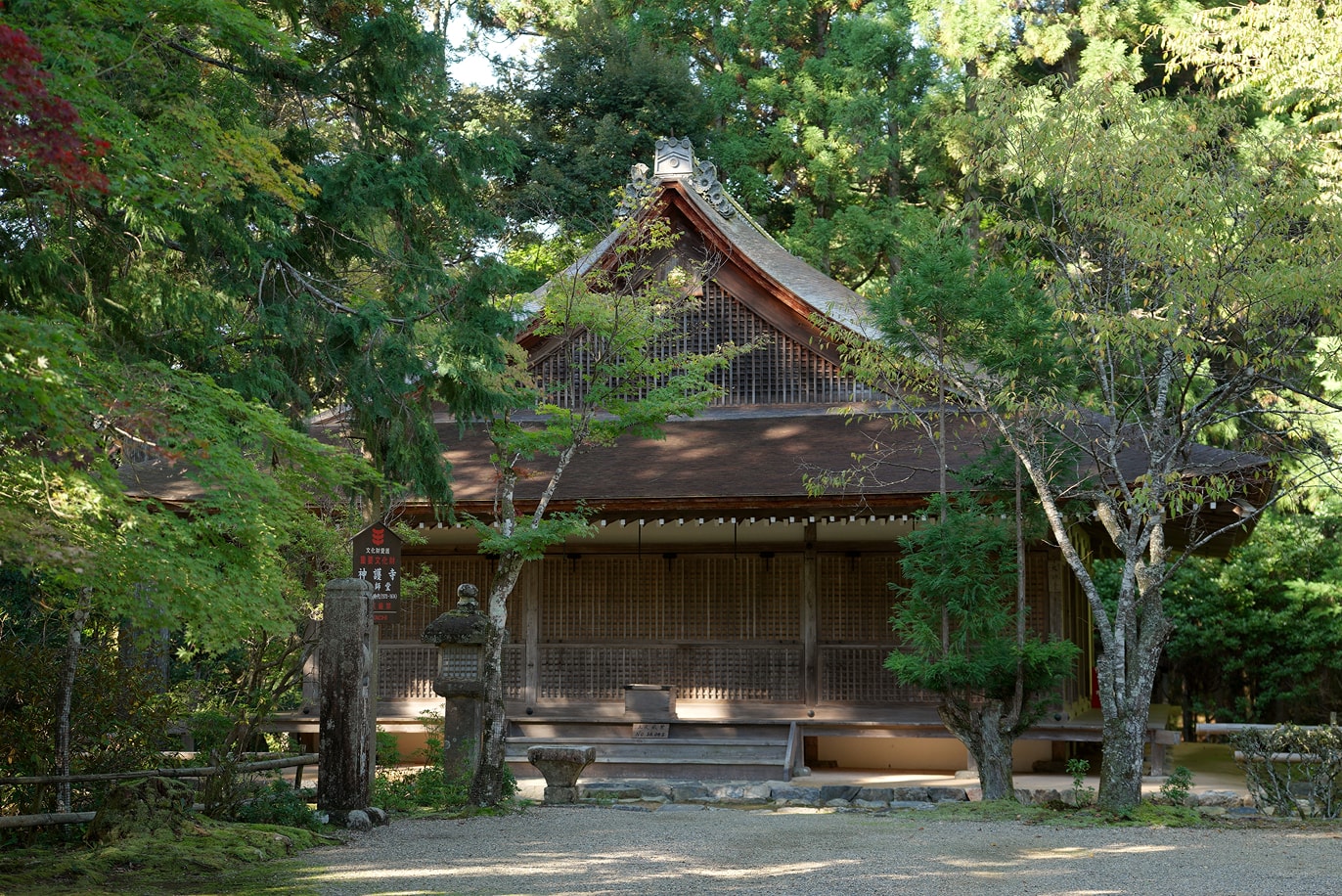
A refined hall imbued
with the presence of Kūkai
Built in 1168, Daishidō Hall stands on the site of the Dōryōbō, the priests’ quarters where the famed priest Kōbō Daishi (774–835) stayed during the early Heian period (794–1185). The current building dates to the Momoyama period (1573–1615), when the daimyo Hosokawa Tadaoki (1563–1646) funded its reconstruction.
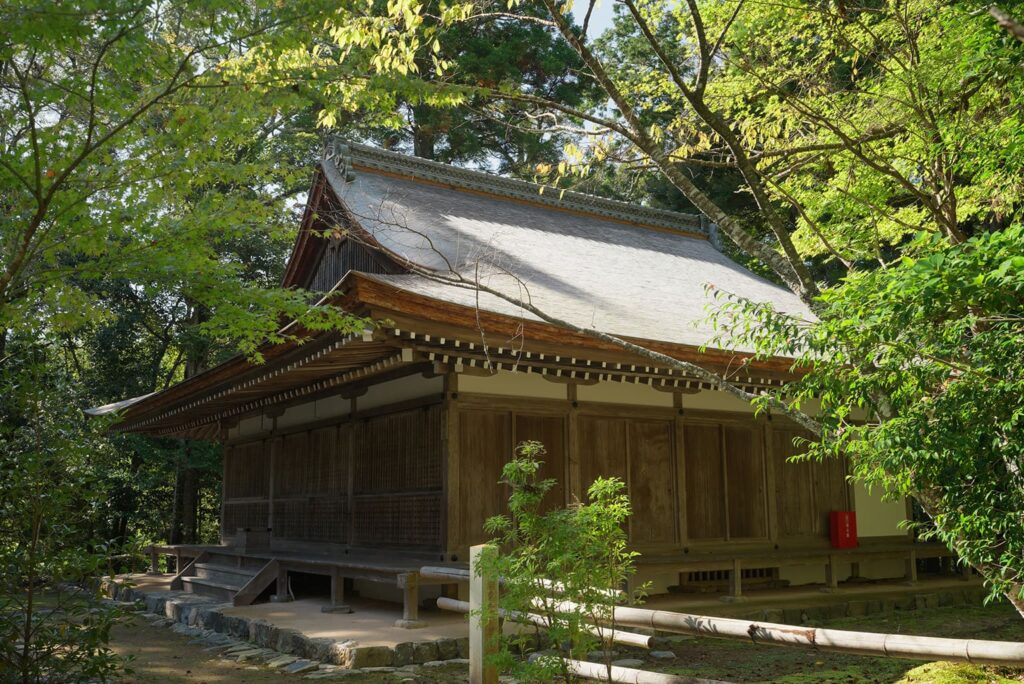
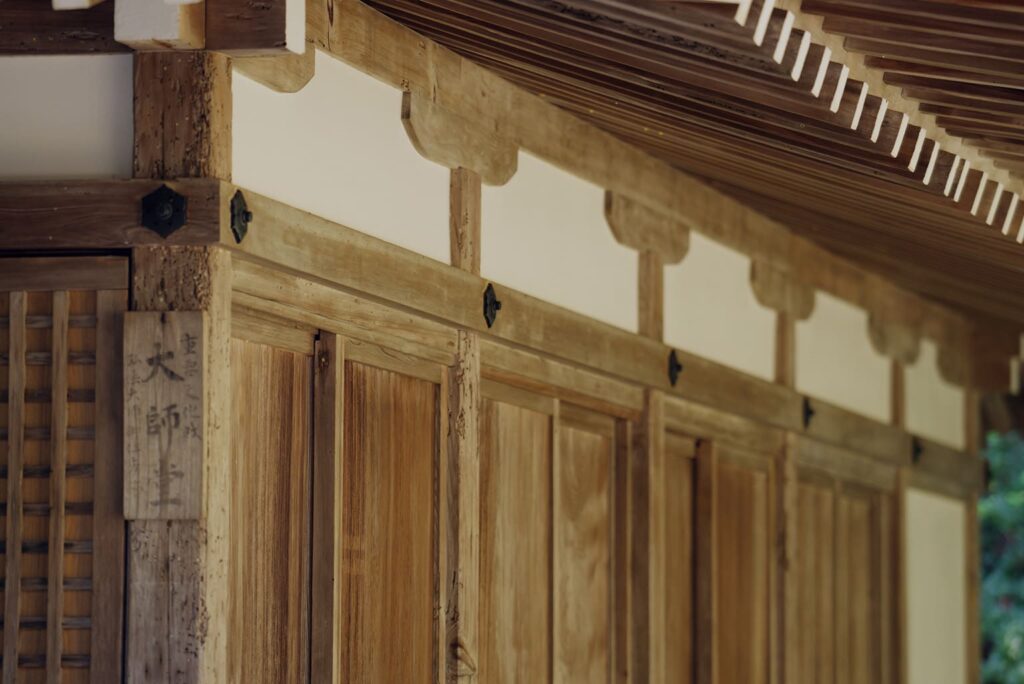
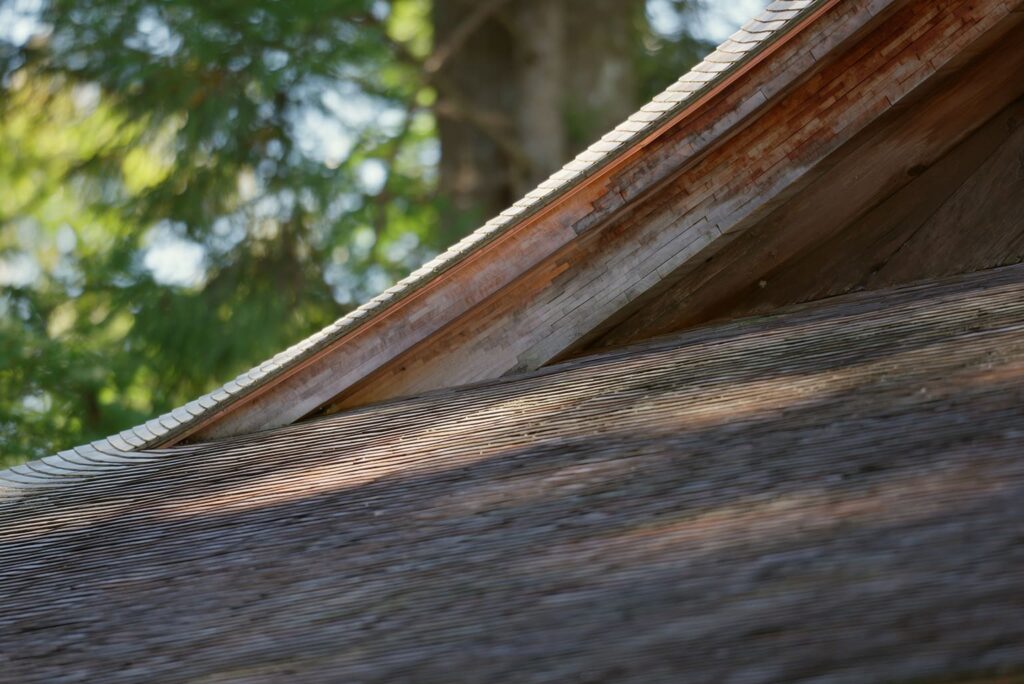
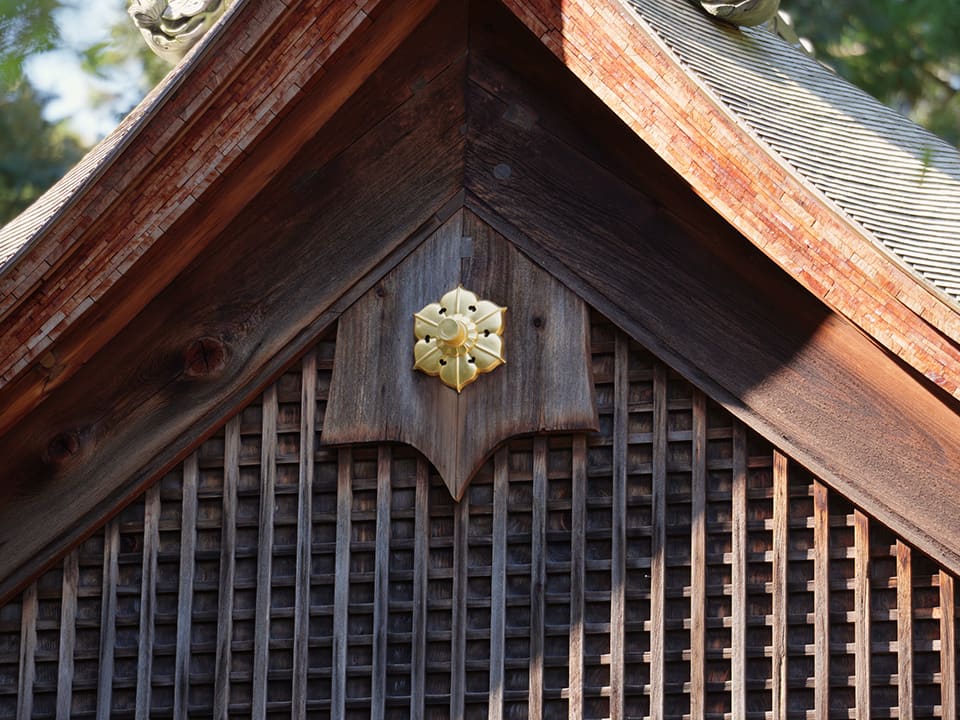
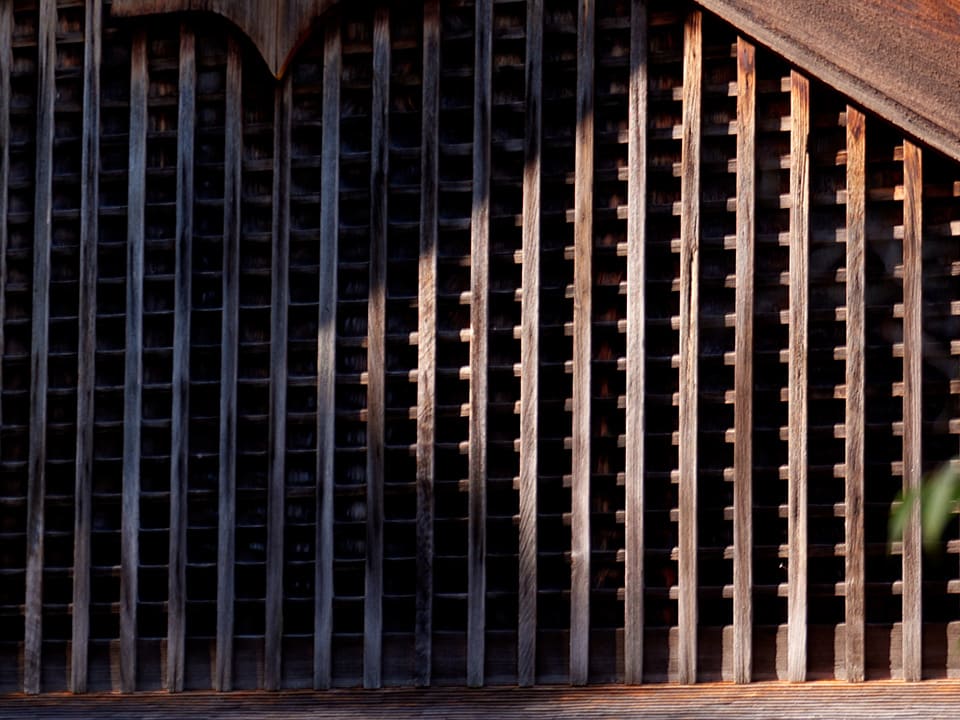
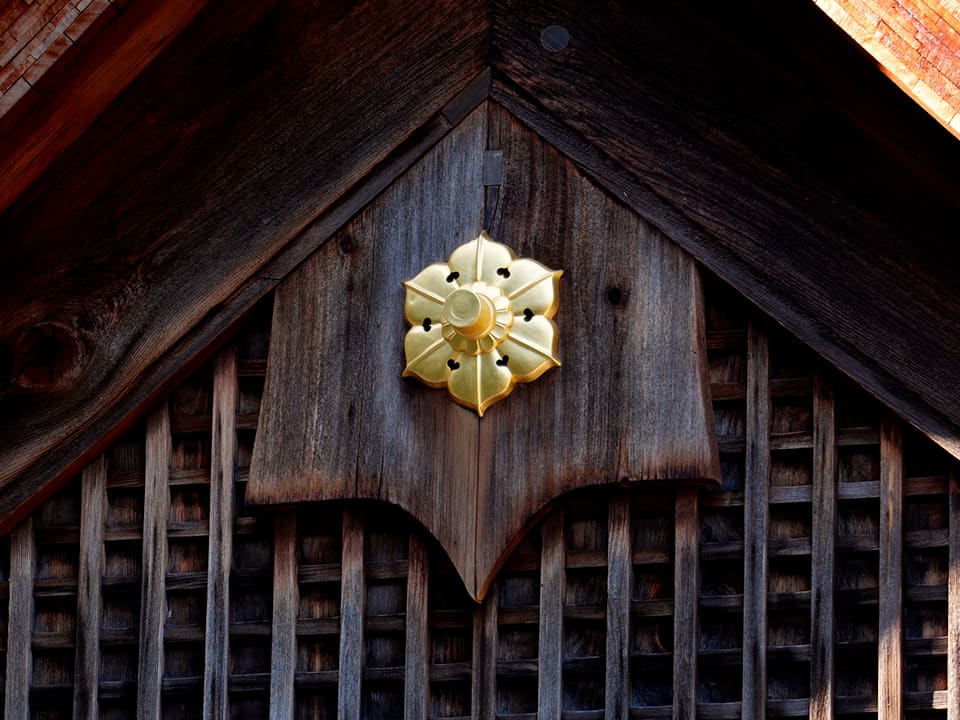
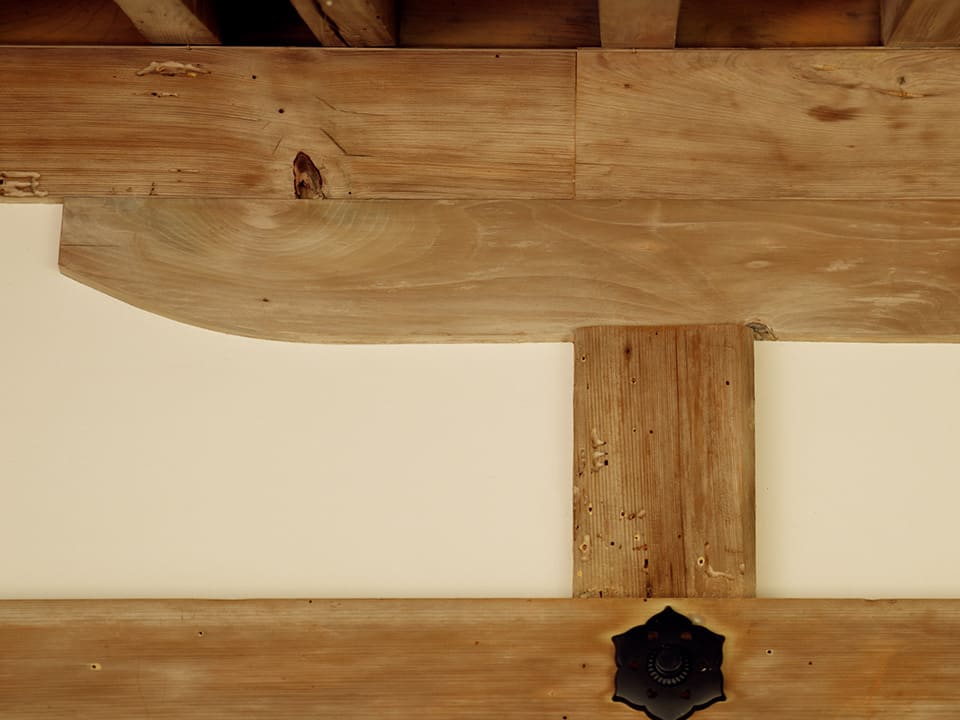
The hall has a hip-and-gable wood shingle roof with a low rim. The eaves are supported by traditional funa-hijiki brackets, while the ornamentation includes a gegyo gable pendant and wooden latticework. Together, these elements convey the simple yet elegant style of Momoyama-period architecture.
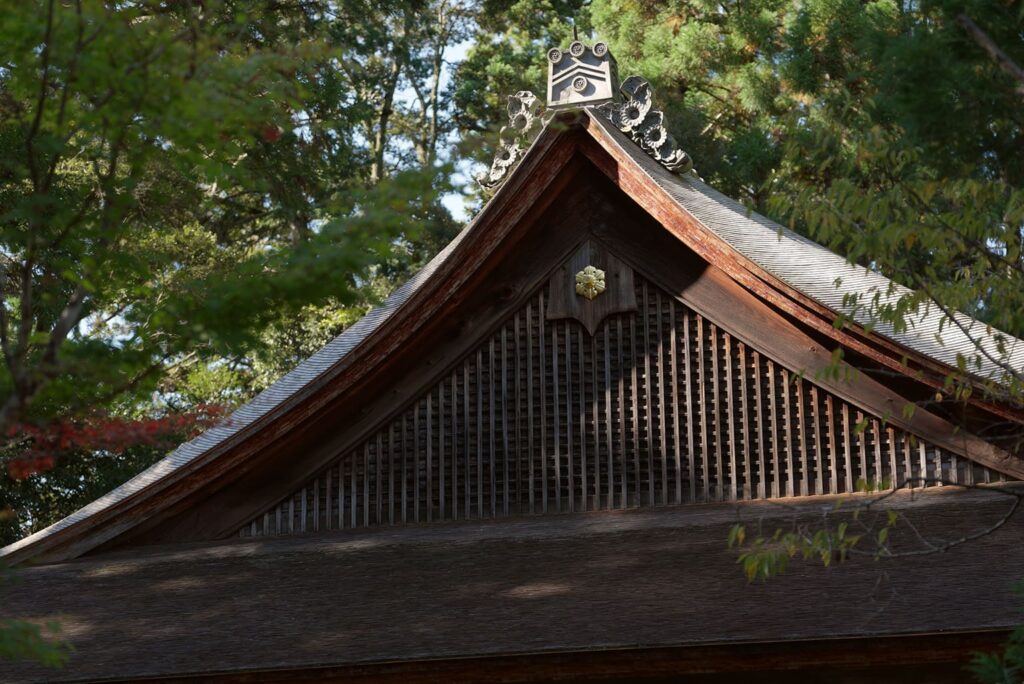
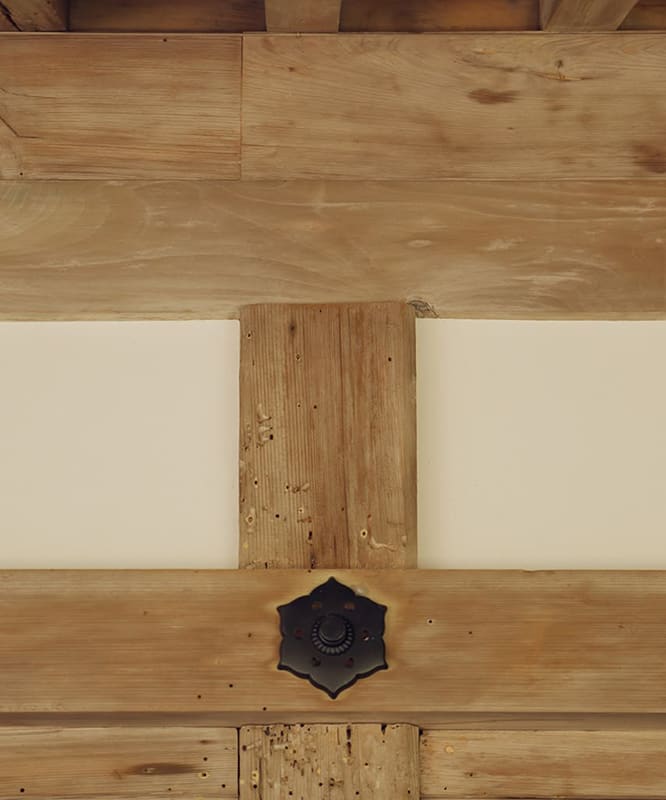
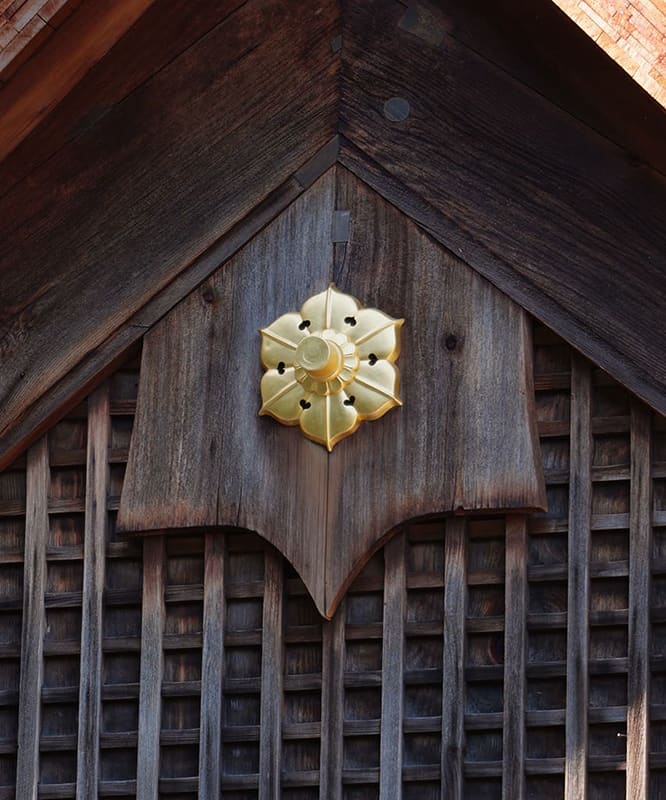
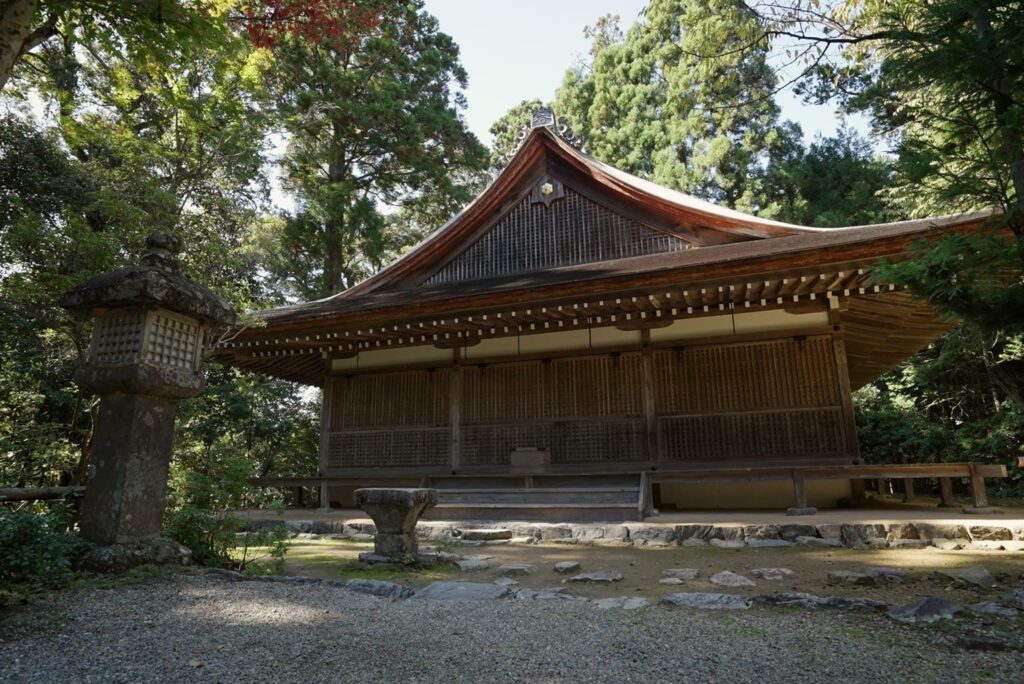
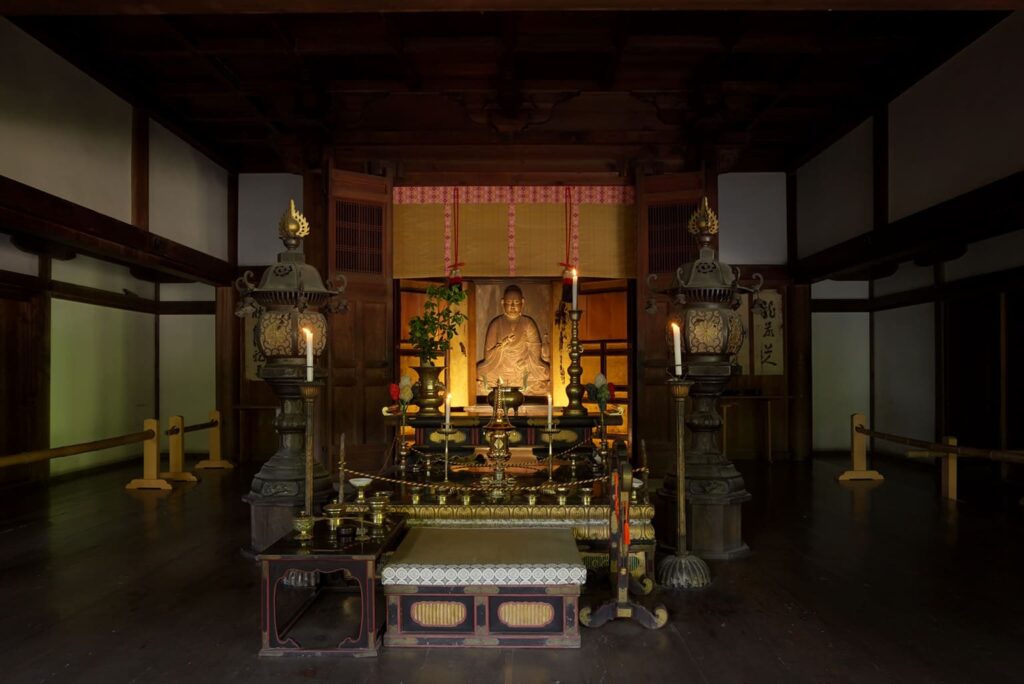
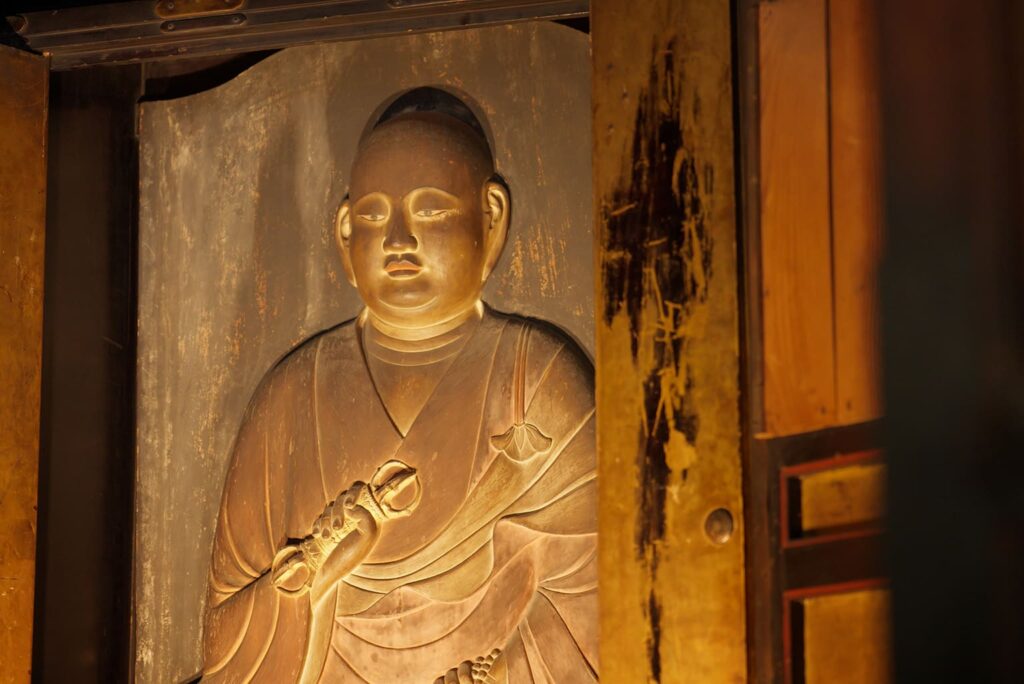
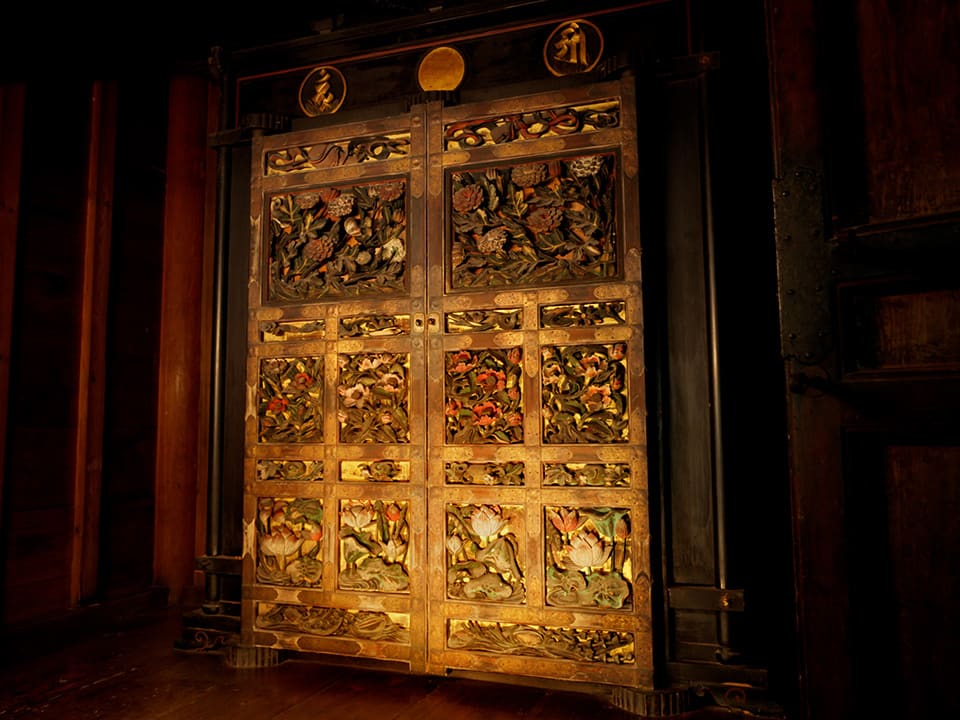
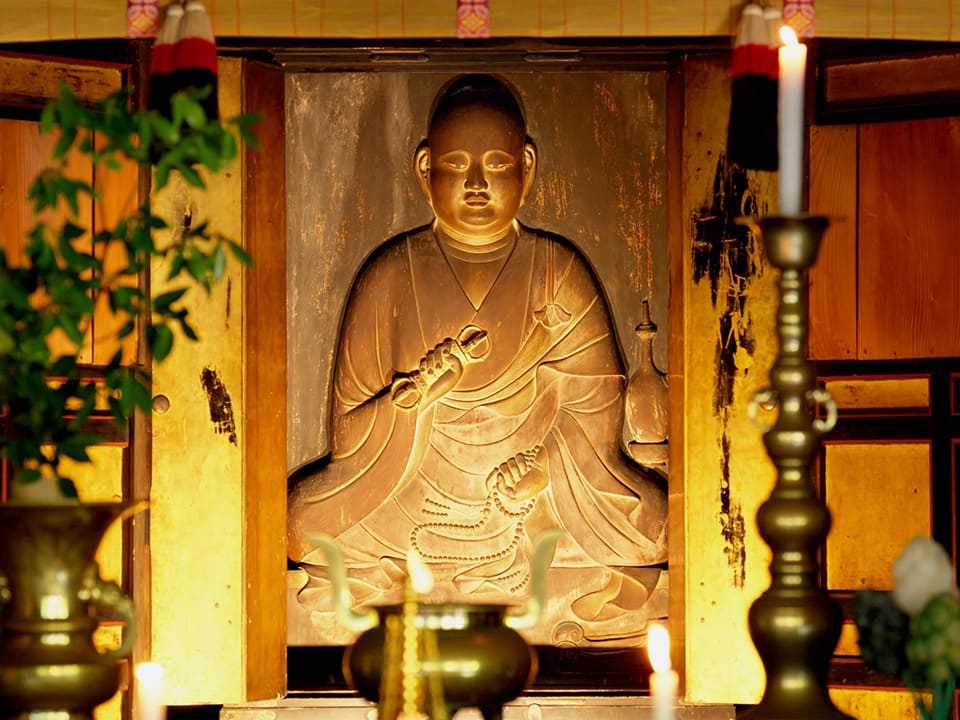
The hall’s interior includes an inner sanctuary demarcated by four pillars, as well as a small space set aside in the back. Enshrined inside is a carved relief of Kōbō Daishi thought to be the work of the Kamakura-period (1185–1333) Buddhist artist Jōki (dates unknown). The carving is kept in a miniature shrine placed inside another miniature shrine. The inner miniature shrine is believed to also date to the Kamakura period. Daishidō Hall commemorates the significant historical and spiritual legacy of Kōbō Daishi.
shingled (roof)
A type of roofing. It involves attaching wooden shingles with bamboo nails, using thicker boards for the eaves section. The materials used include thin boards of cedar, cypress, and sawara cypress.
miniature shrine
A sacred space for enshrining items such as Buddhist statues, relics, and sutra scrolls.
wood carving of Kōbō Daishi
inner sanctuary
The innermost chamber within the temple or shrine where the sacred shintai (object regarded as the divinity’s manifestation or symbol) or the principal Buddhist image is enshrined.
tsuma-kazari gable ornament
wooden lattice
kegyo decorative gable pendant
boat-shaped bracket arms
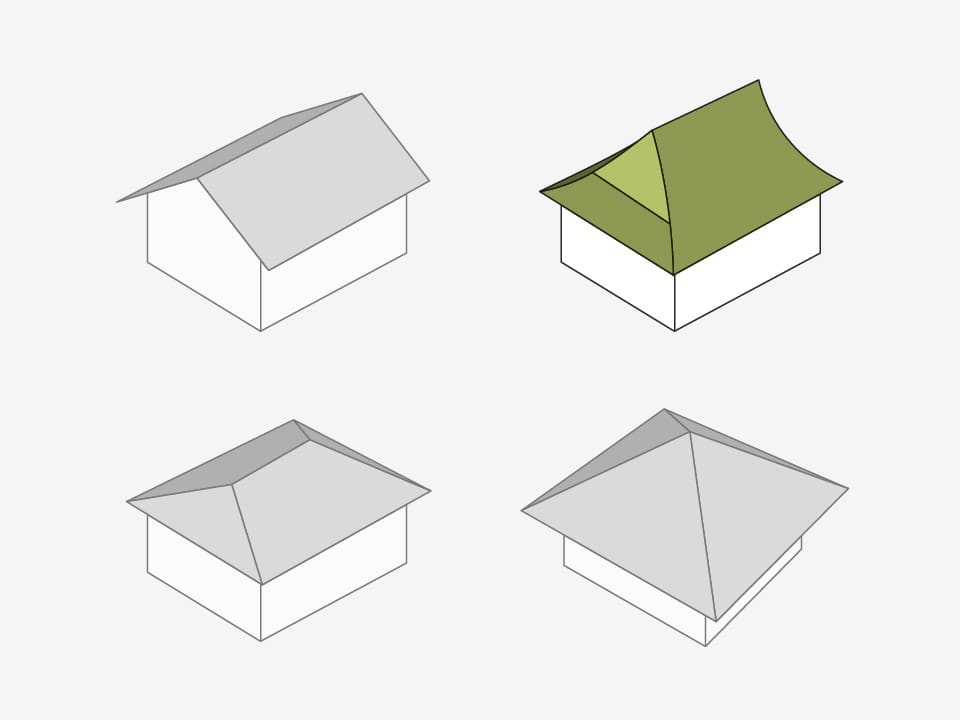
hip-and-gable style (irimoya-zukuri)
A gable (kirizuma-zukuri) is right above the core and a hipped roof are attached to the four sides on the lower part of the gable. (hip-and-gable roof construction)
Hosokawa Tadaoki
Hosokawa Tadaoki (1563–1646) was a daimyo active during the Sengoku (1467–1568) and early Edo (1603–1867) periods. He married Gracia (1563–1600), daughter of the powerful general Akechi Mitsuhide (1528–1582), and played an active role in the Toyotomi and Tokugawa regimes. He was well-versed in the tea ceremony and was one of the seven disciples of the tea master Sen no Rikyu (1522–1591).
Sengoku lord
This refers to daimyo and warriors who became independent and ruled over their territories in various parts of Japan during the Sengoku (Warring States) period (1467–1568).
Momoyama period
During the Momoyama period (1573–1603), the powerful generals Oda Nobunaga (1534–1582) and Toyotomi Hideyoshi (1537–1598) held central control over Japan. The name Momoyama comes from the Momoyama Hills, where Hideyoshi built Fushimi Castle.
Kamakura-period
The roughly 150-year period from the founding of the Kamakura shogunate by Minamoto no Yoritomo to the fall of the shogunate, marked by Hojo Takatoki’s suicide in 1333.
Dōryōbō Priests’ Quarters
A dwelling named and used by the prominent priest Kūkai (774–835). He lived here for over fourteen years.
Jōki
A Buddhist sculptor active at the beginning of the Kamakura period (1185–1333).
Yuiseki Head Temple
This refers to the head temple of a religious sect. The name indicates the temple’s ties with the sect founder and high-ranking priests.
Kūkai (Kōbō Daishi)
A Heian Era priest (774-835). Also known as Kobo Daishi. He is the founder of the Shingon sect and one of the three great calligraphers of the day.
Heian period
The Heian period lasted for approximately 400 years between the transfer of the capital to Heian-kyo (present day Kyoto) by Emperor Kanmu in 794 and the foundation of the Kamakura Shogunate in 1185. The period is often divided into three sections: the Early, Mid- and Late Heian periods. In other words, the period of reviving the political system based on Ritsuryo codes, the regency period and the Insei period (governed by a retired emperor), respectively. (The end of the Late Heian period was ruled by the Taira clan.) Also referred to as the period of the Heian imperial court.
MOVIE
Experience the video to get one step closer.
This video, accompanied by narration, introduces the charms of Daishidō Hall. Experience its charms even more deeply through the video.
Duration: (audio included)


Please take part in the survey.
Takes about 30 seconds